We're loading the full news article for you. This includes the article content, images, author information, and related articles.
A deep dive into Kenya’s political evolution, tracing the line from the anti-KANU struggles of the 90s to the Gen Z digital revolution reshaping the 2027 landscape.
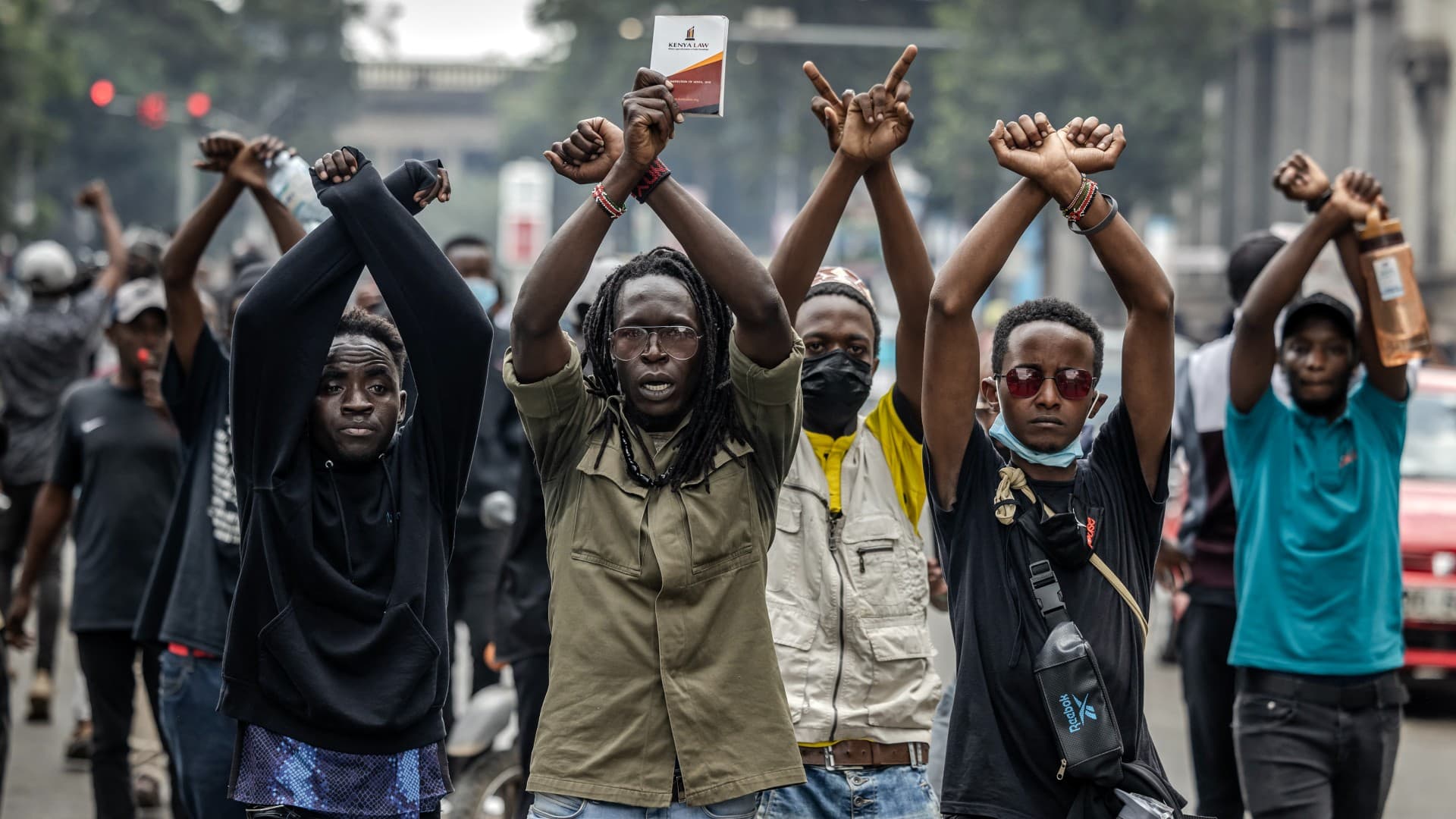
History rarely repeats itself in exact form. But in Kenya, it has an unmistakable habit of rhyming.
As the country edges toward the 2027 General Election, political analysts are increasingly drawing parallels between the twilight years of the KANU regime and the Gen Z uprising that shook the state in 2024. The tools have changed—fax machines and underground pamphlets have been replaced by smartphones and viral hashtags—but the underlying demand is hauntingly familiar: accountability.
In the 1990s, the battleground was Kamukunji. Today, it is the digital commons.
Three decades ago, Kenya’s democratic rupture was driven by a defiant cohort of reformists—James Orengo, Paul Muite, Gitobu Imanyara, and others—derisively labelled the Young Turks. They confronted batons, teargas, and detention without trial in their bid to dismantle the one-party state.
Their crime was simple: insisting that power must answer to the law.
Fast-forward to the 2020s, and a new generation has emerged—less hierarchical, less deferential, and infinitely more networked. These are the Digital Turks: Gen Z activists who organise leaderlessly, mobilise instantly, and document state excesses in real time. They do not seek permission. They seek results.
The 2024 Gen Z protests were not an accident, nor a momentary outburst. They were the latest chapter in a long struggle over the nature of the Kenyan state—whether it exists to serve citizens or to manage them.
Historian Prof. Macharia Munene has long argued that regimes do not fall merely because they are opposed—but because they lose moral legitimacy.
“The KANU era collapsed when it could no longer justify itself morally,” he has observed in past analyses. “Coercion can suppress dissent temporarily, but it cannot manufacture consent.”
That lesson remains relevant.
While the methods of repression have evolved, the logic has not. Where the Moi regime relied on open brutality—detention without trial, media bans, and overt censorship—modern repression is often quieter and more insidious:
Economic exclusion
Selective law enforcement
Abductions masked as ‘unknown assailants’
Digital surveillance and intimidation
The effect, however, is the same: alienation.
And alienation, once it hardens, is politically fatal
Perhaps the most profound shift lies in how Gen Z understands politics.
Unlike previous generations, whose voting patterns were shaped heavily by ethnicity and patronage, Gen Z is increasingly post-tribal. Their political identity is issue-based, not ancestral.
They vote—and protest—around:
Jobs and economic dignity
Cost of living
Internet freedom and digital rights
Transparency and accountability
This makes them uniquely threatening to political systems built on ethnic arithmetic. You cannot mobilise them with tribal fear. You cannot silence them by capturing a few leaders. They have none.
They are decentralised, memetic, and relentless.
One of the great ironies of Kenya’s current moment is that political power remains analogue, even as society has gone digital.
The state still thinks in terms of rallies, gatekeepers, and press statements. Gen Z thinks in terms of virality, screenshots, and receipts. In this asymmetry lies the tension.
“You cannot govern a digital generation with analogue tactics,” Munene warns.
KANU learned this lesson too late. It mistook fear for loyalty, silence for consent, and stability for legitimacy. By the time it realised the ground had shifted, the system that protected it had already begun to collapse.
The article’s warning to today’s political class is therefore not dramatic—it is historical.
The “system” that insulated KANU—its security apparatus, its patronage networks, its culture of impunity—eventually buckled under the weight of public anger and international pressure. Not overnight. But inevitably.
Any regime that ignores the writing on the digital wall risks a similar fate.
Gen Z may not sing liberation songs or quote the constitution from memory, but their instincts are deeply democratic. They may not march behind flags, but they organise around principles. And like the reformists before them, they are animated by a stubborn belief that the state must be accountable—or be challenged.
As 2027 approaches, Kenya’s political fault lines are shifting.
This is no longer a contest between regions or tribes. It is increasingly a generational confrontation:
The Boomers, guarding the gate with familiar tools
The Zoomers, scaling the walls with new ones
History suggests how this ends.
Kenya’s past tells us that when a generation decides the system no longer serves it, the system must change—or be changed. And if history truly does rhyme, then the future, once again, belongs to the young.
Keep the conversation in one place—threads here stay linked to the story and in the forums.
Sign in to start a discussion
Start a conversation about this story and keep it linked here.
Other hot threads
E-sports and Gaming Community in Kenya
Active 9 months ago
The Role of Technology in Modern Agriculture (AgriTech)
Active 9 months ago
Popular Recreational Activities Across Counties
Active 9 months ago
Investing in Youth Sports Development Programs
Active 9 months ago
Key figures and persons of interest featured in this article