We're loading the full news article for you. This includes the article content, images, author information, and related articles.
Guinea’s Junta leader Mamadi Doumbouya wins a controversial election with 87% of the vote, completing his transition from coup leader to civilian president.
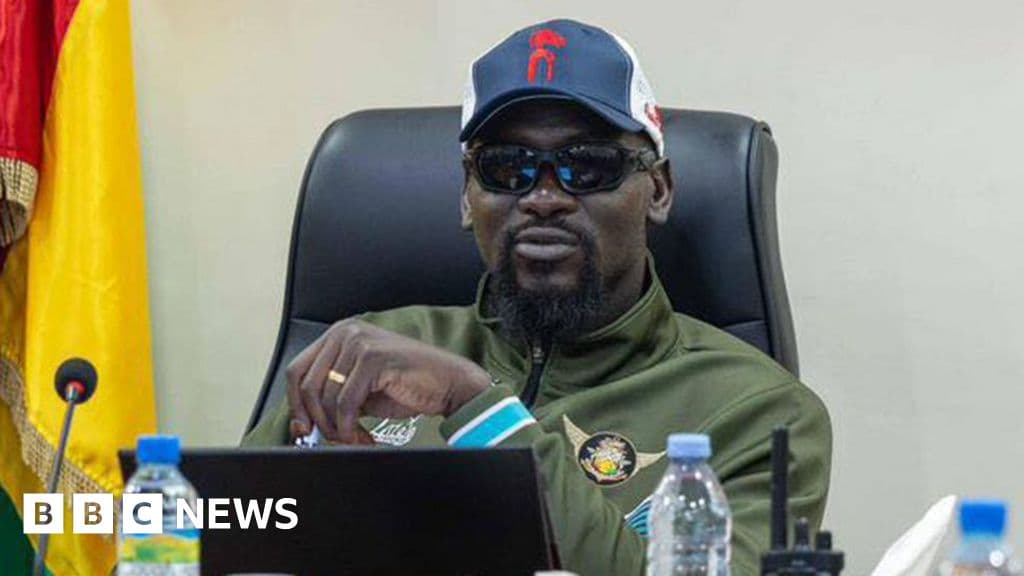
Mamadi Doumbouya’s transformation is now complete—at least on paper.
Four years after storming the presidential palace and toppling Alpha Condé, the former special forces commander has traded combat fatigues for tailored suits and flowing boubous, securing an emphatic—but deeply contested—election victory that clears his path to the presidency. With 87 percent of the vote in a poll boycotted by major opposition figures, the 41-year-old general is set to be sworn in, following a script familiar across coup-prone West Africa.
Doumbouya’s rebranding has been meticulous. Once the face of a military junta, he has recast himself as a disciplined reformer: cycling through Conakry at dawn, cutting ribbons at new schools, and speaking the language of national renewal. The optics are deliberate—designed to reassure a weary public and skeptical foreign partners.
Yet critics argue that beneath the civilian veneer, little has changed.
“The sunglasses are still there,” one opposition figure remarked privately, “and so is the iron fist.”
The vote itself has drawn fierce criticism. Former prime minister Cellou Dalein Diallo dismissed the outcome as a “charade,” pointing to the banning of protests, restrictions on opposition activity, and a sustained crackdown on independent media.
Supporters of the junta counter that stability demanded firm measures and that the election marks a necessary step toward constitutional order. Detractors see a managed transition engineered to legitimize power seized at gunpoint.
Doumbouya’s journey from soldier to statesman inevitably invites comparisons to Jerry Rawlings—the Ghanaian coup leader who later won elections and recast himself as a civilian democrat. The parallel is one Doumbouya’s allies quietly welcome. But history also offers a caution: legitimacy earned through the ballot is fragile when the playing field is uneven
Guinea’s “return to democracy” will be watched closely by ECOWAS, already strained by a wave of coups across West Africa. For the bloc, Doumbouya’s presidency is both a test case and a warning—proof that juntas can outwait sanctions and re-enter civilian politics on their own terms.
As he prepares to take the oath, Doumbouya insists he remains a “soldier of the people.” For many Guineans, that claim rings hollow. Activists remain behind bars. Opposition leaders live in exile. Independent voices operate under constant pressure.
The uniform may have changed.
The posture of power, critics say, has not.
Guinea now enters its next chapter with a civilian president whose authority was forged in khaki—and whose democratic credentials will be judged not by percentages on a results sheet, but by what follows.
Keep the conversation in one place—threads here stay linked to the story and in the forums.
Sign in to start a discussion
Start a conversation about this story and keep it linked here.
Other hot threads
E-sports and Gaming Community in Kenya
Active 9 months ago
The Role of Technology in Modern Agriculture (AgriTech)
Active 9 months ago
Popular Recreational Activities Across Counties
Active 9 months ago
Investing in Youth Sports Development Programs
Active 9 months ago



