We're loading the full news article for you. This includes the article content, images, author information, and related articles.
The Canadian-American icon redefined city skylines with his titanium-clad curves, leaving a legacy that challenged the very physics of construction.
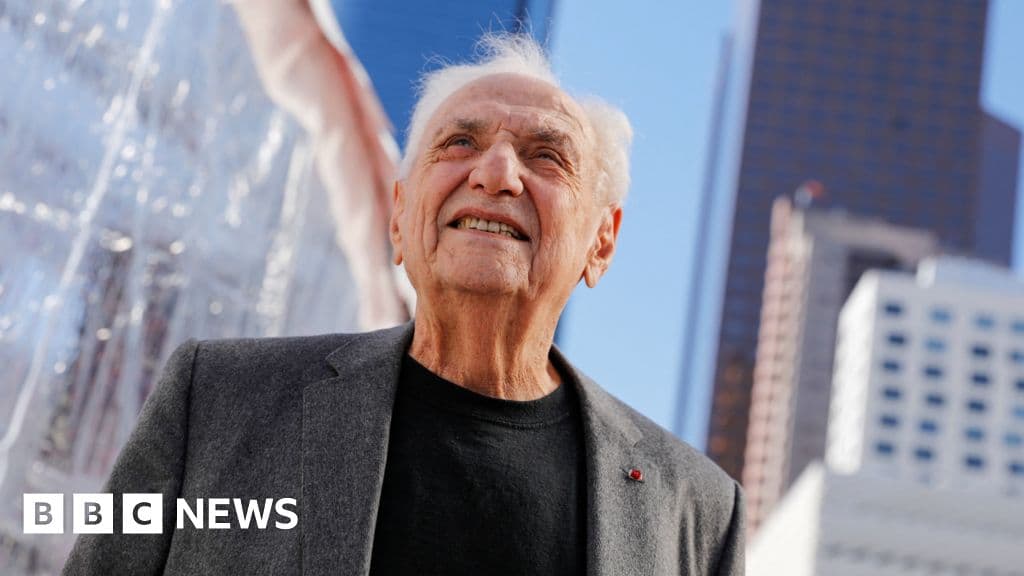
Frank Gehry, the architectural rebel who transformed industrial scraps and titanium sheets into some of the world’s most recognizable landmarks, has died at the age of 96.
His passing marks the end of a defining era for global "starchitecture." Gehry did not merely design buildings; he engineered economic engines, proving with the Guggenheim Museum in Bilbao that daring design could single-handedly revitalize a struggling city—a concept that continues to influence urban planning discussions from Los Angeles to Nairobi.
Gehry’s death was confirmed by his chief of staff, Meaghan Lloyd. While his later works were celebrated for their grandeur, his origins were rooted in a gritty, industrial aesthetic that challenged the polished norms of the mid-20th century.
Born in Toronto in 1929, Gehry moved to Los Angeles as a teenager. He studied at the University of Southern California and later at Harvard, but it was his own home in Santa Monica that shattered the mold. In a move that shocked his neighbors, he enveloped the house in chain-link fencing, plywood, and corrugated steel.
This was the birth of deconstructivism—a style that rejected symmetry and embraced fragmentation. For Kenyan architects and students observing global trends, Gehry represented the ultimate permission to experiment with low-cost materials to create high-concept art.
Gehry’s career trajectory shifted permanently in 1997 with the opening of the Guggenheim Museum in Bilbao, Spain. The building was a spectacle of shimmering titanium curves that appeared to defy structural logic.
"He broke from traditional architectural principles of symmetry, using unconventional geometric shapes and unfinished materials," noted architectural historians reviewing his legacy. His work demanded that the viewer engage with the building, not just inhabit it.
While Gehry’s most famous structures stand in Europe and North America, his influence permeates the global south. His philosophy challenged the rigid, box-like structures that dominate rapid urbanization, pushing developers to consider the cultural value of a skyline.
He is survived by his wife, Berta Isabel Aguilera, their two sons, Alejandro and Samuel, and two daughters from his first marriage, Leslie and Brina.
Gehry leaves behind a world that looks physically different because of his imagination. He took the static art of architecture and made it move, proving that even steel and concrete can possess a soul.
Keep the conversation in one place—threads here stay linked to the story and in the forums.
Sign in to start a discussion
Start a conversation about this story and keep it linked here.
Other hot threads
E-sports and Gaming Community in Kenya
Active 9 months ago
The Role of Technology in Modern Agriculture (AgriTech)
Active 9 months ago
Popular Recreational Activities Across Counties
Active 9 months ago
Investing in Youth Sports Development Programs
Active 9 months ago



