We're loading the full news article for you. This includes the article content, images, author information, and related articles.
Denmark faces a period of intense political uncertainty as Prime Minister Mette Frederiksen’s Social Democrats fall short of a parliamentary majority.
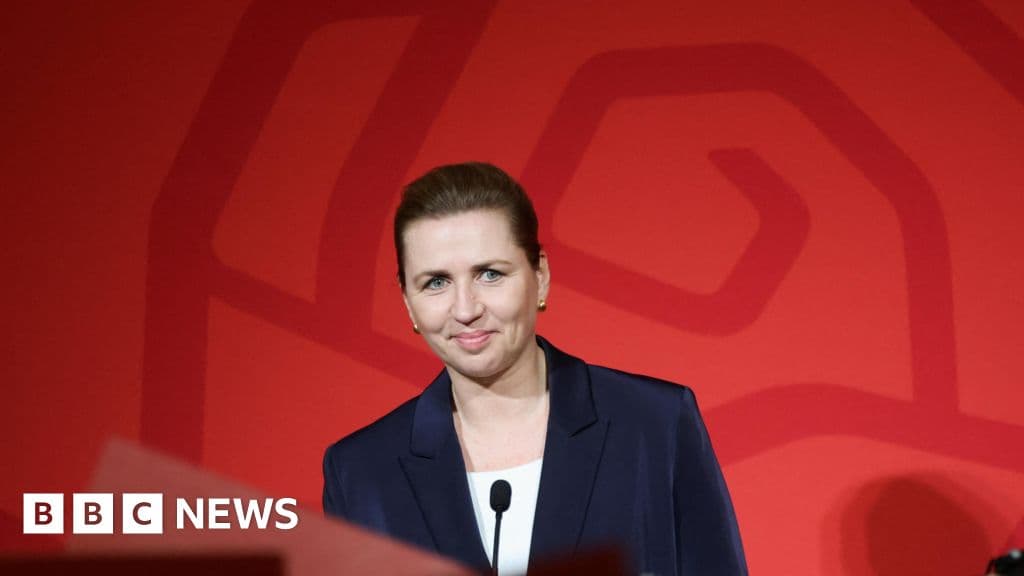
The heavy, ornate doors of Christiansborg Palace stood as a silent witness to a historic political retreat on Tuesday night. Prime Minister Mette Frederiksen, once the undisputed architect of Danish consensus, stood before a subdued crowd, her party’s grip on power fundamentally weakened as the Social Democrats recorded their lowest vote share in more than a century.
With only 21.9% of the electorate supporting the Social Democrats, the ruling party now faces a treacherous path toward forming a functional government. While they remain the largest political force, the failure to secure a parliamentary majority has plunged the Nordic nation into a period of profound uncertainty, stalling legislative agendas and forcing a precarious reliance on coalition bargaining.
The core of the crisis lies in the rigid, bloc-based structure of the Folketing, Denmark’s 179-seat parliament. To govern, a coalition must command at least 90 seats. Following the latest tally, the math offers no clear path to stability. The “red bloc,” a traditional alliance of center-left parties, has managed to secure only 84 seats, while their counterparts in the “blue bloc” trail with 77.
This arithmetic creates a vacuum, leaving the remaining seats in the hands of smaller, fringe parties or representatives from the autonomous territories of the Faroe Islands and Greenland. These kingmakers are now poised to exact heavy concessions in exchange for their support, a reality that analysts suggest will lead to a fractured, stop-start style of governance. The inability of either major bloc to reach the 90-seat threshold means that every piece of legislation, from budget appropriations to climate policy, will be subject to intense, multi-party negotiation.
The decline of the Social Democrats is not an isolated event but rather the latest symptom of a broader European trend: the fragmentation of the center-left. Voters, squeezed by the rising cost of living and anxieties surrounding migration and climate change, have splintered their support across the political spectrum. In Copenhagen, the atmosphere is one of exhaustion.
Political scientists from the University of Copenhagen point to a disconnect between the government’s technocratic efficiency and the lived reality of the Danish working class. Despite maintaining strong employment figures, the party struggled to counter narratives concerning the degradation of public healthcare and the pace of the green energy transition. The election results reflect a nation that is deeply divided, not just between the traditional left and right, but between urban centers and rural municipalities where the Social Democrats have faced significant erosion in their electoral base.
For observers in Nairobi, the political paralysis in Copenhagen is far from a distant, academic affair. Denmark remains one of Kenya’s most steadfast bilateral partners, with a relationship anchored in decades of development cooperation. The *Strategic Framework for Kenya-Denmark Partnership (2021-2025)* has funneled billions of shillings into renewable energy projects, governance reform, and youth employment initiatives. When converted, the annual Danish aid commitment is estimated at over KES 15 billion, a figure that is now subject to the whims of a potentially unstable administration.
A weak or caretaker government in Denmark often leads to a "policy freeze" regarding foreign aid allocations. If the parliamentary deadlock persists, long-term climate financing agreements—critical for Kenya’s transition to green manufacturing—may face bureaucratic delays. Diplomatic sources suggest that while the Danish civil service provides continuity, the lack of a clear mandate in Copenhagen reduces the political capital available to lobby for increased development support within the Nordic donor community. For Kenyan businesses and environmental agencies relying on DANIDA-funded projects, the next few weeks of coalition building are a high-stakes waiting game.
Negotiations are expected to stretch across weeks, testing the diplomatic acumen of Prime Minister Frederiksen. She must now convince disparate parties with vastly different economic ideologies to coalesce around a common platform. Historical precedent in Danish politics suggests that minority governments are the norm, yet rarely has the margin of error been so slim.
The pressure is mounting from both sides of the aisle. The blue bloc, despite being in the minority, sees this as an opening to force the Social Democrats into concessions on tax reform and public sector spending. Conversely, the smaller parties on the left are likely to demand stricter climate targets and increased social welfare spending, further complicating the PM’s task of building a cabinet that can survive a vote of no confidence.
As the sun rises over Copenhagen, the political future remains as unpredictable as the North Sea weather. Denmark has moved from a era of comfortable majorities to a new, precarious reality of endless compromise. The question is no longer whether the government can lead, but whether it can survive the first motion of censure that inevitably awaits in the parliament chamber.
Keep the conversation in one place—threads here stay linked to the story and in the forums.
Sign in to start a discussion
Start a conversation about this story and keep it linked here.
Other hot threads
E-sports and Gaming Community in Kenya
Active 10 months ago
The Role of Technology in Modern Agriculture (AgriTech)
Active 10 months ago
Popular Recreational Activities Across Counties
Active 10 months ago
Investing in Youth Sports Development Programs
Active 10 months ago



