We're loading the full news article for you. This includes the article content, images, author information, and related articles.
The world's best-selling pickup is shifting to a hybrid model, a major setback for the EV revolution driven by high costs, political winds in the U.S., and what the company calls a necessary pivot to customer demand.
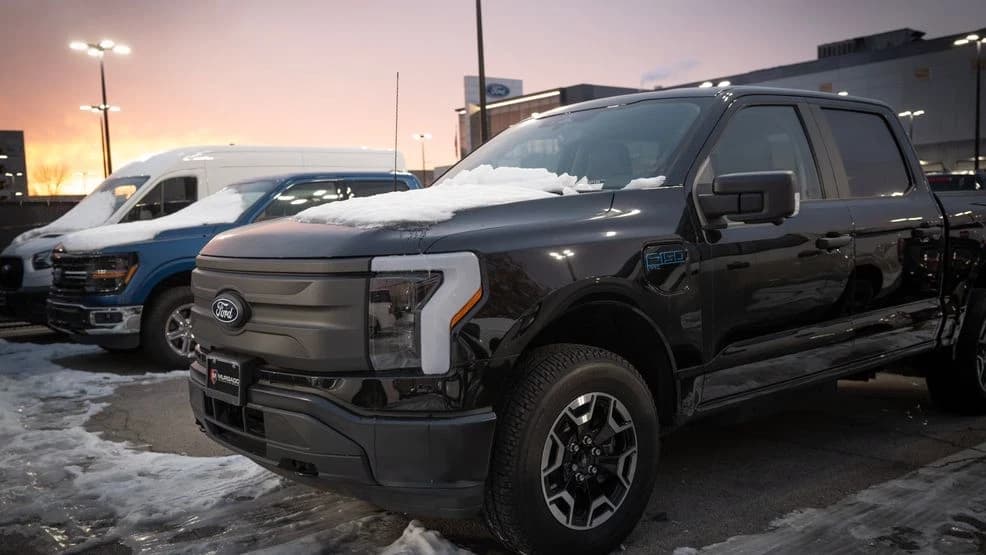
Ford Motor Company is hitting the brakes on its all-electric F-150 Lightning, ending production of the pioneering battery-powered truck by the end of this year. The American auto giant announced it will replace the vehicle with a next-generation hybrid model, a stunning reversal that signals a broader industry retreat from an all-electric future.
This strategic pivot is a direct response to a collision of harsh market realities: disappointing sales, high production costs, and significant regulatory changes in the United States. For Kenyans, this global decision ripples across our own burgeoning electric vehicle market, raising questions about the viability of pure EVs and potentially reshaping the future of vehicles on our roads.
The current F-150 Lightning will be succeeded by an Extended Range Electric Vehicle (EREV). Unlike a conventional hybrid, the new model's wheels will still be driven exclusively by electric motors, preserving the instant torque and quiet operation that EV drivers favour. However, it will now carry an onboard gasoline engine that functions solely as a generator to recharge the battery, dramatically boosting its estimated range to over 1,100 kilometres (700 miles) and addressing the critical issue of 'range anxiety', especially when towing.
Ford's decision was heavily influenced by financial pressures and a shifting political landscape. The company will absorb a staggering $19.5 billion (approx. KES 2.5 trillion) in special charges related to the strategic overhaul. Ford CEO Jim Farley noted that the move was a “customer-driven shift to create a stronger, more resilient and more profitable Ford.”
The reversal follows the expiration of a crucial $7,500 (approx. KES 975,000) federal EV tax credit in the U.S. under the Trump administration, which caused a sharp drop in demand. Sales of the F-150 Lightning tumbled by 72% in November alone after the incentive expired. “The operating reality has changed, and we are redeploying capital into higher-return growth opportunities,” Farley stated.
While the F-150 Lightning is a rare sight in Kenya due to its high import cost, Ford's global strategy has local implications. The pivot to hybrid technology may, ironically, present a more practical path for electrification in Kenya, where the EV charging infrastructure is still in its infancy.
Key challenges for EV adoption in Kenya remain:
Ford's new hybrid approach, which mitigates range and infrastructure concerns, could influence the types of electrified vehicles imported and assembled locally. It acknowledges a reality that Kenyan consumers understand well: the need for a reliable backup when the primary power source is unavailable.
The government has set a target for EVs to make up 5% of all new car sales by 2025, supported by tax incentives. However, Ford's global recalibration suggests the road to electrification may have more detours than anticipated. As Andrew Frick, a Ford president, explained, “The American consumer is speaking clearly... they want the freedom to choose the powertrain that fits their life and their work.” It is a sentiment that will surely resonate with many Kenyan drivers weighing their options for the future.
Keep the conversation in one place—threads here stay linked to the story and in the forums.
Sign in to start a discussion
Start a conversation about this story and keep it linked here.
Other hot threads
E-sports and Gaming Community in Kenya
Active 10 months ago
Popular Recreational Activities Across Counties
Active 10 months ago
The Role of Technology in Modern Agriculture (AgriTech)
Active 10 months ago
Investing in Youth Sports Development Programs
Active 10 months ago