We're loading the full news article for you. This includes the article content, images, author information, and related articles.
The deal secures Kyiv's immediate financial future after marathon talks in Brussels, but reveals deep divisions on the unprecedented step of seizing Moscow's frozen funds.
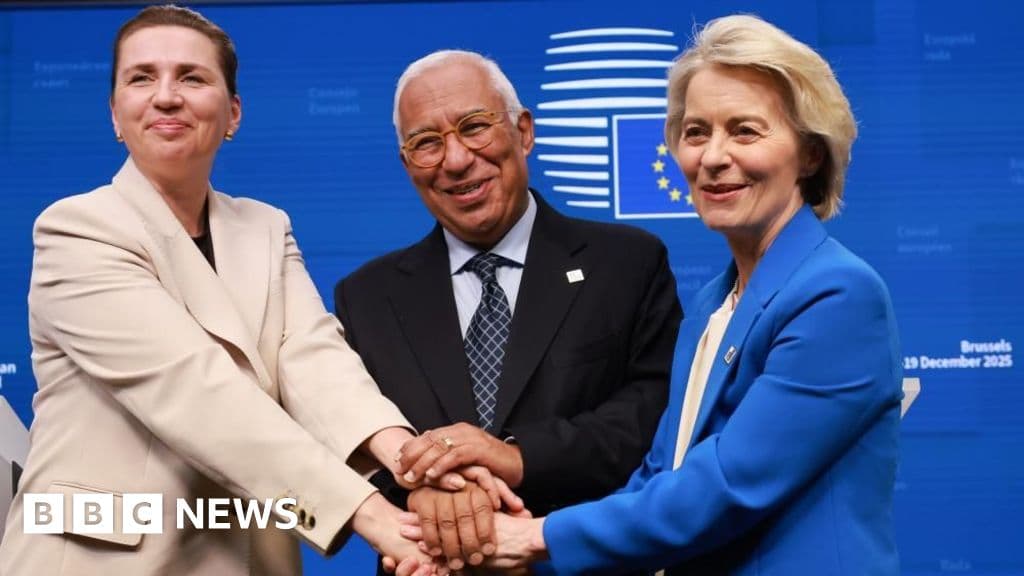
European Union leaders have approved a landmark €90 billion (approx. KES 13.6 trillion) loan for Ukraine, providing a critical financial lifeline to the war-torn nation for the next two years. The agreement, reached after intense late-night negotiations, crucially relies on EU borrowing rather than the contentious proposal of using frozen Russian sovereign assets.
This decision provides immediate relief for Ukraine's battered economy, ensuring it can maintain essential services and military readiness. For Kenyans, this distant negotiation matters as it reinforces the international financial systems that underpin global trade and stability, which directly impact fuel and food prices back home.
The agreement was announced by European Council President Antonio Costa, who posted on X, "We committed, we delivered." The loan is structured to be interest-free, with repayments only expected once Russia pays war reparations to Ukraine.
The summit sidestepped a legally and politically complex plan to use some of the €210 billion in Russian central bank assets frozen in Europe to back the loan. Belgium, where the majority of the funds are held, raised significant concerns about potential legal retaliation from Moscow and the financial liabilities involved, ultimately leading leaders to opt for the more conventional route of borrowing on capital markets.
Ukrainian President Volodymyr Zelensky, who had strongly advocated for using the Russian assets, nonetheless expressed gratitude for the deal. "This is significant support that truly strengthens our resilience," he noted on social media, emphasizing the importance of keeping the Russian assets immobilized.
In a surprising turn, French President Emmanuel Macron suggested it would be "useful" for Europe to find a way to re-engage in dialogue with Russian President Vladimir Putin in the coming weeks. "I believe that it's in our interest as Europeans and Ukrainians to find the right framework to re-engage this discussion," Macron told reporters, introducing a new, and potentially divisive, element to Europe's strategy.
Keep the conversation in one place—threads here stay linked to the story and in the forums.
Sign in to start a discussion
Start a conversation about this story and keep it linked here.
Other hot threads
E-sports and Gaming Community in Kenya
Active 9 months ago
The Role of Technology in Modern Agriculture (AgriTech)
Active 9 months ago
Popular Recreational Activities Across Counties
Active 9 months ago
Investing in Youth Sports Development Programs
Active 9 months ago