We're loading the full news article for you. This includes the article content, images, author information, and related articles.
Charities warn vulnerable residents against turning off heating as the war in Iran disrupts supply chains, sending energy costs soaring across Britain.
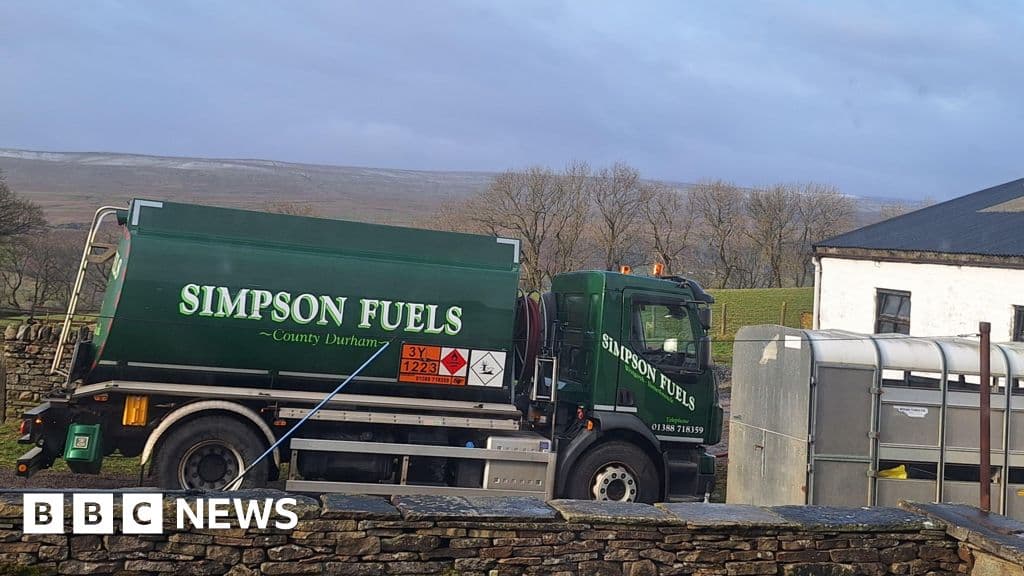
The biting cold of late March typically signals a retreat toward spring in the Durham Dales, but this year, the frost brings a more insidious threat. Inside stone-walled cottages miles from the national gas grid, families are facing an impossible ultimatum: suffer in freezing temperatures or face financial ruin to keep the boiler running. As the ongoing conflict in Iran destabilizes global energy markets, the cost of heating oil and liquefied petroleum gas (LPG) has doubled in under four weeks, pushing rural households to the precipice of a full-scale humanitarian crisis.
This is not merely a localized inconvenience but a systemic failure exposed by geopolitical volatility. For residents in Northumberland, Cumbria, and across County Durham, the war in Iran is not a distant news headline—it is the direct reason why the cost of heating their homes has surged to levels that rival the median monthly food budget for a family of four. Charities are now issuing desperate warnings, urging residents not to turn off their heating entirely, citing grave risks to health, particularly among the elderly and those with existing respiratory conditions.
The geography of energy poverty is starkly delineated by infrastructure. In major urban centers, mains gas acts as a regulated buffer against the most violent spikes in wholesale energy costs. Conversely, rural communities operate in a Wild West of energy procurement, relying heavily on delivery-based heating fuels like oil, LPG, and solid fuels. These commodities are highly sensitive to spot-market fluctuations, meaning that when geopolitical tension hits the Middle East, the price at the pump for home heating oil does not just rise it explodes.
Emma Spry, manager of Upper Teesdale Agricultural Support Services (UTASS), has been on the front lines of this crisis for weeks. Speaking from Middleton-in-Teesdale, Spry describes a community already strained by the inherent costs of rural life—higher grocery prices, greater travel distances, and limited public infrastructure. The fuel price surge has acted as a catalyst, collapsing the thin margins many households maintain. The current landscape of this energy crisis can be broken down as follows:
To understand the depth of this crisis, one must look at the chain of transmission. A conflict in the Middle East does not just impact a cottage in Cumbria it recalibrates the energy landscape for the entire world. For the informed global citizen—particularly those in Nairobi—the UK's rural energy plight serves as a cautionary tale regarding the dangers of an import-dependent economy. When global crude oil prices spike due to regional wars, the effects are felt instantaneously in the East African market.
In Kenya, where petroleum products constitute a massive portion of the import bill, a surge in global oil prices typically triggers a ripple effect that is arguably more severe than in the UK. When global Brent crude prices rise, the cost of transportation, agriculture, and manufacturing in Kenya follows suit. An increase in global energy prices effectively devalues the purchasing power of the Kenyan Shilling (KES) and drives cost-push inflation. In 2026, with the current global supply chain constraints, a rise in fuel costs often translates to a KES 20 to 30 increase per liter at the pump, significantly impacting the livelihoods of matatu operators, farmers transporting produce, and families reliant on kerosene for cooking.
Economists at the Central Bank of Kenya have frequently warned that energy price volatility is the primary engine of domestic inflation. While the mechanisms differ—the UK struggles with home heating, whereas Kenya struggles with transport and production logistics—the root cause remains the same: a profound, dangerous reliance on volatile global commodity markets that are subject to the whims of geopolitical conflict.
The human toll of this crisis is measured in the hours a heater is left off. UTASS and similar organizations have reported a surge in calls from residents who are rationing heat, keeping rooms at temperatures that health experts warn are dangerously low. The risk is not merely discomfort it is hypothermia, damp-related health issues, and the exacerbation of chronic conditions. The government claims to have acted quickly to support households at risk, but for those in the Dales, the aid has yet to reach the most vulnerable.
The solution, according to experts like Spry, lies in the collective. Cooperative oil-buying schemes have emerged as a vital lifeline, allowing communities to pool their purchasing power to negotiate lower rates and bulk delivery discounts. However, this is a reactive measure, not a structural one. True security in the face of global instability requires a fundamental rethink of how remote, rural populations generate and store heat. Whether through government-subsidized heat pumps, investment in biomass energy, or decentralized renewable grids, the era of relying on volatile, imported fossil fuels for basic survival must come to an end.
As the conflict in Iran persists, the reality of this energy crisis remains fluid and precarious. Residents in the Durham Dales and beyond are bracing for a spring that shows no sign of warming, both in temperature and in the economic outlook. The question remains: how many more seasons can vulnerable populations survive on the brink before the structural cracks in the global energy system finally give way?
Keep the conversation in one place—threads here stay linked to the story and in the forums.
Sign in to start a discussion
Start a conversation about this story and keep it linked here.
Other hot threads
E-sports and Gaming Community in Kenya
Active 10 months ago
The Role of Technology in Modern Agriculture (AgriTech)
Active 10 months ago
Popular Recreational Activities Across Counties
Active 10 months ago
Investing in Youth Sports Development Programs
Active 10 months ago



