We're loading the full news article for you. This includes the article content, images, author information, and related articles.
In a historic pivot from the 'NGO industrial complex,' Washington bypasses aid agencies to sign a Sh325 billion direct pact with Nairobi—but the new terms come with strict conditions.
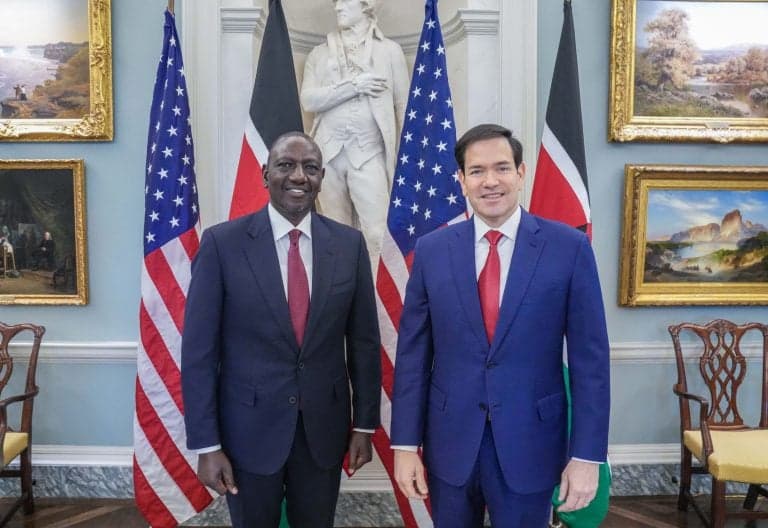
NAIROBI — The era of the foreign aid middleman is officially over. In a move that fundamentally rewrites the playbook for development assistance in Africa, US Secretary of State Marco Rubio has confirmed why Kenya was selected as the testing ground for Washington’s aggressive new "America First" Global Health Strategy.
Speaking in Washington following the signing of a landmark $2.5 billion (approx. KES 325 billion) framework, Rubio did not mince words. The decision to bypass traditional non-governmental organizations (NGOs) in favor of direct Government-to-Government (G2G) funding was deliberate, calculated, and rooted in a desire to dismantle what he termed the "NGO industrial complex."
For decades, billions of shillings in health aid have flowed through a labyrinth of international contractors before reaching a clinic in Kisumu or a dispensary in Kilifi. Under this new deal, that tap is turned off. The money now flows directly to the state—specifically, to the structures supporting the Social Health Authority (SHA)—marking a massive vote of confidence in Kenya’s institutional stability, even as it raises eyebrows over data privacy and sovereignty.
Why Nairobi? According to Secretary Rubio, the choice was not sentimental; it was strategic. He outlined a "twofold" rationale that placed Kenya ahead of other longstanding African allies.
"Number one, because of our close partnership," Rubio stated, alluding to Kenya’s recent leadership in the Haiti security mission. "Number two, they have stable and strong institutions both in government and in the healthcare sector."
This pivot is significant. By validating Kenya’s internal systems, the US is effectively saying it trusts the Ministry of Health more than the myriad of international agencies that have traditionally managed HIV/AIDS and malaria programs. For the Ruto administration, this is a diplomatic coup, legitimizing the controversial transition to the SHA on the global stage.
The five-year agreement is a financial behemoth. While the headline figure is $2.5 billion, the breakdown reveals a cost-sharing model that demands skin in the game from the Kenyan taxpayer:
"We are not going to spend billions of dollars funding the NGO industrial complex while close and important partners like Kenya either have no role to play or have very little influence over how healthcare money is being spent," Rubio emphasized.
However, the deal is not without its gray areas. The shift to a bilateral framework has sparked fears regarding patient data. Critics have questioned whether the "America First" policy implies US access to the sensitive health records of millions of Kenyans as part of disease surveillance measures.
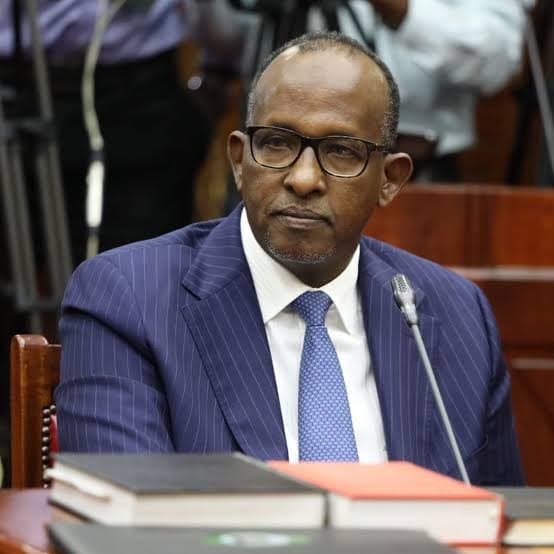
Health Cabinet Secretary Aden Duale moved swiftly to quell these concerns, asserting that sovereignty remains intact. "Your health data is a national strategic asset," Duale noted. "Under the new US–Kenya Framework, all data sharing follows Kenyan laws. Only de-identified, aggregated data is shared."
Despite these assurances, analysts warn that the devil will be in the implementation. With the dismantling of USAID’s traditional oversight mechanisms, the burden of accountability now shifts entirely to Kenyan institutions. If funds are misappropriated, there is no buffer—the diplomatic fallout will be direct and immediate.
For the average Kenyan, the impact will be felt in the supply chain. The promise is that by cutting out administrative heavyweights, more funds will be available for actual medicine and equipment. If successful, the perennial shortages of ARVs and malaria kits could become a thing of the past.
But the pressure is now on. President William Ruto has pledged that "every shilling and every dollar will be spent efficiently." As Kenya steps into this new role as the pilot for American foreign policy, the world is watching. Success could unlock a new era of dignified partnership; failure could see the aid tap run dry permanently.
Keep the conversation in one place—threads here stay linked to the story and in the forums.
Sign in to start a discussion
Start a conversation about this story and keep it linked here.
Other hot threads
E-sports and Gaming Community in Kenya
Active 9 months ago
The Role of Technology in Modern Agriculture (AgriTech)
Active 9 months ago
Popular Recreational Activities Across Counties
Active 9 months ago
Investing in Youth Sports Development Programs
Active 9 months ago
Key figures and persons of interest featured in this article