We're loading the full news article for you. This includes the article content, images, author information, and related articles.
The landmark government-to-government pact bypasses NGOs to fund KEMSA and SHA directly—but the State must now prove your medical records are safe from foreign eyes.
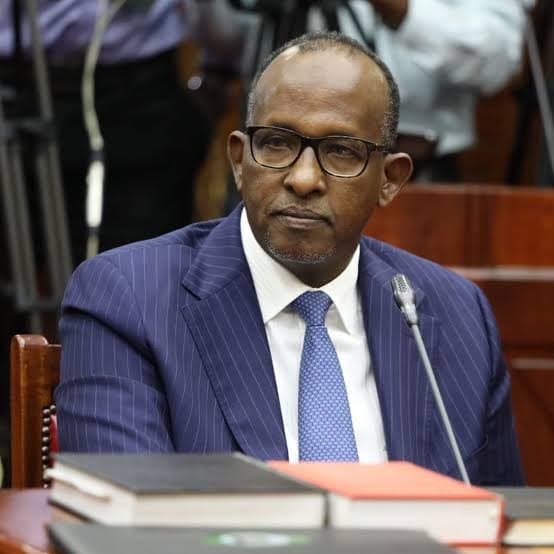
Health Cabinet Secretary Aden Duale has termed the new Sh208 billion ($1.6 billion) partnership between Kenya and the United States a "liberation moment" for the country’s healthcare, marking a decisive shift from donor dependency to direct government financing. Speaking from Washington D.C. shortly after the deal was signed, Duale assured Kenyans that the agreement respects national sovereignty and strictly protects patient privacy.
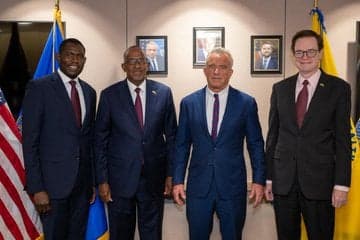
The five-year Health Cooperation Framework, witnessed by President William Ruto and signed by Prime Cabinet Secretary Musalia Mudavadi and U.S. Secretary of State Marco Rubio, is the first of its kind in Africa. It fundamentally rewrites the rules of foreign aid: instead of channeling funds through American NGOs and contractors, the U.S. will now send money directly to Kenyan institutions like the Kenya Medical Supplies Authority (KEMSA) and the Social Health Authority (SHA).
"For decades, we have been spectators in our own health sector, watching billions flow to intermediaries while our hospitals lacked medicine," Duale noted. "This framework changes that. It is a vote of confidence in our systems, but it comes with the heavy burden of accountability."
The deal aligns with the Trump administration's "America First Global Health Strategy," which seeks to cut administrative waste by eliminating third-party implementers. For the average Kenyan, this could mean more reliable drug supplies and better-equipped hospitals, as funds previously consumed by overhead costs in Washington or Nairobi offices are redirected to frontline services.
Under the agreement, the U.S. commits to providing approximately Sh208 billion over five years to combat HIV/AIDS, malaria, and tuberculosis, and to strengthen maternal health. However, the flow of funds is conditional. The Kenyan government must meet strict transparency benchmarks and progressively increase its own domestic health financing by Sh110 billion ($850 million) over the same period.
While the financial windfall is welcome, the deal has sparked immediate anxiety regarding data sovereignty. Critics and whistleblowers, including Nelson Amenya, have raised alarms that the agreement could grant U.S. agencies unrestricted access to the sensitive medical data of millions of Kenyans as a condition for funding.
Duale moved swiftly to dismiss these fears, emphasizing that the partnership is governed strictly by Kenya’s Data Protection Act and the Digital Health Act. He insisted that no individual patient records would be shared with Washington.
"Your health data is a national strategic asset. Your privacy is our responsibility," Duale emphasized. "Any data exchanged will be de-identified and aggregated for epidemiological purposes only—to track disease trends, not to spy on citizens. We are partners, not subordinates."
Analysts warn that while the deal offers immense opportunity, it exposes the government to significant risk. By removing the NGO buffer, the Ruto administration is now directly responsible for every shilling. Any scandal at KEMSA or the Ministry of Health could trigger an immediate freeze in funding, potentially paralyzing the sector.
"The training wheels are off," warned health economist Dr. Sheila Mburugu. "If we mismanage these funds as we have seen in the past, there is no donor agency to blame. The buck stops at Afya House."
As the delegation returns to Nairobi, the focus shifts from the boardroom handshakes to the grim reality of implementation. For the sick mother in Turkana or the HIV patient in Kisumu, the source of the money matters less than the medicine on the shelf. The government has won the funds; now it must win the trust.
Keep the conversation in one place—threads here stay linked to the story and in the forums.
Sign in to start a discussion
Start a conversation about this story and keep it linked here.
Other hot threads
E-sports and Gaming Community in Kenya
Active 9 months ago
The Role of Technology in Modern Agriculture (AgriTech)
Active 9 months ago
Popular Recreational Activities Across Counties
Active 9 months ago
Investing in Youth Sports Development Programs
Active 9 months ago
Key figures and persons of interest featured in this article