We're loading the full news article for you. This includes the article content, images, author information, and related articles.
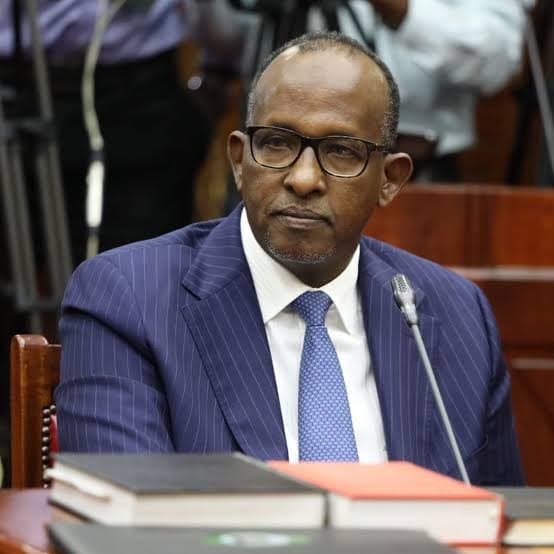
Health Cabinet Secretary Aden Duale has launched a blistering public attack on St. Mary's Lwak Girls High School in Siaya County following damning allegations that the administration barred a Grade 10 student from wearing a hijab.

Health Cabinet Secretary Aden Duale has launched a blistering public attack on St. Mary's Lwak Girls High School in Siaya County following damning allegations that the administration barred a Grade 10 student from wearing a hijab.
Terming the school's actions as blatantly discriminatory, backward, and entirely unconstitutional, Duale invoked the supreme law of the land to defend the young learner. The incident has violently reignited a deeply polarising national debate over the intersection of institutional dress codes and the fundamental right to religious expression in Kenya's public education sector.
The controversy erupted after the student's father revealed that the school administration reneged on prior assurances made during the admission process. Barely a month into the academic term, the Muslim student was prohibited from donning her religious attire, ultimately forcing her frustrated parents to withdraw her from the institution entirely. The administration's silence in the face of parental inquiries only poured fuel on the escalating crisis.
CS Duale, a long-standing and unapologetic advocate for Muslim rights, cited Articles 32 and 37 of the Kenyan Constitution, which fiercely protect the freedom of worship, belief, and the outward expression of those beliefs. He argued that Kenya is a proudly multi-denominational republic, and public or state-sponsored institutions possess no legal mandate to enforce homogenous, secular dress codes that marginalise minority faiths.
The issue swiftly escalated from a local school dispute to a matter of national parliamentary oversight. The National Assembly's Public Accounts Committee (PAC), led by Vice Chairperson Amina Udgoon Siyad, dragged the Ministry of Education into the fray. The committee aggressively interrogated Basic Education Principal Secretary Prof. Julius Bitok, demanding the immediate and unconditional reinstatement of the girl to continue her studies unhindered.
This clash is merely the latest skirmish in a protracted legal and cultural war. The confrontation inevitably resurrects the ghosts of the landmark 2019 Supreme Court ruling. In that highly contentious judgment, the apex court overturned a Court of Appeal decision that had previously allowed Muslim students to wear hijabs in non-Muslim-sponsored schools, ruling instead that individual schools retained the right to determine their specific uniform policies.
However, proponents of religious freedom argue that the broad application of anti-discrimination laws must supersede exclusionary institutional by-laws. Lawmakers in the PAC echoed this sentiment, firmly asserting that no child in Kenya should be denied access to basic education under the guise of uniform compliance. The push for radical inclusivity remains a critical flashpoint in the pursuit of educational equity.
"A Mkorino can wear their thing and go to school. A Singh can wear his turban and go to school. A Muslim girl can wear a hijab and go to school," Duale stated emphatically, drawing a firm line in the sand regarding religious accommodation.
Keep the conversation in one place—threads here stay linked to the story and in the forums.
Sign in to start a discussion
Start a conversation about this story and keep it linked here.
Other hot threads
E-sports and Gaming Community in Kenya
Active 9 months ago
The Role of Technology in Modern Agriculture (AgriTech)
Active 9 months ago
Popular Recreational Activities Across Counties
Active 9 months ago
Investing in Youth Sports Development Programs
Active 9 months ago
Key figures and persons of interest featured in this article