We're loading the full news article for you. This includes the article content, images, author information, and related articles.
A damning Parliamentary Budget Office report reveals Kenya’s water sector is technically insolvent, weighed down by KES 25 billion in debts and losses. For the average citizen, this signals a looming public health disaster.
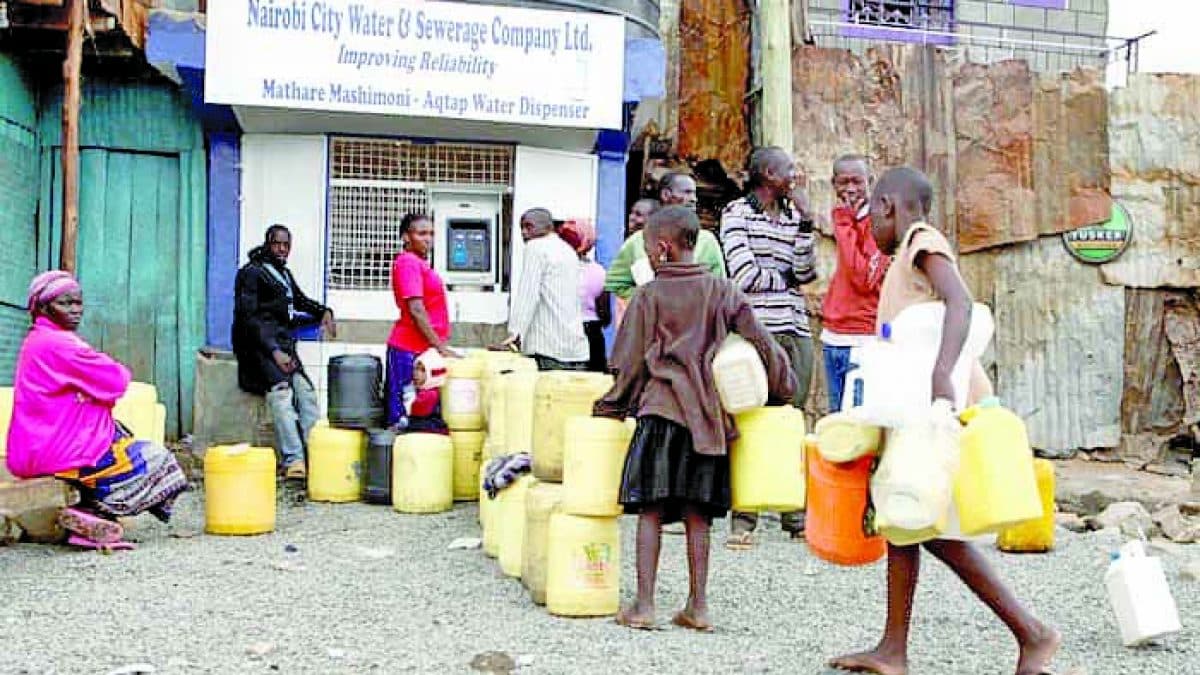
The taps are running dry across Kenya, but this time, the scarcity isn't due to failed rains—it is a drought of governance. A chilling new report by the Parliamentary Budget Office (PBO) has revealed that 70 out of 87 public water service providers are technically insolvent, teetering on the edge of total collapse. For millions of Kenyans, from the high-rises of Kilimani to the settlements of Kondele, the threat is no longer just rationing; it is the complete disintegration of safe water delivery.
The crisis, laid bare in documents released this week, paints a picture of a sector drowning in red ink. With combined debts and losses exceeding KES 25 billion, the very institutions mandated to sustain life are now on life support. The question is no longer if the bubble will burst, but when—and who will pay the price.
The numbers are staggering. The PBO report indicates that KES 20.3 billion is tied up in unserviced debt, leaving the vast majority of water companies unable to meet basic operational costs. These firms cannot pay electricity bills, service equipment, or remit statutory deductions like NSSF and PAYE for their staff.
Nairobi City Water and Sewerage Company (NCWSC) leads this grim league table with a debt burden of KES 5.3 billion. It is followed closely by:
"This is not just an accounting error; it is systemic failure," notes a senior analyst at the Institute of Economic Affairs. "When a utility company cannot pay its own bills, it inevitably cuts corners on water treatment and infrastructure maintenance. The end result is dirty water or no water at all."
Perhaps the most infuriating statistic for the tax-paying Kenyan is the level of Non-Revenue Water (NRW)—water that is treated and pumped but is lost to leaks, theft, or billing errors before it generates a cent. The report highlights that NRW has hit a national average of 46 percent, nearly double the regulatory benchmark of 25 percent set by the Water Services Regulatory Board (WASREB).
In the financial year ending June 2024 alone, the sector lost KES 5.1 billion in unbilled water. This is money literally washing away into the ground or lining the pockets of cartels operating illegal connections. In Nairobi, where rationing is a weekly reality, nearly half of the water produced never reaches a paying meter.
The PBO attributes this hemorrhage to "governance lapses, fiscal indiscipline, and operational inefficiencies." In simpler terms: mismanagement and corruption. While county governments were meant to streamline these services under devolution, many have turned water companies into employment bureaus, bloating wage bills while infrastructure rots.
The financial rot has visceral consequences. When water firms are broke, they cannot expand their networks to the informal settlements where cholera and typhoid are constant threats. They cannot afford the chemicals needed for rigorous water treatment. The reliance on broke firms to provide a basic human right is, as the Daily Nation editorial board warned yesterday, "a public health risk."
For the Kenyan mwananchi, the impact is twofold: higher tariffs to cover these inefficiencies and the continued cost of buying expensive water from private bowsers. The promise of the 2010 Constitution—which declared water a basic human right—is being eroded by balance sheets that don't balance.
Unless the national and county governments intervene with radical surgery—firing incompetent boards, digitizing billing to stop theft, and ring-fencing water revenues—the taps will run dry for good. As the debt crisis deepens, the message to the governors is clear: You cannot drink excuses.
Keep the conversation in one place—threads here stay linked to the story and in the forums.
Sign in to start a discussion
Start a conversation about this story and keep it linked here.
Other hot threads
E-sports and Gaming Community in Kenya
Active 9 months ago
The Role of Technology in Modern Agriculture (AgriTech)
Active 9 months ago
Popular Recreational Activities Across Counties
Active 9 months ago
Investing in Youth Sports Development Programs
Active 9 months ago