We're loading the full news article for you. This includes the article content, images, author information, and related articles.
Government reforms and tax incentives promise a seismic shift, making brand-new, zero-mileage vehicles cheaper than eight-year-old secondhand imports.
The era of dumping aging vehicles on Kenyan roads may be nearing its end. In a seismic policy shift, the government has announced that brand-new, locally assembled cars will soon cost the same as—or even less than—eight-year-old secondhand imports, effectively rewriting the rules of ownership for the Kenyan motorist.
For decades, the dream of driving a "tear rubber" vehicle has been an elusive fantasy for the average Kenyan, reserved only for the corporate elite and government bureaucracy. However, the narrative is shifting dramatically following a bold declaration by the Ministry of Trade. Cabinet Secretary Lee Kinyanjui has asserted that through aggressive policy reforms and tax incentives, the price of zero-mileage vehicles is crashing down to match the inflated costs of used imports that currently dominate the market.
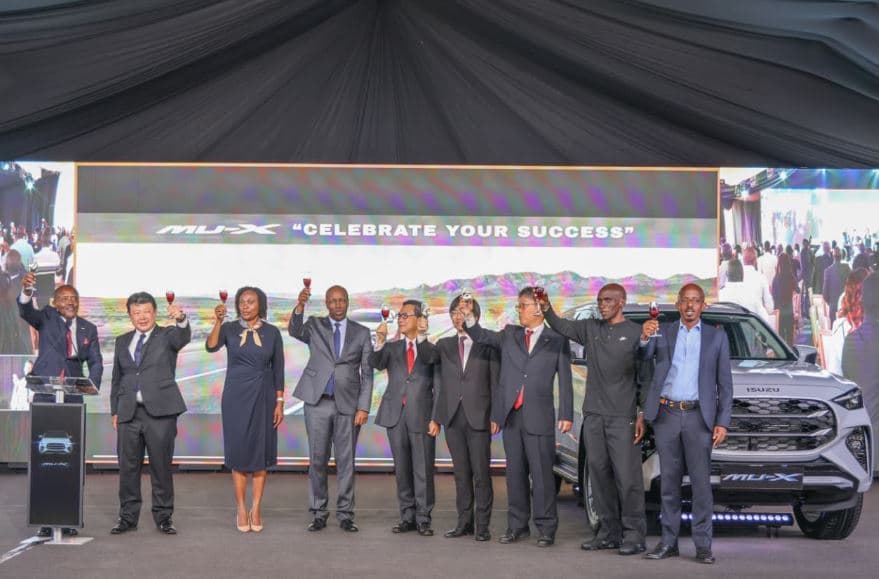
The proof of this ambitious pudding lies in the Isuzu MU-X. This locally assembled SUV has become the poster child for the government's "Buy Kenya, Build Kenya" automotive strategy. Following the implementation of the National Automotive Policy, the price of this high-end vehicle has plummeted by a staggering 27 percent. What was once a prohibitive Sh13.5 million price tag has been slashed to Sh9.9 million. While still a premium figure, the trajectory is unmistakable: local assembly is stripping away the punitive taxes that make cars expensive.
CS Kinyanjui emphasizes that this is not a fluke but a structural change. "For the first time, Kenyans can access a brand-new, zero-mileage vehicle at a price they have traditionally paid for a used import," he stated. The strategy hinges on removing the heavy excise duties levied on fully built imports and replacing them with incentives for assemblers who source parts locally. This move aims to dismantle the long-held belief that "new" means "unaffordable."
The government is not just relying on tax cuts; it is engineering the financial ecosystem to support this transition. A key component of this strategy is the introduction of the "Samurai Bond," a financial instrument designed to fund the local manufacturing of vehicle components. By producing parts like glass, batteries, and suspension systems within Kenya's borders, manufacturers can lower production costs even further.
This shift is also a geopolitical victory for Nairobi. Isuzu East Africa has positioned Kenya as the only country outside Thailand to manufacture the MU-X model, signaling confidence in the local workforce and technical capacity. This isn't just about cheaper cars; it's about industrialization, job creation, and reducing the massive forex drain caused by importing thousands of used vehicles annually from Japan and Europe.
As the "Samurai Bond" gains traction and more manufacturers set up shop in Nairobi and Thika, the days of the "mitumba" car market may be numbered. The message from the ministry is clear: why buy someone else's eight-year-old problem when you can drive a showroom-fresh machine for the same price?
Keep the conversation in one place—threads here stay linked to the story and in the forums.
Sign in to start a discussion
Start a conversation about this story and keep it linked here.
Other hot threads
E-sports and Gaming Community in Kenya
Active 10 months ago
Popular Recreational Activities Across Counties
Active 10 months ago
The Role of Technology in Modern Agriculture (AgriTech)
Active 10 months ago
Investing in Youth Sports Development Programs
Active 10 months ago
Key figures and persons of interest featured in this article