We're loading the full news article for you. This includes the article content, images, author information, and related articles.
Rescue operations are underway in Nairobi’s busy commercial hub as emergency teams race against time to locate survivors trapped beneath the rubble of a crumbled structure.
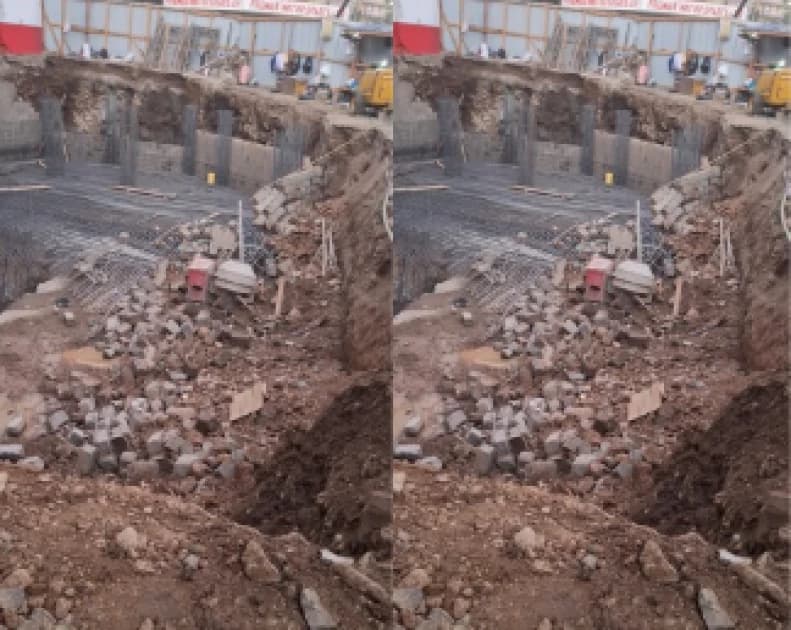
Panic has gripped the heart of Nairobi’s downtown district after a multi-storey residential building collapsed near the OTC stage, trapping an unknown number of occupants beneath a mountain of twisted metal and concrete.
This latest structural failure on the notoriously congested Kirinyaga Road is not merely an accident; it is a damning indictment of the city’s regulatory paralysis. As emergency sirens wail through the morning traffic, the collapse serves as a grim reminder that for many Nairobians, the very roofs over their heads are ticking time bombs, built on a foundation of negligence and corruption.
The structure, located in one of the city’s busiest commercial hubs, came down in the early hours of Wednesday, sending a plume of dust choking through the narrow streets. The Kenya Red Cross was the first to respond, deploying advanced search and rescue teams to the site. "Response teams are currently navigating the debris," a Red Cross spokesperson confirmed on site. "Our priority is to locate survivors in voids within the rubble before the window of opportunity closes."
Witnesses describe a scene of absolute bedlam. "It sounded like a bomb," said James Kamau, a matatu driver stationed at the nearby OTC terminus. "One minute the building was there, the next it was just a cloud of dust. We heard people screaming from the inside." The collapse has paralyzed transport along the busy artery, with police cordoning off the area to prevent looting and manage the surging crowds of onlookers.
This incident is unfortunately part of a sickeningly familiar pattern in Nairobi’s "River Road" belt, where rapid urbanization often outpaces safety enforcement. Investigative reports indicate that developers in the area frequently bypass city zoning laws, adding unauthorized floors to foundations meant for single-storey structures. The National Construction Authority (NCA) has previously flagged hundreds of buildings in the precinct as unsafe, yet enforcement remains sporadic at best.
Urban planning experts argue that the OTC collapse is symptomatic of a deeper rot. "We are seeing the results of impunity," says urban planner Dr. Sheila Mwakio. "When you have a system where inspection reports can be made to disappear, you are essentially licensing death traps." As the excavators dig, the question on every observer's lips is not just how this happened, but who allowed it to happen.
As night falls over the city, floodlights are being set up to allow the rescue operation to continue into the darkness. For the families waiting behind the police tape, every passing hour agonizes the soul. Nairobi is a city that never stops building, but today, it pauses to mourn the cost of its unbridled ambition.
Keep the conversation in one place—threads here stay linked to the story and in the forums.
Other hot threads
E-sports and Gaming Community in Kenya
Active 8 months ago
The Role of Technology in Modern Agriculture (AgriTech)
Active 8 months ago
Popular Recreational Activities Across Counties
Active 8 months ago
Investing in Youth Sports Development Programs
Active 8 months ago