We're loading the full news article for you. This includes the article content, images, author information, and related articles.
Democrats are projected to win a special election for a Florida legislative district that includes Donald Trump's Mar-a-Lago home in Palm Beach.
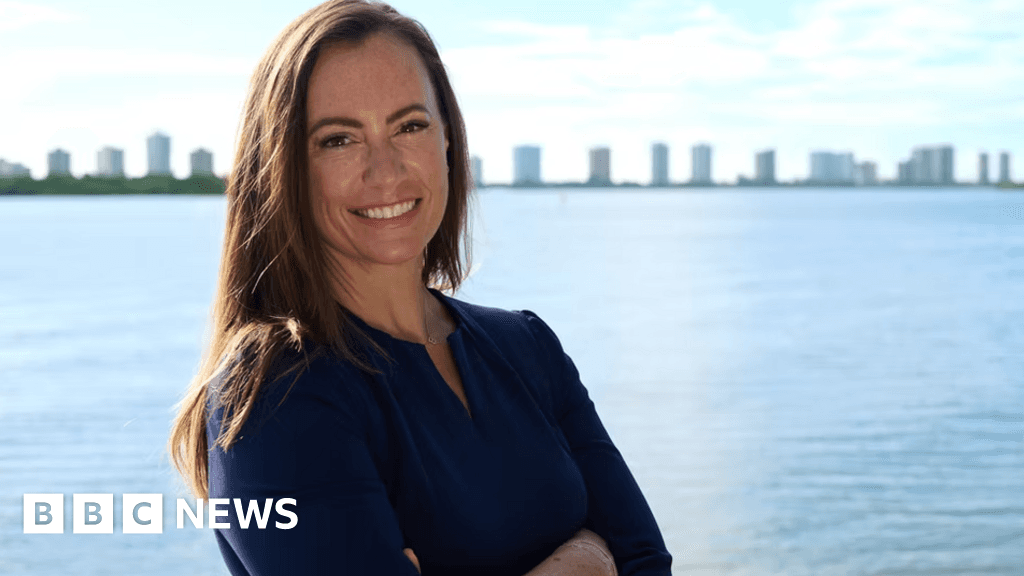
The gilded gates of Mar-a-Lago, arguably the most iconic symbol of the modern Republican movement, now sit within a district that has defied the political gravity of the last two years. In a special election that has sent shockwaves through the American political establishment, voters in Florida's District 87 have elected Democrat Emily Gregory to the state House of Representatives. This result, which saw a first-time candidate topple a Trump-endorsed opponent, represents a jarring 19-percentage-point swing from the 2024 general election cycle.
This outcome is not merely a statistical anomaly in a local legislative race it acts as a high-fidelity barometer for the American electorate’s mood heading into the midterm elections later this year. For political analysts and global observers, the result suggests that even in deep-red enclaves, the saturation of presidential-level campaigning cannot insulate local candidates from the shifting tides of voter dissatisfaction. At stake is the future of state-level policy in Florida, a state that serves as a critical battleground for education, insurance, and environmental regulation in the United States.
The campaign trajectory of Emily Gregory serves as a case study in modern retail politics. Facing Jon Maples, a Republican candidate who leveraged the direct endorsement of President Donald Trump, Gregory eschewed the temptation to nationalize every aspect of her platform. Instead, she anchored her campaign in the tangible, granular concerns of the district: rising property insurance premiums, local zoning regulations, and the quality of public school infrastructure.
Data analysis from the local election office indicates a critical shift in turnout demographics compared to the 2024 general election. While Republicans maintained their traditional voter registration advantage in the county, they failed to convert that structural edge into actual ballot casting. Conversely, independent voters—a block often characterized by their volatility—broke decisively toward the Democratic ticket in the final weeks of the campaign.
The Republican defeat, particularly in an area where the former president exerts significant cultural and political influence, highlights the limits of top-down endorsements. Political strategists note that when local economic anxieties intersect with voter fatigue, even the most formidable political brands can struggle to mobilize the base effectively.
For readers in Nairobi and beyond, the mechanics of this Florida upset offer a lesson in the universality of political accountability. The decline in the influence of national endorsements over hyper-local legislative outcomes mirrors trends observed in democratic transitions across sub-Saharan Africa. Citizens increasingly prioritize local service delivery—roads, healthcare, and economic stability—over the ideological purity of national-level political figures.
Furthermore, the volatility of the American political landscape carries direct consequences for global markets. The US remains a primary arbiter of international trade policy, development aid, and climate finance. When internal political stability in the United States fractures, as evidenced by this district-level revolt, global partners are forced to recalibrate their diplomatic strategies. The uncertainty of the 2026 American midterms injects a layer of caution into international trade negotiations, as foreign investors and governments alike grapple with the potential for sudden shifts in American foreign policy.
The newly elected Gregory now faces the arduous task of governing in a chamber where her party remains in the minority. Her victory provides momentum, yet it does not confer legislative power. The Florida House of Representatives continues to be dominated by Republicans who have consolidated control over the state's legislative agenda for over a decade. Gregory will be forced to operate within a rigid ideological framework, requiring her to navigate a landscape where bipartisan consensus is increasingly rare.
Analysts at the University of Florida suggest that her tenure will be defined by her ability to bridge the gap between her campaign promises—largely focused on cost-of-living relief—and the hardline fiscal policies championed by the legislative leadership. If she manages to deliver tangible policy wins for her district, she could become a template for Democratic candidates running in competitive areas nationwide. If she falters, she risks becoming a temporary footnote in a state dominated by entrenched partisan interests.
The Republican leadership has already moved to frame the loss as a local aberration, attributing the outcome to low turnout and specific candidate flaws rather than a broader systemic issue. However, the optics of losing a seat that includes the residence of the sitting president cannot be minimized. As the Democratic National Committee looks toward the November midterms, this Florida victory serves as a morale-boosting proof of concept. The party now possesses a verified strategy: focus on the localized pocketbook issues that define the daily lives of voters, rather than the abstract culture wars that dominate national television debates.
The victory of Emily Gregory in Florida District 87 serves as a stark reminder that in any functioning democracy, political power is neither permanent nor guaranteed. As ballots continue to be counted in other jurisdictions across the United States, observers will be watching to see if this Florida tremor escalates into a nationwide political earthquake. For the voters of Palm Beach, the work of accountability has only just begun.
Keep the conversation in one place—threads here stay linked to the story and in the forums.
Sign in to start a discussion
Start a conversation about this story and keep it linked here.
Other hot threads
E-sports and Gaming Community in Kenya
Active 10 months ago
The Role of Technology in Modern Agriculture (AgriTech)
Active 10 months ago
Popular Recreational Activities Across Counties
Active 10 months ago
Investing in Youth Sports Development Programs
Active 10 months ago



