We're loading the full news article for you. This includes the article content, images, author information, and related articles.
A Mombasa judge rules the government failed to protect Kwale International Sugar Company from squatters and arbitrarily carved out land for mining, leaving taxpayers to foot a massive bill.
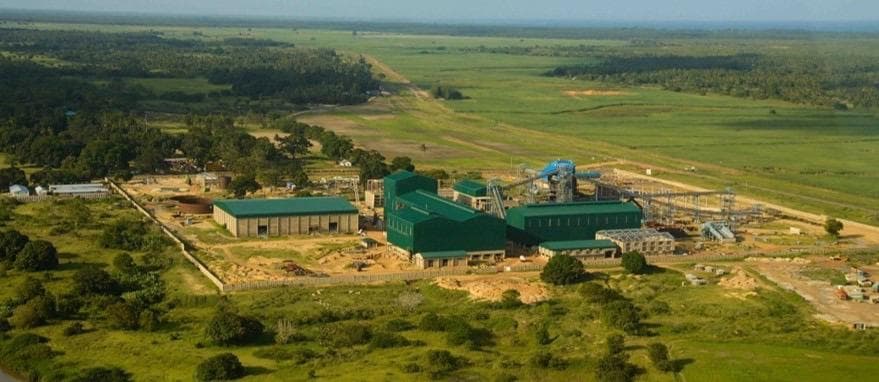
A Mombasa High Court judge has ordered the state to pay a staggering Sh24 billion to a Kwale sugar investor, penalizing the government for a chaotic mix of broken land promises and administrative negligence that crippled a major agricultural project.
The ruling serves as a costly indictment of the state’s inability to guarantee land tenure for foreign direct investment, sending a chilling warning to bureaucrats while burdening the Kenyan taxpayer with yet another multi-billion shilling debt arising from avoidable legal blunders.
Justice Florence Wangari delivered the verdict in favor of Kwale International Sugar Company Limited (KISCOL), a consortium linking Mauritian agribusiness giant Omnicane Limited with Kenya’s Pabari Group. The dispute traces back to 2007, when the investors committed $300 million (approx. KES 38.7 billion) to transform 15,000 acres of Kwale County into a modern irrigated sugar estate and milling complex.
However, court filings reveal that the government’s assurance of "vacant possession" was little more than a paper promise. Upon arrival, the investors found significant swathes of the land occupied by local residents asserting ancestral rights. Despite KISCOL successfully defending its lease in previous litigation, the state failed to enforce evictions, leaving the investor in a stalemate with the community.
Justice Wangari emphasized that the government violated the bedrock condition of the investment. She noted:
Compounding the breach, the court found that the government arbitrarily carved out approximately 1,000 hectares (2,470 acres) of the leased land and handed it to Base Titanium for mineral extraction. This excision was done without consulting KISCOL, providing compensation, or offering alternative land.
The administrative chaos forced KISCOL to operate on nearly half its intended land capacity, leading to mounting losses and ballooning interest rates on loans taken to fund the initial infrastructure. The government’s counterclaim, which sought to terminate the lease and argued the suit was time-barred, was rejected by the court.
With interest and legal costs yet to be fully tabulated, the final bill to the Exchequer is set to climb even higher than the headline figure, turning a failed agricultural dream into a fiscal nightmare for the public purse.
Keep the conversation in one place—threads here stay linked to the story and in the forums.
Sign in to start a discussion
Start a conversation about this story and keep it linked here.
Other hot threads
E-sports and Gaming Community in Kenya
Active 9 months ago
The Role of Technology in Modern Agriculture (AgriTech)
Active 9 months ago
Popular Recreational Activities Across Counties
Active 9 months ago
Investing in Youth Sports Development Programs
Active 9 months ago