We're loading the full news article for you. This includes the article content, images, author information, and related articles.
A landmark ruling by the Employment and Labour Relations Court sets a precedent on public sector accountability, ordering the Nairobi County Assembly to compensate a candidate for failing to communicate the outcome of his vetting for a senior role.
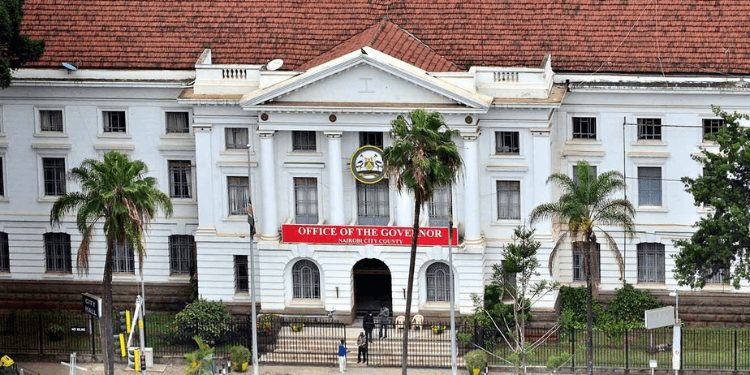
The Nairobi County Assembly and its Speaker have been ordered to jointly pay Ksh7 million in damages to a job applicant after failing to communicate the outcome of his vetting for a senior county position, in a significant ruling delivered on Wednesday, November 5, 2025. The Employment and Labour Relations Court found that the Assembly's inaction violated the constitutional rights of the applicant, Mr. Halkano Dida Waqo, setting a critical precedent for transparency and administrative justice in Kenya's public recruitment processes.
The case, presided over by Justice Byram Ongaya, centered on the Assembly's failure to conclude the vetting process for Mr. Waqo, who had been nominated for the position of County Chief Officer for Housing and Urban Renewal on April 15, 2024. Following his nomination by the County Governor, Mr. Waqo underwent a vetting exercise by the Lands, Planning, and Housing Committee of the County Assembly on May 6, 2024. However, the committee never tabled its report for debate by the full assembly, leaving Mr. Waqo in limbo for months without any formal communication.
In his petition (E117 of 2025), Mr. Waqo argued that the prolonged silence from the County Assembly caused him significant emotional distress, reputational damage, and financial loss, as he had forgone other professional opportunities in anticipation of the appointment. His legal team contended that the Assembly's failure to provide feedback was a breach of his rights under Article 35 (the right to access information) and Article 47 (the right to fair administrative action) of the Constitution of Kenya.
The court heard that while six other nominees vetted alongside Mr. Waqo were approved, his nomination was inexplicably stalled. The Assembly's committee failed to table its report within the 21 sitting days stipulated by the Public Appointments (County Assemblies Approval) Act, 2017, effectively aborting the process without reason or notice.
Justice Ongaya, in his judgment, ruled that the County Assembly and its Speaker had unlawfully and procedurally failed in their statutory duties. The court affirmed that their failure to prepare, table, and communicate the outcome of the vetting report was a direct infringement on Mr. Waqo's constitutional rights. “The 3rd and 4th respondents violated the petitioner's rights under Articles 35 and 47 of the Constitution when they failed to prepare, table, and communicate the outcome of the vetting report,” the judge stated.
The court, however, clarified that Mr. Waqo did not have a legitimate expectation of automatic employment, as the vetting process does not guarantee an appointment. Nonetheless, the failure to complete the process and inform the candidate was deemed a severe administrative injustice deserving of compensation. The Ksh7 million award was granted as general damages for the constitutional violations and the emotional suffering endured by the petitioner. The court directed that the amount be paid by January 2026, failing which it will attract interest.
Notably, the Nairobi County Governor and the County Government were cleared of direct liability, as their constitutional and statutory roles concluded with the nomination. The responsibility for the flawed process was placed squarely on the County Assembly and its Speaker.
This ruling is a significant development in Kenyan labour and administrative law. It establishes a clear legal expectation for all public bodies, including county and national government entities, to maintain transparent and communicative recruitment and vetting processes. The judgment serves as a stern warning against the common practice of “ghosting” job applicants, particularly in the public sector, affirming that candidates have a right to timely and conclusive feedback.
Legal experts suggest this case will empower more job seekers to challenge administrative negligence in public appointments. It reinforces the principles of good governance, accountability, and transparency that are enshrined in Article 10 of the Constitution and are fundamental to fair labour practices. The decision underscores that while appointment is not guaranteed, a fair and complete process is a constitutional right for every applicant.
Keep the conversation in one place—threads here stay linked to the story and in the forums.
Sign in to start a discussion
Start a conversation about this story and keep it linked here.
Other hot threads
E-sports and Gaming Community in Kenya
Active 9 months ago
The Role of Technology in Modern Agriculture (AgriTech)
Active 9 months ago
Popular Recreational Activities Across Counties
Active 9 months ago
Investing in Youth Sports Development Programs
Active 9 months ago



