We're loading the full news article for you. This includes the article content, images, author information, and related articles.
The High Court suspends the KSh 7 billion Outer Ring Road BRT tender after a firm challenges "discriminatory" clauses restricting bids to South Korean companies, delaying relief for commuters.
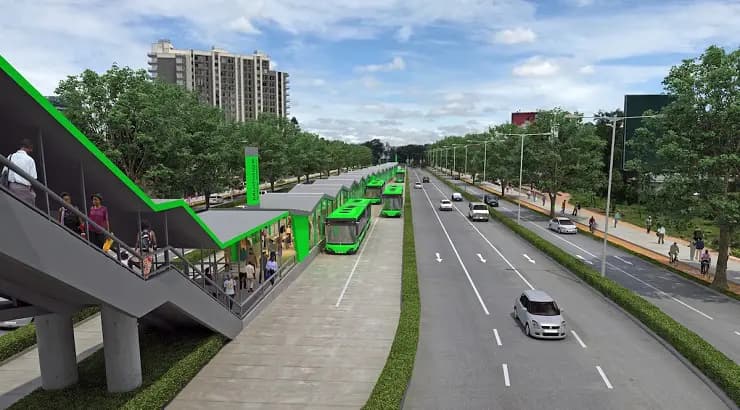
The long-awaited transformation of Nairobi’s chaotic Outer Ring Road has hit a massive legal speed bump. The High Court has slammed the brakes on the KSh 7 billion Bus Rapid Transit (BRT) Line 5 tender following a petition by a disgruntled construction firm alleging blatant discrimination in favor of Korean contractors.
CK Solutions Limited, trading as Beyond Trading, filed the urgent suit to stop the Kenya Urban Roads Authority (KURA) from awarding the lucrative contract. The firm argues that the tender process was rigged from the start to lock out local and non-Korean international players, citing a restrictive clause tied to the financing deal with the Korea Exim Bank.
At the heart of the dispute is a condition that restricts bidding exclusively to South Korean firms. KURA defends this as a standard conditionalty of the donor funding—essentially, "their money, their rules." However, CK Solutions contends this violates the Constitution of Kenya, which guarantees fair competition, transparency, and affirmative action for local enterprises.
"We cannot sell our sovereignty for a loan," the petitioner’s lawyer argued in court. "Kenyan roads should be built by whoever offers the best value, not whoever holds the loan book." The tender, aimed at establishing a dedicated bus line from the Taj Mall junction to Allsops, is seen as a critical fix for the gridlock that plagues the Eastlands corridor.
This lawsuit is the latest in a series of setbacks for Nairobi’s BRT ambition. Line 2 on Thika Road is still a work in progress, years after the red lines were painted on the tarmac. The litigation culture in public procurement has become a double-edged sword: while it checks corruption, it also paralyzes development. Billions of shillings in infrastructure projects are currently gathering dust in court registries.
Justice Chacha Mwita has certified the matter as urgent, scheduling a mention for January 27, 2026. Until then, KURA’s hands are tied. The Koreans are watching, the contractors are fighting, and the people of Donholm and Pipeline are still stuck in traffic.
The case sets a significant precedent for future government-to-government (G2G) deals. If the court rules that donor conditions cannot override local procurement laws, it could force a renegotiation of billions of dollars in foreign aid. It is a sovereignty battle masked as a tender dispute, and the outcome will ripple far beyond Outer Ring Road.
Keep the conversation in one place—threads here stay linked to the story and in the forums.
Sign in to start a discussion
Start a conversation about this story and keep it linked here.
Other hot threads
E-sports and Gaming Community in Kenya
Active 9 months ago
The Role of Technology in Modern Agriculture (AgriTech)
Active 9 months ago
Popular Recreational Activities Across Counties
Active 9 months ago
Investing in Youth Sports Development Programs
Active 9 months ago



