We're loading the full news article for you. This includes the article content, images, author information, and related articles.
Hubble reveals NGC 7722, a rare lenticular galaxy 187 million light-years away, showcasing the dusty aftermath of a galactic merger.
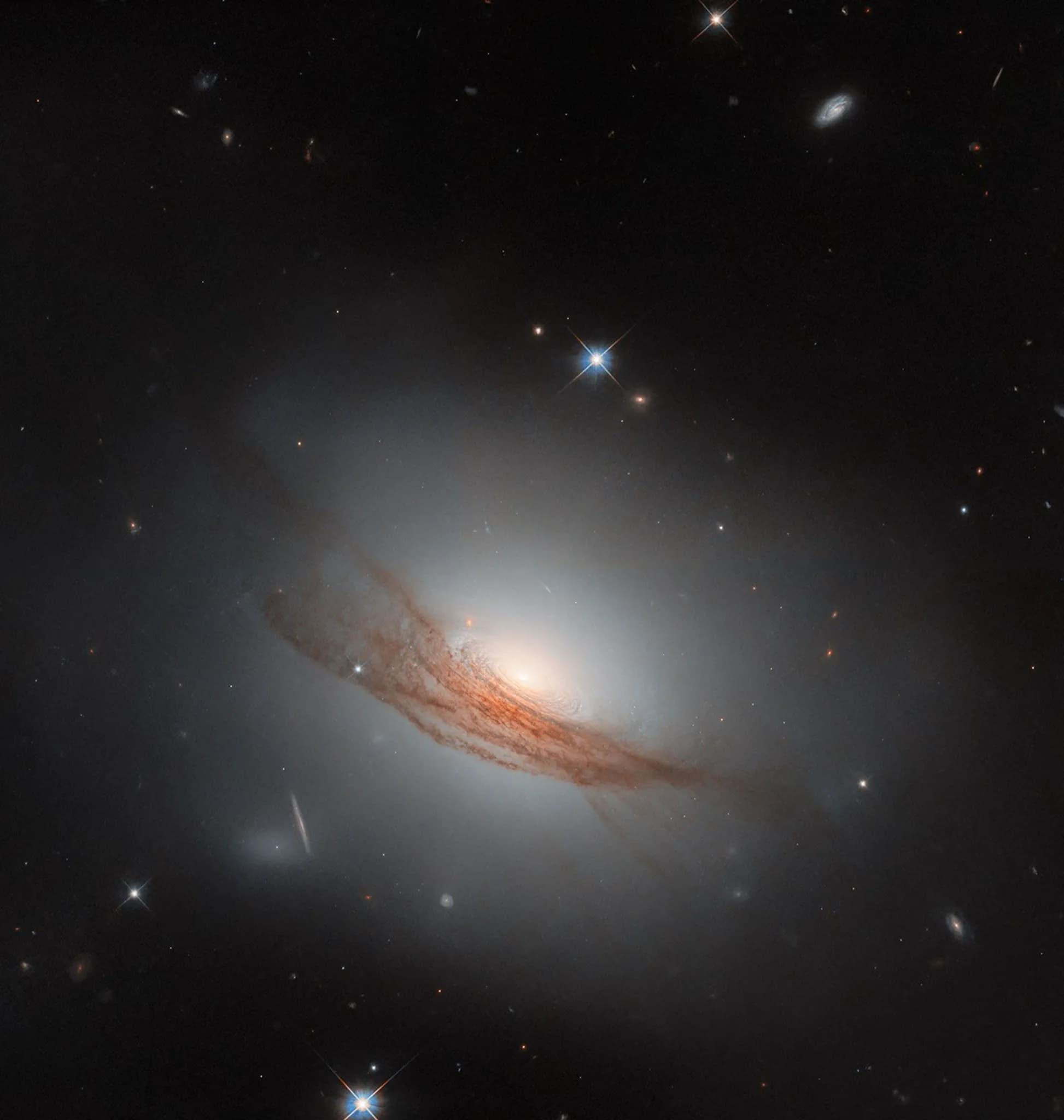
The veteran space telescope has beamed back a mesmerizing image of NGC 7722, a galaxy that defies simple classification and bridges the gap between cosmic families.
The Hubble Space Telescope has captured a stunning portrait of NGC 7722, a cosmic hybrid defying standard classification. This "lens-shaped" galaxy offers astronomers a rare glimpse into the evolutionary missing link between spiral and elliptical galaxies, frozen in a dust-choked transition. Located approximately 187 million light-years away in the constellation Pegasus, NGC 7722 is a silent witness to the violent history of the universe.
NGC 7722 is classified as a lenticular galaxy. To the untrained eye, it might look like a smudged spiral, but to astronomers, it is a "transitional link." It sits on the evolutionary fence, possessing the central bulge of an elliptical galaxy and the disk of a spiral galaxy, yet lacking the defined arms of the latter. This ambiguity makes lenticular galaxies relatively rare and scientifically precious. They are the middle children of the cosmos—often overlooked but holding the secrets to how galaxies age and die.
The image, released by the ESA/Hubble team, is the sharpest ever taken of this object. It reveals a bright, glowing core surrounded by a halo of light, but the most striking feature is the dramatic bands of dark dust that wrap around its nucleus. These dust lanes are not just decoration; they are the forensic evidence of a past catastrophe. Astronomers believe they are the debris from a merger with another galaxy millions of years ago, a gravitational car crash that stripped the gas and reshaped the structure of NGC 7722.
"NGC 7722 is, so to speak, an archaeological artifact that preserves the history of an ancient cosmic catastrophe," noted a statement from the scientific team. The galaxy acts as a laboratory for studying galactic dynamics. The way the dust has settled into concentric rings tells a story of gravity smoothing out the chaos of a collision over eons.
As humanity prepares to look deeper with the James Webb Space Telescope, Hubble continues to provide the essential context of our local universe. Images like this remind us that the cosmos is not static; it is a violent, dynamic arena where galaxies collide, merge, and transform. NGC 7722 is a beautiful snapshot of that eternal process, a lens-shaped monuments to the forces that shape the night sky.
Keep the conversation in one place—threads here stay linked to the story and in the forums.
Sign in to start a discussion
Start a conversation about this story and keep it linked here.
Other hot threads
E-sports and Gaming Community in Kenya
Active 9 months ago
The Role of Technology in Modern Agriculture (AgriTech)
Active 9 months ago
Popular Recreational Activities Across Counties
Active 9 months ago
Investing in Youth Sports Development Programs
Active 9 months ago