We're loading the full news article for you. This includes the article content, images, author information, and related articles.
The sudden suspension of Dr. Iqbal Khandwalla, CEO of the Coast General Teaching and Referral Hospital, has exposed deep-seated governance concerns.
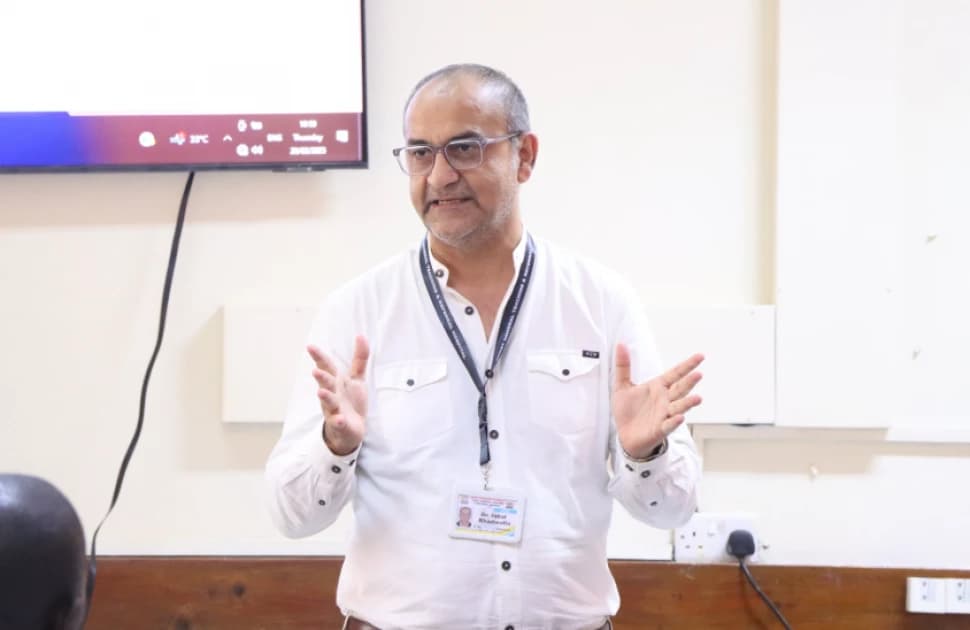
The sudden suspension of Dr. Iqbal Khandwalla, CEO of the Coast General Teaching and Referral Hospital, has exposed deep-seated governance concerns within one of Kenya's most critical healthcare facilities.
The Kenyan public healthcare system is no stranger to crisis, but the latest development at the Coast General Teaching and Referral Hospital (CGTRH) has sent shockwaves through the medical fraternity. The abrupt suspension of the hospital's Chief Executive Officer, Dr. Iqbal Khandwalla, over grave concerns regarding his office conduct and performance, has plunged the premier coastal medical facility into an unprecedented leadership vacuum.
This suspension is not a mere administrative reshuffle; it is a critical intervention at a facility that serves as the medical lifeline for millions of residents across Mombasa, Kilifi, Kwale, Lamu, and Tana River counties. Dr. Sood Mohamed has been swiftly appointed as the acting CEO to steer the ship, but the dust surrounding Dr. Khandwalla's exit refuses to settle. The incident highlights the fragile state of governance and accountability within Kenya's devolved healthcare infrastructure.
While the exact specifics of the "office conduct" probe remain closely guarded by the hospital's board of management and the county health department, highly placed sources indicate a pattern of administrative friction. Suspensions of this magnitude within a Level 5 teaching and referral hospital usually stem from a combination of financial mismanagement, severe breaches of procurement protocols, or catastrophic breakdowns in labor relations with medical staff.
The Coast General Hospital has historically struggled with operational bottlenecks, including periodic shortages of essential drugs, delayed payments to suppliers, and failing diagnostic equipment. The probe into the CEO's office is expected to scrutinize how these operational failures correlate with executive decision-making. The board's swift action suggests that the situation had reached a critical threshold where intervention was necessary to prevent a total collapse of hospital services.
A leadership crisis at a referral hospital is never contained within the walls of the executive suite; it bleeds directly into the wards and operating theaters. When a facility of CGTRH's magnitude experiences top-level instability, the immediate casualties are patient care and staff morale. Doctors, nurses, and clinical officers are forced to operate in an environment clouded by uncertainty and administrative paralysis.
Procurement processes for life-saving medical supplies often stall during such transitions, as acting executives are hesitant to authorize large expenditures pending the outcome of forensic audits. For the thousands of patients who rely on Coast General for subsidized cancer treatments, dialysis, and emergency surgeries, this administrative limbo can easily translate into a matter of life and death. The continuity of care is fundamentally compromised when the leadership mandate is in question.
The turmoil at Coast General must be viewed through the wider lens of Kenya's ongoing healthcare challenges. The transition from the National Hospital Insurance Fund (NHIF) to the Social Health Insurance Fund (SHIF) has already created massive logistical and financial strain on public hospitals. Facilities are grappling with delayed reimbursements from the state, forcing them to operate on razor-thin margins.
The appointment of Dr. Sood Mohamed as acting CEO offers a temporary reprieve, but the challenges ahead are monumental. His immediate mandate will be to restore confidence among the hospital staff, streamline disrupted supply chains, and cooperate fully with the ongoing investigations into his predecessor's conduct. The Mombasa County government, under whose jurisdiction the hospital falls, is under immense pressure to ensure a transparent resolution to the crisis.
Ultimately, the suspension of Dr. Khandwalla is a wake-up call for health administrators across Kenya. It underscores the urgent need for transparent, accountable, and patient-centric leadership in public health. The residents of the Coast region deserve a referral hospital that functions with precision and integrity, free from the shadows of administrative misconduct. The ongoing probe must serve not just as an inquiry into one man, but as a total systemic overhaul of Coast General Hospital.
Keep the conversation in one place—threads here stay linked to the story and in the forums.
Sign in to start a discussion
Start a conversation about this story and keep it linked here.
Other hot threads
E-sports and Gaming Community in Kenya
Active 9 months ago
The Role of Technology in Modern Agriculture (AgriTech)
Active 9 months ago
Popular Recreational Activities Across Counties
Active 9 months ago
Investing in Youth Sports Development Programs
Active 9 months ago