We're loading the full news article for you. This includes the article content, images, author information, and related articles.
The US export control faces fresh challenges as Chinese startup DeepSeek trains its latest model on Nvidia's Blackwell chips.

The United States' rigorous export controls face an unprecedented challenge as Chinese startup DeepSeek reportedly trained its newest artificial intelligence model using heavily restricted Nvidia Blackwell chips.
The global race for artificial intelligence supremacy has encountered a critical geopolitical flashpoint. Chinese AI powerhouse DeepSeek has managed to train its latest model, scheduled for release next week, on Nvidia's most advanced AI processor, the Blackwell. This revelation comes from a senior Trump administration official, highlighting a potential and significant breach of stringent U.S. export controls.
The strategic implications are profound. If Chinese tech firms can circumvent international embargoes to access the "crown jewels" of American semiconductor technology, the efficacy of Washington's containment strategy is fundamentally compromised. The development raises urgent questions about the porosity of global technology supply chains.
According to U.S. intelligence, DeepSeek is actively attempting to remove technical indicators that might explicitly reveal the use of American AI chips in their upcoming model. The Blackwell processors are believed to be clustered at a highly secure data centre in Inner Mongolia, an autonomous region in northern China.
While the exact method DeepSeek used to acquire the restricted hardware remains officially undisclosed, the situation underscores a massive, covert procurement network. U.S. policy explicitly prohibits the shipping of Blackwell processors to China, driven by fears from Washington hawks that such advanced computing power could rapidly supercharge China's military capabilities.
The ongoing tech blockade has paradoxically spurred accelerated innovation within China. While Dr. Saif Khan, a former National Security Council director, notes that the reliance on smuggled Blackwells exposes China's shortfall in domestic chip manufacturing, it also highlights their unyielding determination to remain competitive. The debate in Washington is now fiercely divided.
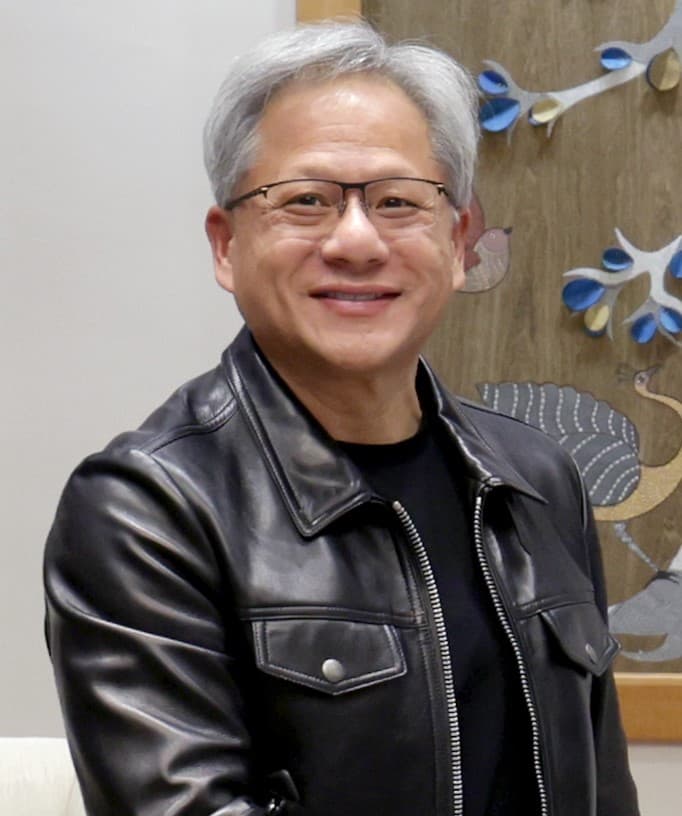
Some prominent figures, including White House AI Czar David Sacks and Nvidia CEO Jensen Huang, have previously argued that completely starving China of advanced chips only incentivises domestic competitors like Huawei to redouble their efforts to match Western technology.
As the geopolitical tug-of-war intensifies, the tech sector watches closely. The integration of cutting-edge U.S. hardware into sovereign Chinese AI models not only blurs the lines of technological ownership but threatens to render existing trade embargoes entirely obsolete. "We are witnessing the dawn of an uncontrollable technological proliferation," a leading policy analyst warned.
Keep the conversation in one place—threads here stay linked to the story and in the forums.
Sign in to start a discussion
Start a conversation about this story and keep it linked here.
Other hot threads
E-sports and Gaming Community in Kenya
Active 9 months ago
The Role of Technology in Modern Agriculture (AgriTech)
Active 9 months ago
Popular Recreational Activities Across Counties
Active 9 months ago
Investing in Youth Sports Development Programs
Active 9 months ago
Key figures and persons of interest featured in this article