We're loading the full news article for you. This includes the article content, images, author information, and related articles.
By 2026, the e-CNY will evolve from virtual cash to 'digital deposit money,' a move set to reshape global trade and offer new options for Kenyan importers.
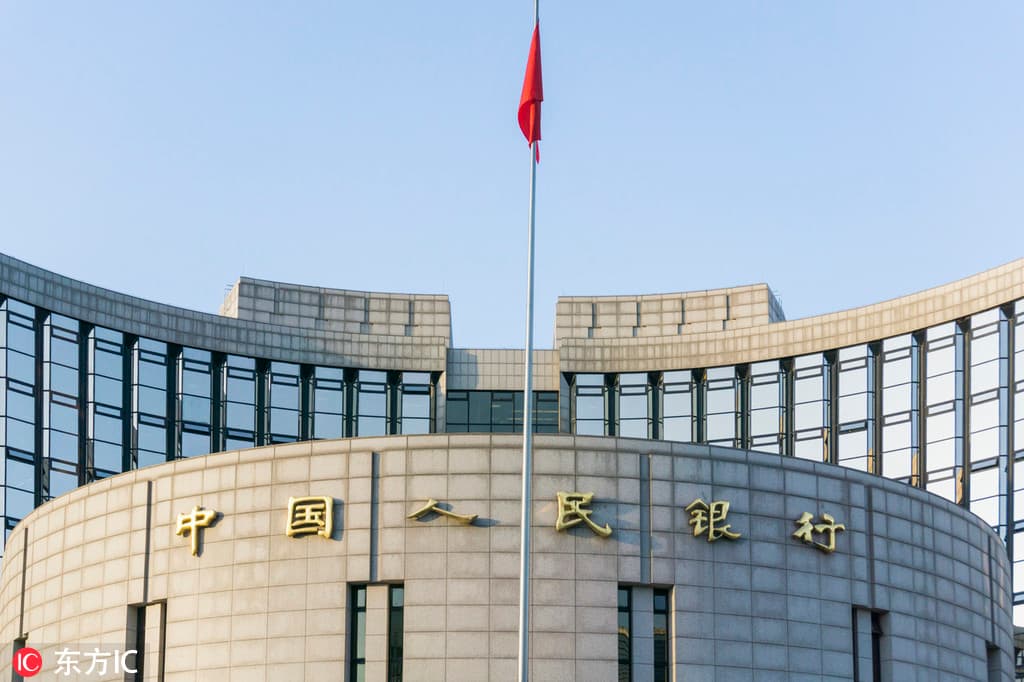
China has effectively fired the starting gun on the next phase of the financial revolution, announcing a pivot that will transform its electronic currency from a simple payment tool into an interest-earning asset.
The People’s Bank of China (PBOC) revealed this week that effective January 1, 2026, the digital renminbi (e-CNY) will transition from a cash-replacement model to "digital deposit money." For the global economy—and Kenya’s import-heavy market—this signals a future where digital state currency isn't just a wallet for spending, but a vehicle for saving.
The announcement, detailed by PBOC Vice-Governor Lu Lei in the Financial News, outlines a comprehensive overhaul of the currency's management framework. Until now, the e-CNY has functioned as M0—essentially the digital equivalent of the banknotes in your pocket. It was a direct liability of the central bank and paid no interest.
Under the new regime, the currency will be reclassified as M1. This technical shift has profound real-world implications: the e-CNY will become a liability of commercial banks, fully integrated into the banking system, while remaining under the central bank's technical oversight.
"A new generation of measurement, management, operational and ecosystem frameworks for the e-CNY will take effect," Lu noted, emphasizing that the currency will now serve as a robust "store of value" rather than just a medium of exchange.
The most immediate impact for users is the potential for returns. Liu Xiaochun, vice-president of the Shanghai Finance Institute, described the move as a global first.
"This makes China the first economy to position its CBDC as an interest-bearing currency," Liu observed. "It strengthens China’s leading role in CBDC development and digital financial innovation."
For the average user, this blurs the line between a digital wallet and a bank account. Holding e-CNY will no longer mean letting money sit idle; it will behave like a deposit, accruing interest and incentivizing users to hold larger balances digitally.
For Kenya, where China remains the single largest source of imports, this development is more than just financial trivia. Kenyan traders, who imported over KES 1.3 trillion worth of goods from China in 2024, often rely on the US dollar for settlement. The evolution of the e-CNY offers a glimpse into a future where direct shilling-to-yuan trade could be incentivized by interest-bearing digital wallets.
The shift is expected to supercharge the e-CNY’s utility in cross-border payments. By aligning the digital currency with commercial banking standards, China is laying the groundwork for smoother international settlements, potentially bypassing traditional SWIFT networks.
Key features of the 2026 framework include:
As the 2026 deadline approaches, the global financial community is watching closely. China is not just digitizing money; it is rewriting the incentives for holding it.
Keep the conversation in one place—threads here stay linked to the story and in the forums.
Sign in to start a discussion
Start a conversation about this story and keep it linked here.
Other hot threads
E-sports and Gaming Community in Kenya
Active 9 months ago
The Role of Technology in Modern Agriculture (AgriTech)
Active 9 months ago
Popular Recreational Activities Across Counties
Active 9 months ago
Investing in Youth Sports Development Programs
Active 9 months ago