We're loading the full news article for you. This includes the article content, images, author information, and related articles.
A new partnership to build a moon base signals a major leap in continental space exploration, raising both opportunities and pressing questions for Kenya's own celestial ambitions
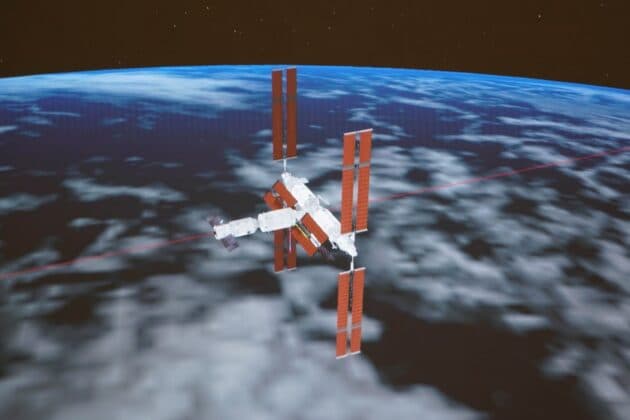
A new space alliance is taking shape over African skies, as China and South Africa formalise a partnership that extends from near-Earth orbit to the surface of the moon. This collaboration positions South Africa as a key player in China's ambitious lunar exploration program and accelerates the continent's role in the global space race.
For Kenya, this development is more than a distant headline; it's a continental shift that could reshape Africa's technological landscape. As the Kenya Space Agency (KSA) nurtures its own partnerships and satellite programs, the Sino-South African venture provides a powerful case study on leveraging international cooperation to achieve national space goals.
The agreement solidifies extensive cooperation between the China National Space Administration (CNSA) and the South African National Space Agency (SANSA). The collaboration is set to include joint efforts in the International Lunar Research Station (ILRS), a moon base project led by China and Russia. "There is huge potential and there will be big opportunities in the field of space cooperation," noted Wang Yanan, chief editor of Aerospace Knowledge magazine.
China brings its advanced technology, rich experience, and willingness to share expertise to the table. South Africa, in turn, offers a solid industrial foundation, scientific capabilities, and a crucial geographical advantage. Its location at the continent's southern tip is ideal for ground-based tracking and control of spacecraft, a critical component for complex lunar missions.
While this partnership solidifies, Kenya is carving its own path. The Kenya Space Agency, established in 2017, has been pivotal in advancing the nation's space agenda. Key milestones include the launch of its first satellite, the 1KUNS-PF in 2018, and the Taifa-1 Earth observation satellite, designed to monitor agricultural and environmental data. Kenya's strategic location along the equator also offers a natural advantage for future satellite launches.
The KSA has actively sought international collaborations with various partners, including France and Japan, to build capacity and promote the use of geospatial data to tackle challenges like food security and climate change. This approach contrasts with the deeper, more singular alliance now seen between South Africa and China.
China's deepening space ties in Africa are seen by some as a force multiplier for its geopolitical ambitions, embedding dual-use technologies and drawing nations into its economic orbit. This has prompted warnings from the United States about the strategic risks of such collaborations. For African nations, however, the partnerships offer a fast track to developing space capabilities that can address urgent domestic needs.
As South Africa hitches its wagon to China's lunar ambitions, Kenya continues to build a versatile, earth-focused space program. The question for Nairobi is how to navigate this new landscape, ensuring its own sovereign space identity propels the nation forward and delivers tangible benefits, from the farm to the city, for every Kenyan.
Keep the conversation in one place—threads here stay linked to the story and in the forums.
Sign in to start a discussion
Start a conversation about this story and keep it linked here.
Other hot threads
E-sports and Gaming Community in Kenya
Active 9 months ago
The Role of Technology in Modern Agriculture (AgriTech)
Active 9 months ago
Popular Recreational Activities Across Counties
Active 9 months ago
Investing in Youth Sports Development Programs
Active 9 months ago