We're loading the full news article for you. This includes the article content, images, author information, and related articles.
In a sweeping pre-summit purge, China has unceremoniously removed nine high-ranking military officials from its legislative body.
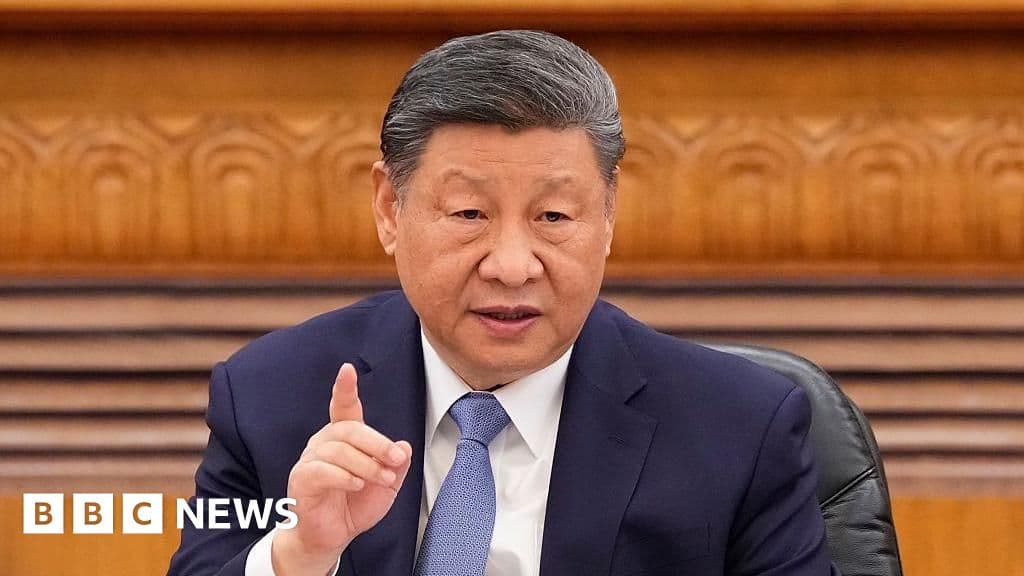
In a sweeping pre-summit purge, China has unceremoniously removed nineteen officials, including nine high-ranking military generals, from its top legislative body ahead of the country's most critical political meeting.
The dismissals, announced by the National People's Congress (NPC) Standing Committee, target the upper echelons of the People's Liberation Army (PLA) Ground Force and Navy.
This aggressive consolidation of power matters deeply because Beijing's internal stability directly influences global supply chains and multi-billion-shilling infrastructure investments across East Africa, particularly in Kenya.
No official reasons were immediately provided for the sudden removals, which occurred just days before the annual "Two Sessions" parliamentary meetings. However, the move strongly aligns with President Xi Jinping's relentless, decade-long anti-corruption crusade.
Among those ousted from the legislature are Li Qiaoming, the formidable commander of the PLA Ground Force, and Shen Jinlong, a former PLA Navy commander. Their removal sends a chilling message through the ranks of the Chinese military establishment.
This development follows closely on the heels of the dramatic ouster of Zhang Youxia, President Xi's highest-ranking general and closest military ally, who was recently accused of "serious violations of discipline and law"—a standard euphemism for extreme corruption in Beijing.
For Kenya and the broader East African community, political tremors in Beijing are never isolated events. China remains the region's most dominant bilateral lender, heavily financing mega-projects such as the Standard Gauge Railway (SGR) and extensive road networks.
When the leadership of the PLA and state-owned enterprises faces severe domestic scrutiny, the approval and disbursement of foreign loans can experience significant delays. A shift in Beijing's internal focus often translates to tightened fiscal policies abroad, impacting infrastructural timelines in Nairobi and Mombasa.
Furthermore, any perception of instability or massive restructuring within the Chinese state apparatus prompts local economic analysts to reassess the risk associated with heavily Sino-reliant national debt portfolios, which run into trillions of shillings.
Since assuming power in 2013, President Xi has made the eradication of corruption the central pillar of his governance. His famous "tigers and flies" campaign was designed to target both high-level bureaucratic elites and lower-level functionaries without prejudice.
While state media champions these purges as necessary cleansing for national security, international critics frequently characterize them as calculated maneuvers to eliminate political rivals and enforce absolute ideological loyalty.
"The battle against corruption remains grave and complex," President Xi recently declared, signaling that the structural overhaul of the Chinese military apparatus is far from its conclusion.
Keep the conversation in one place—threads here stay linked to the story and in the forums.
Sign in to start a discussion
Start a conversation about this story and keep it linked here.
Other hot threads
E-sports and Gaming Community in Kenya
Active 9 months ago
The Role of Technology in Modern Agriculture (AgriTech)
Active 9 months ago
Popular Recreational Activities Across Counties
Active 9 months ago
Investing in Youth Sports Development Programs
Active 9 months ago