We're loading the full news article for you. This includes the article content, images, author information, and related articles.
President Gabriel Boric's move to convert the infamous Punta Peuco prison into a standard facility marks a symbolic end to the preferential treatment for human rights abusers, a step with global resonance for nations confronting legacies of state-sanctioned violence.
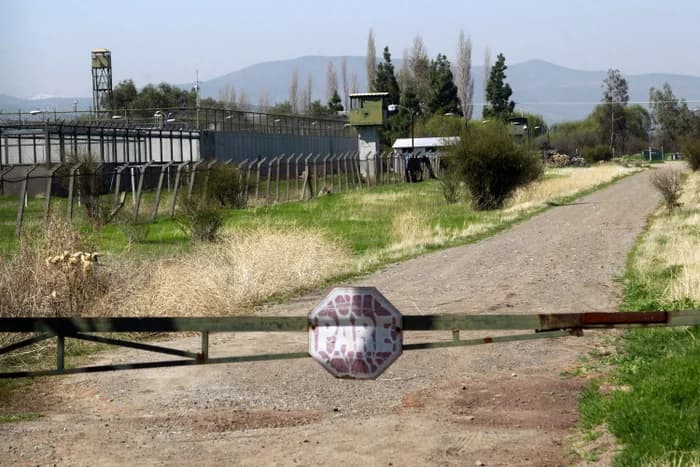
SANTIAGO, CHILE – In a landmark decision resonating with efforts towards transitional justice worldwide, the Chilean government has moved to end the privileged incarceration of military officials convicted of heinous crimes during the dictatorship of General Augusto Pinochet. On Monday, 3 November 2025, President Gabriel Boric announced that the Punta Peuco prison, long seen as a symbol of impunity, will be incorporated into the public prison network.
"From today forward, Chile will no longer have first and secondary category prisoners," President Boric declared in a public address around 11:25 AM local time (5:25 PM EAT). "Places will be decided according to security criteria, not privilege… this is a step further in the direction of a more democratic Chile, which is more respectful of human dignity."
The move addresses a deep societal wound in Chile, where the memory of the 17-year military regime (1973-1990) remains raw. The Punta Peuco facility, located in the municipality of Tiltil, was purpose-built in 1995 to house high-ranking military officials convicted of crimes against humanity. Its inmates, numbering around 141 men with an average age of 80, enjoyed conditions starkly different from the rest of the country's overcrowded penitentiary system. Reports have long highlighted amenities such as tennis courts, barbecue facilities, private cells, and extensive common areas, fostering an environment far removed from punitive justice.
The prisoners of Punta Peuco are not common criminals. Most are former members of Pinochet's notorious intelligence service, the DINA (Dirección de Inteligencia Nacional), responsible for a systematic campaign of state terror. Official figures from truth commissions, such as the Rettig and Valech reports, estimate that the dictatorship was responsible for over 40,000 victims, including more than 3,200 killed or forcibly disappeared and tens of thousands subjected to torture. Methods of torture were systematic and gruesome, including electric shocks, waterboarding, and widespread sexual violence, used as a tool of repression and humiliation against perceived political opponents.
Among the inmates is Miguel Krassnoff, a former brigadier, who is serving sentences totaling more than 1,000 years for his role in numerous human rights abuses. The prison was initially opened to house General Manuel Contreras, the head of the DINA, and Brigadier Pedro Espinoza, both convicted for the 1976 car bomb assassination of former foreign minister Orlando Letelier in Washington D.C., a brazen act of international terrorism.
President Boric's administration has confirmed that structural work is already underway to convert the facility, which will be renamed Tiltil Penitentiary. A former sports pitch is being repurposed for a new office and surveillance post, with the prison expected to receive new inmates from the general population from early 2026. The decision aims to alleviate overcrowding in the public system and, more importantly, to dismantle a structure of legal and social inequality.
The move has been praised by human rights organizations and victims' families who have campaigned for decades to close the facility, viewing it as an affront to justice. However, it has drawn criticism from right-wing figures. José Antonio Kast, a far-right leader, accused the president of attempting to build a legacy in his final months in office.
This is not the first time a Chilean president has acted against such privileged prisons. In 2013, right-wing President Sebastián Piñera closed Penal Cordillera, another comfortable facility that held 10 former military officers in private cabins.
While Chile is geographically distant, its struggle with historical injustices offers a powerful lens through which to view Kenya's own journey. The dismantling of Punta Peuco is a potent symbol of a nation striving to ensure that justice is blind and that accountability applies to all, regardless of former power or position. It underscores the importance of confronting painful pasts to build a more equitable future.
Kenya's own process of transitional justice, primarily through the Truth, Justice and Reconciliation Commission (TJRC), has had a more fraught trajectory. The TJRC was established following the 2007/2008 post-election violence to investigate and document gross human rights violations and other historical injustices from independence in 1963 to 2008. The commission collected over 40,000 statements and submitted its comprehensive report to President Uhuru Kenyatta in May 2013.
However, the implementation of the TJRC's recommendations has been slow and inconsistent, facing political headwinds. Unlike the definitive action taken in Chile, key recommendations on prosecutions, reparations, and institutional reforms remain largely unfulfilled, leaving many Kenyan victims still waiting for substantive justice. The Chilean example highlights the critical role of political will in moving from truth-telling to tangible accountability. As nations across the globe, including Kenya, grapple with the legacies of authoritarianism and state violence, Chile's decision to end the era of pampered prisons serves as a crucial reminder that true reconciliation cannot be achieved while symbols of impunity are allowed to stand.
Keep the conversation in one place—threads here stay linked to the story and in the forums.
Sign in to start a discussion
Start a conversation about this story and keep it linked here.
Other hot threads
E-sports and Gaming Community in Kenya
Active 9 months ago
The Role of Technology in Modern Agriculture (AgriTech)
Active 9 months ago
Popular Recreational Activities Across Counties
Active 9 months ago
Investing in Youth Sports Development Programs
Active 9 months ago



