We're loading the full news article for you. This includes the article content, images, author information, and related articles.
It’s the ultimate test of lung capacity and logic. As the World Diving Chess title fight grips the globe, we dive into the silence, the strategy, and the sheer physical toll of the sport’s most suffocating format.
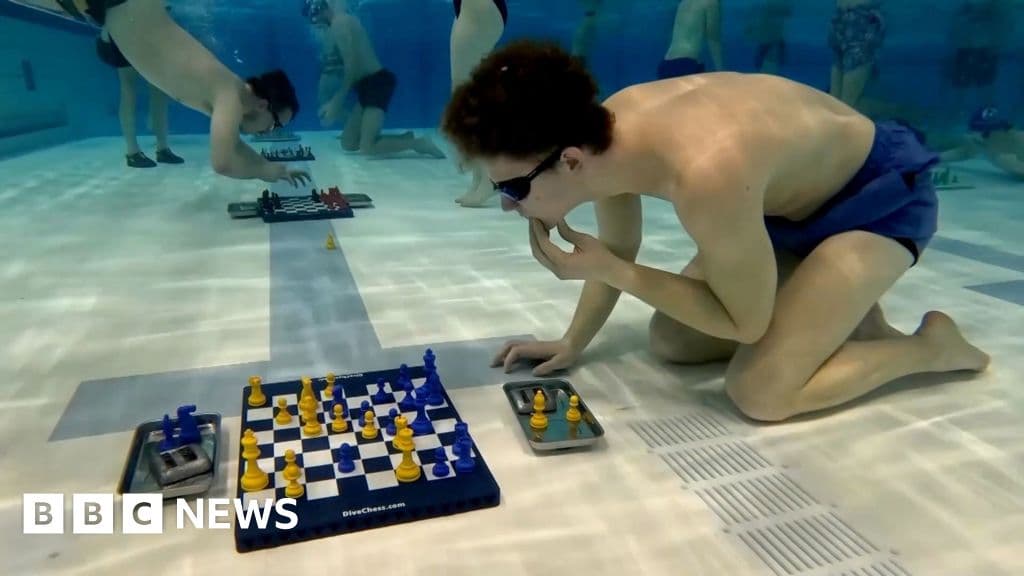
The venue is silent, save for the rhythmic splash, gasp, splash of competitors breaking the surface. There are no ticking clocks here. Instead, time is measured in burning lungs and fading oxygen. This is the World Diving Chess Championship, where a grandmaster’s calculation meets a free-diver’s endurance, and the only way to win is to hold your breath longer than your opponent.
In a sport traditionally defined by armchairs and quiet contemplation, Diving Chess has thrown the rulebook into the deep end. The premise is deceptively simple: players submerge to make a move on a magnetic board anchored to the pool floor. They can think for as long as their air lasts. But the moment they resurface, their opponent must dive. The result is a brutal cycle of CO2 tolerance and tactical warfare that is captivating audiences from London to Cape Town.
Unlike the rapid-fire blitz games seen in Nairobi’s City Market chess clubs, Diving Chess introduces a visceral physical penalty for hesitation. "In regular chess, if you take too long, you lose time," explains Etan Ilfeld, the sport’s inventor. "In diving chess, if you take too long, you drown. Well, not literally, but your brain starts to panic."
The mechanics demand a unique dual-processing power:
This structure creates a ruthless rhythm. If you can hold your breath for two minutes, you can analyze a complex position deeply. If your opponent can only manage 45 seconds, they are forced to play simple, reactionary moves, slowly suffocating their position on the board.
While the World Championship has found its traditional home at the Leonardo Royal Hotel in London, the sport is making waves closer to home. Just weeks ago, the chess world was stunned when American Grandmaster Hans Niemann claimed the inaugural Freestyle Underwater Chess title in Cape Town, South Africa.
Niemann’s victory on African soil signals a shift. The event showcased that this is no longer just a quirky pastime for eccentric masters; it is evolving into a serious competitive discipline. For Kenyan fans, the Cape Town tournament brought the spectacle to our doorstep, highlighting a potential new frontier for the continent’s swimmers and thinkers.
"It’s 60% chess, 40% survival," noted Michal Mazurkiewicz, a Polish master and multi-time world champion known for his superhuman breath-holding ability. His dominance has proven that in this arena, a strong pair of lungs can neutralize a higher ELO rating.
For the Kenyan observer, the sport resonates with the endurance culture of our coast. Much like the Bajuni free-divers of Lamu who scour the seabed, these chess players must suppress the body’s scream for oxygen to focus on the task at hand.
The equipment, too, is a marvel of adaptation. Standard tournament sets—costing around KES 2,500—would float away instantly. The specialized magnetic sets used in championship play are heavy, industrial-grade units designed to stick through the turbulence of a frantic endgame.
As the sport grows, the question isn't just who has the best opening theory, but who can keep a cool head when the water pressure builds. In Diving Chess, the deepest thinker literally wins.
Keep the conversation in one place—threads here stay linked to the story and in the forums.
Sign in to start a discussion
Start a conversation about this story and keep it linked here.
Other hot threads
E-sports and Gaming Community in Kenya
Active 9 months ago
The Role of Technology in Modern Agriculture (AgriTech)
Active 9 months ago
Popular Recreational Activities Across Counties
Active 9 months ago
Investing in Youth Sports Development Programs
Active 9 months ago