We're loading the full news article for you. This includes the article content, images, author information, and related articles.
After years of delays and missed targets, the government approves a Public-Private Partnership to rollout Second-Generation licences, introducing digital wallets and an aggressive demerit system.
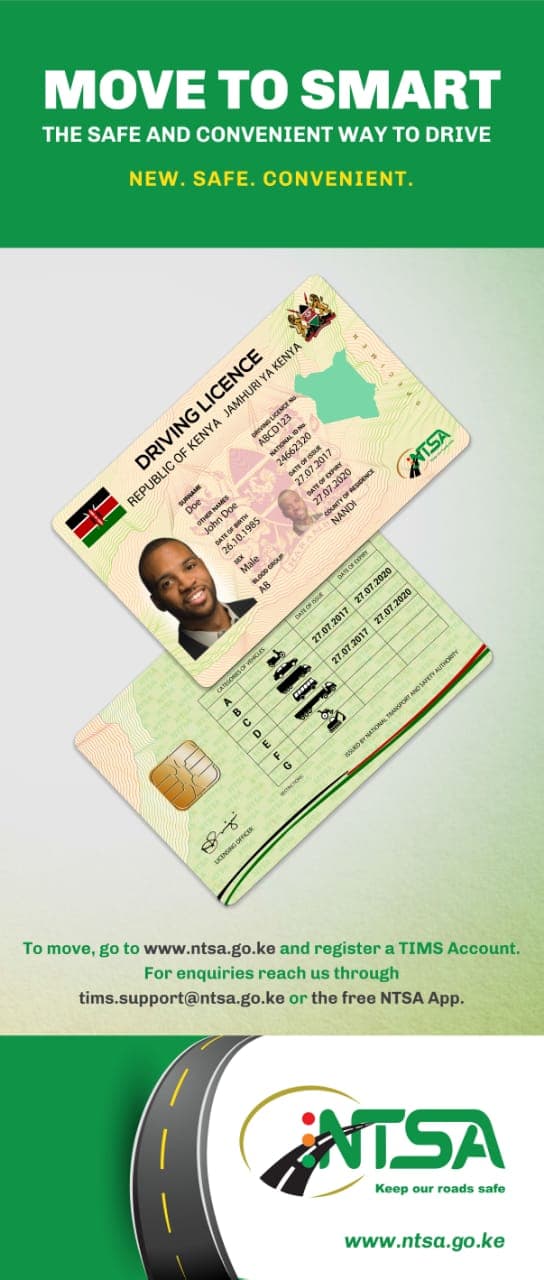
For years, obtaining a smart driving licence in Kenya has been a test of patience, often defined by long queues and indefinite system delays. That era of frustration may be nearing its end following a decisive move by the executive.
In a bid to clear a massive backlog and modernize road safety enforcement, the Cabinet has effectively stripped the National Transport and Safety Authority (NTSA) of its monopoly on licence issuance, handing the reins to private investors under a new Public-Private Partnership (PPP) framework.
The overhaul, approved during a Cabinet meeting on Monday, aims to fix a broken system. Since the launch of the smart licence initiative in 2017, the NTSA has struggled to scale operations. As of June 2025, the authority had issued only 2.1 million chip-based licences against a target of 5 million—leaving millions of Kenyan motorists relying on outdated documents or waiting in limbo.
This shift is not merely administrative; it promises to fundamentally alter how Kenyans drive. The incoming private sector partner is tasked with rolling out the Second-Generation Smart Driving Licence, which will be integrated with a suite of digital enforcement tools designed to curb rogue driving habits.
According to the Cabinet dispatch, the new ecosystem will include:
“Through innovative financing, Cabinet approved the rollout of Second-Generation Smart Driving Licences under a public-private partnership... to enhance road safety and modernise licensing,” the Cabinet stated.
The government’s pivot to a PPP model is a tacit admission that state-run mechanisms have failed to keep pace with demand. By bringing in private capital and technical expertise, the state intends to accelerate deployment and remove the bottlenecks that have plagued the NTSA for nearly a decade.
This approach is also designed to shield the exchequer. The private investor will likely finance the infrastructure upgrades, recouping costs through issuance fees or transaction charges, thereby limiting the burden on public finances.
Beyond efficiency, the government is banking on the security features of the new system to sanitize the transport sector. The chip-based cards and real-time verification capabilities are expected to weed out fake licences that are rampant on Kenyan roads.
Emphasizing the gravity of the shift, Kipchumba Murkomen highlighted the critical nature of the data involved. "The centrality of security in enabling this transformation cannot be overstated,” he noted.
Keep the conversation in one place—threads here stay linked to the story and in the forums.
Sign in to start a discussion
Start a conversation about this story and keep it linked here.
Other hot threads
E-sports and Gaming Community in Kenya
Active 9 months ago
The Role of Technology in Modern Agriculture (AgriTech)
Active 9 months ago
Popular Recreational Activities Across Counties
Active 9 months ago
Investing in Youth Sports Development Programs
Active 9 months ago
Key figures and persons of interest featured in this article