We're loading the full news article for you. This includes the article content, images, author information, and related articles.
**Thousands flee as military jets terrorise civilians in a brutal campaign to secure a widely condemned election, a crisis of legitimacy that echoes familiar struggles for democracy.**
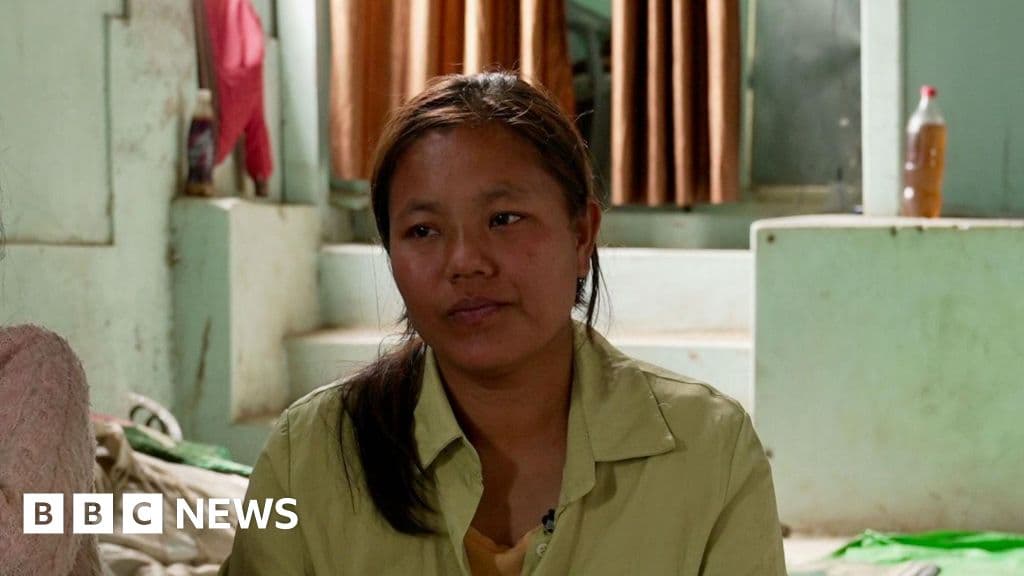
Late one night last month, the roar of fighter jets shattered the peace in Iang Za Kim’s village. Explosions followed, and she ran from her home to see smoke pluming in the distance. "We were terrified," she recounted, her voice trembling. "We grabbed what we could – some food and clothes and ran into the jungles."
This is the stark reality in Myanmar's western Chin State. A fierce military offensive is underway, not just to seize territory, but to force a population to the polls. The junta's goal is to stage-manage a multi-phase general election starting December 28, an exercise international observers have dismissed as a sham designed to grant a veneer of legitimacy to the generals who seized power in a 2021 coup.
For Iang and thousands like her, the choice is between the jungle and a ballot box at gunpoint. "If we are caught and refuse to vote, they will put us in jail and torture us," she explained. "We've run away so that we don't have to vote."
The air strikes are part of a broader, brutal pattern. Human rights groups and ethnic alliances have accused the military of committing war crimes by systematically targeting civilian areas, including hospitals and schools. In one recent attack on December 10, a bombing on a hospital in Mrauk-U killed 33 people, including patients and medical staff. These attacks are driving a staggering humanitarian crisis.
The United Nations reports that a third of Myanmar's population, nearly 20 million people, will require humanitarian aid in 2025. The number of internally displaced persons (IDPs) has surged to over 3.5 million, a population larger than the entire city of Nairobi. These families face dire shortages of food, healthcare, and water, with aid delivery severely restricted by the conflict.
For Kenyans, the plight of Myanmar's citizens strikes a familiar chord. The struggle for credible elections, the pain of displacement, and the tension between military power and civilian will are themes that resonate deeply with our own history. Kenya's government has previously condemned the 2021 coup, calling for the "restoration of constitutional order" and recognizing the "primacy of democratic civilian government."
This official stance reflects a core Kenyan value: that the will of the people, expressed through free and fair elections, is paramount. The events in Myanmar are a grim reminder of what is at stake when that principle is violated. While the contexts are different, the human cost of political instability and contested elections is a universal language of suffering.
As the world watches, the people of Chin State and other rebel-held areas are not just fleeing bombs; they are running from a future scripted by a military regime. Their flight into the jungle is a vote with their feet, a powerful rejection of a democratic process devoid of democracy itself.
Keep the conversation in one place—threads here stay linked to the story and in the forums.
Sign in to start a discussion
Start a conversation about this story and keep it linked here.
Other hot threads
E-sports and Gaming Community in Kenya
Active 9 months ago
The Role of Technology in Modern Agriculture (AgriTech)
Active 9 months ago
Popular Recreational Activities Across Counties
Active 9 months ago
Investing in Youth Sports Development Programs
Active 9 months ago



