We're loading the full news article for you. This includes the article content, images, author information, and related articles.
Hopes of permanent employment for 20,000 Junior Secondary School teachers are dashed as the Commission cites budget holes and extends temporary contracts for another year, sparking strike threats.
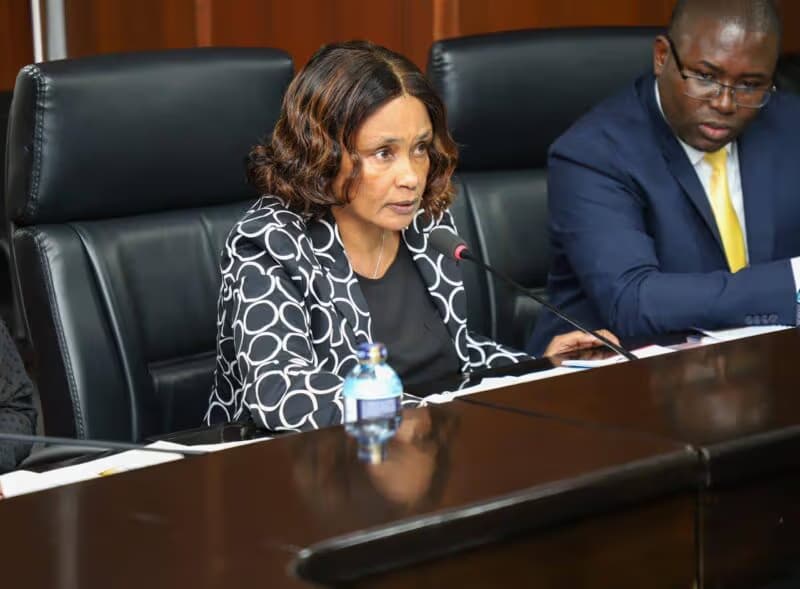
For 20,000 Junior Secondary School (JSS) teachers, the promise of a permanent job was the only light at the end of a grueling, underpaid tunnel. Today, the Teachers Service Commission (TSC) dimmed that light, declaring that an internship is merely for "practical teaching experience" and carries no guarantee of automatic absorption into the permanent and pensionable payroll.
This stark clarification, delivered amidst a fresh wave of contract extensions rather than confirmations, has sent shockwaves through the education sector. It fundamentally alters the compact between the state and the young educators who have shouldered the burden of the Competency-Based Curriculum (CBC) rollout for peanuts.
In a detailed response to the Daily Nation, the TSC defended its decision to extend intern contracts for another year—from January 1 to December 31, 2026—rather than confirming them. The Commission’s stance is legally precise but politically explosive: the internship program is designed to offer unemployed youth a chance to sharpen their skills, not a golden ticket to a government job.
"The internship programme is meant to provide practical teaching experience... but does not guarantee automatic absorption," the Commission stated. This bureaucratic pivot comes despite Education Cabinet Secretary Julius Ogamba acknowledging that the government relies heavily on these interns to plug a deficit of over 100,000 teachers.
The financial reality is equally grim. TSC CEO Dr. Nancy Macharia has indicated that while the Commission requested approximately KES 30.4 billion to confirm 46,000 interns, the National Treasury’s axe fell hard. No funds were allocated in the 2025/2026 financial year for the confirmation of this specific cohort of 20,000 JSS tutors—only enough to keep them on their current temporary terms.
To understand the anger, one must look at the payslip. These interns earn a gross stipend of KES 20,000. After statutory deductions for the Housing Levy, SHIF, and NSSF, a teacher takes home roughly KES 17,000.
In Nairobi, where a modest bedsitter can cost KES 10,000 and a 2kg packet of maize flour hovers around KES 200, this is not a living wage—it is a survival stipend. For a professional expected to teach complex sciences and humanities to Grade 7, 8, and 9 learners, the "practical experience" argument feels like a mockery of their struggle to put food on the table.
The TSC’s announcement stands in sharp contrast to the assurances given by the highest office in the land. In November 2025, President William Ruto was unequivocal, promising that interns would be confirmed after two years of service. "Once two years are over, there is no negotiation... straight into permanent and pensionable," he declared.
That promise now hangs by a thread. The interns, many of whom have already served their initial one-year term, are now staring at a second (or third) year of uncertainty. The disconnect between the President’s political pledges and the Treasury’s ledger is creating a credibility crisis that threatens to spill over into the streets.
The fallout is already brewing. Intern teachers, organized under various lobby groups, have rejected the contract extensions. "We thought our Christmas gift would be permanent letters," lamented James Odhiambo, a representative for the JSS teachers. "Instead, we are being told to sign up for another year of poverty."
With schools set to reopen in January 2026, the threat of a boycott is real. If these 20,000 teachers down their tools, the Junior Secondary School system—already fragile and under-resourced—could face paralysis. The courts, which previously flagged the internship model as problematic before staying the judgment, may once again become the battleground.
As it stands, the government is asking its youngest, most vulnerable workers to subsidize the education system with their patience. But as January approaches, patience is a currency that has been devalued to zero.
Keep the conversation in one place—threads here stay linked to the story and in the forums.
Sign in to start a discussion
Start a conversation about this story and keep it linked here.
Other hot threads
E-sports and Gaming Community in Kenya
Active 9 months ago
The Role of Technology in Modern Agriculture (AgriTech)
Active 9 months ago
Popular Recreational Activities Across Counties
Active 9 months ago
Investing in Youth Sports Development Programs
Active 9 months ago



