We're loading the full news article for you. This includes the article content, images, author information, and related articles.
From global ridicule to economic savior: How a Spanish grandmother’s botched art restoration became a tourism goldmine.
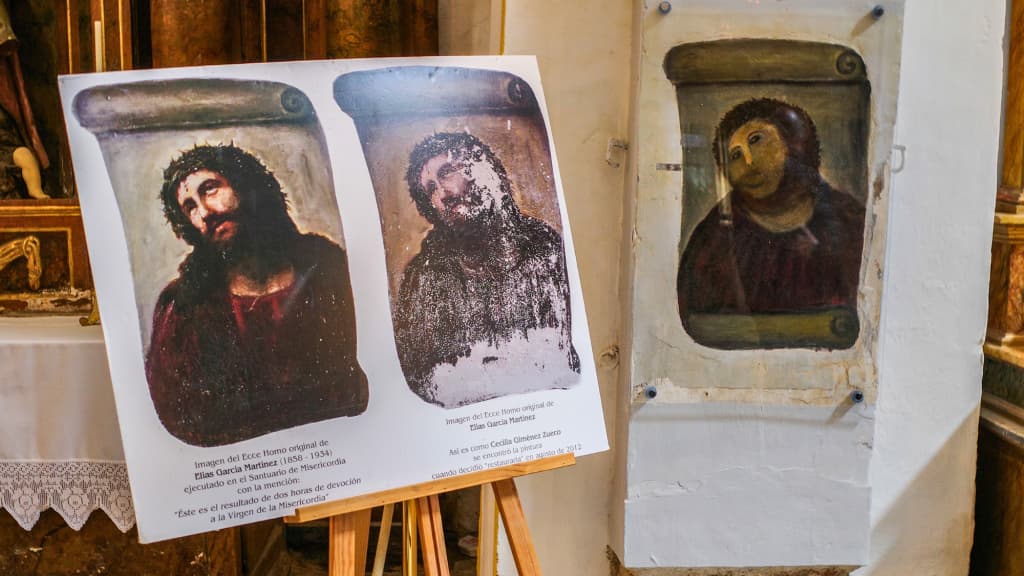
Cecilia Giménez Zueco, the Spanish pensioner whose botched restoration of a Christ fresco sparked a global internet frenzy and inadvertently revitalized her fading town, has died at the age of 94.
Her passing closes a chapter on one of the internet’s most wholesome viral moments. But beyond the memes, Giménez’s creation—dubbed "Ecce Mono" or "Monkey Jesus"—stands as a testament to how an act of genuine devotion, however clumsy, can reverse the fortunes of a struggling community. In a world often obsessed with perfection, Giménez proved that there is profound value, and economic viability, in our flaws.
The saga began in 2012 in the small town of Borja, Zaragoza. Distressed by the peeling paint of Ecce Homo, a 1930 fresco by Elías García Martínez, Giménez took it upon herself to restore the artwork. She later insisted she had the local priest's approval, acting not out of vanity, but piety.
The result was visually catastrophic but culturally magnetic. The solemn face of Christ was transformed into a blurry, round-faced figure that critics likened to a monkey or a potato. The image spread like wildfire across social media, becoming a defining meme of the early 2010s. While Giménez was initially distraught by the mockery, the narrative quickly shifted from ridicule to affection.
For Kenyans familiar with the constant hustle to attract tourists to heritage sites, the "Beast Jesus" effect offers a fascinating case study in accidental marketing. While the artistic merit of the restoration remains non-existent, its economic impact was undeniable.
According to figures cited by the BBC, the town of Borja saw a massive surge in footfall:
This influx transformed the local economy, funding an arts center and stabilizing the sanctuary's finances. It is a striking parallel to the Kenyan "Jua Kali" spirit—where unexpected materials and situations are repurposed to put food on the table. Giménez did not paint a masterpiece, but she manufactured a destination.
Borja Mayor Eduardo Arilla confirmed Giménez’s death, posting a heartfelt tribute that emphasized her character over the controversy. Arilla described her as "a strong woman, a selfless mother, and a hard worker," noting that her contribution to the town was "irreplaceable."
As Borja mourns, the "Beast Jesus" remains resolutely on the sanctuary wall. It survives as a permanent reminder that intent matters, and that sometimes, a mistake can be more miraculous than the original plan.
Keep the conversation in one place—threads here stay linked to the story and in the forums.
Sign in to start a discussion
Start a conversation about this story and keep it linked here.
Other hot threads
E-sports and Gaming Community in Kenya
Active 9 months ago
The Role of Technology in Modern Agriculture (AgriTech)
Active 9 months ago
Popular Recreational Activities Across Counties
Active 9 months ago
Investing in Youth Sports Development Programs
Active 9 months ago