We're loading the full news article for you. This includes the article content, images, author information, and related articles.
The killing of Sharif Osman Hadi, a pivotal figure in the 2024 youth uprising, has ignited violent protests in Dhaka, casting a dark shadow over the nation's fragile transition to democracy
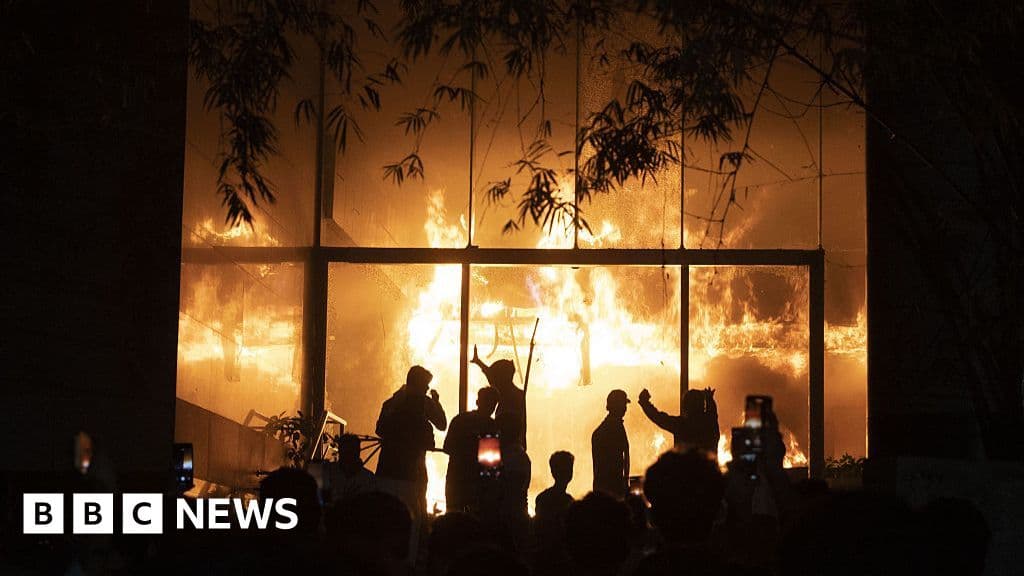
A wave of violence has engulfed Dhaka, the capital of Bangladesh, following the death of youth protest leader Sharif Osman Hadi, threatening the stability of the nation's first elections since a student-led uprising ousted former Prime Minister Sheikh Hasina in 2024.
Hadi, 32, a charismatic and senior figure in the student group Inqilab Mancha, died on Thursday in a Singapore hospital from injuries sustained in a brazen assassination attempt. Masked assailants on a motorcycle shot him on December 12 while he was campaigning for a parliamentary seat, an attack that has now sent shockwaves through the country's delicate political landscape.
The news of his death triggered immediate and furious protests. Hundreds of his supporters poured into the streets, demanding justice and the arrest of his killers. The demonstrations quickly escalated, with mobs attacking and setting fire to the offices of two of the country's most prominent newspapers, The Daily Star and Prothom Alo, trapping journalists inside and forcing both publications to suspend operations.
Sharif Osman Hadi was more than a political candidate; he was a symbol of the "July Revolution," a mass uprising that began as a student protest against a government job quota system and swelled into a nationwide movement against Sheikh Hasina's increasingly authoritarian rule. The protests, fueled by economic frustration and accusations of corruption, ultimately led to Hasina fleeing to neighboring India in August 2024.
Hadi, as a spokesperson for Inqilab Mancha, was an outspoken critic of the former regime and of Indian influence in Bangladesh. His planned candidacy in the upcoming February 2026 elections was seen as a crucial step in translating street-level activism into formal political power.
The assassination has plunged the interim government, led by Nobel laureate Muhammad Yunus, into a severe crisis. In a televised address, Yunus called Hadi's death an "irreparable loss for the nation" and vowed that the country's path to democracy would not be halted by terror. The government has declared a day of national mourning.
However, the violence underscores the deep divisions and volatility gripping Bangladesh. Analysts note that the interim government faces immense challenges, including a politicised civil service, economic instability, and the task of holding free and fair elections in a polarised environment. The attacks on the newspapers, which protesters accused of being pro-India, highlight the potent mix of nationalism and political grievance driving the unrest.
As Dhaka remains under an uneasy calm with troops deployed to key areas, the nation holds its breath. The killing of Sharif Osman Hadi is a stark reminder of the violent currents running beneath Bangladesh's democratic aspirations, leaving the future of the country hanging precariously in the balance.
Keep the conversation in one place—threads here stay linked to the story and in the forums.
Sign in to start a discussion
Start a conversation about this story and keep it linked here.
Other hot threads
E-sports and Gaming Community in Kenya
Active 9 months ago
The Role of Technology in Modern Agriculture (AgriTech)
Active 9 months ago
Popular Recreational Activities Across Counties
Active 9 months ago
Investing in Youth Sports Development Programs
Active 9 months ago



