We're loading the full news article for you. This includes the article content, images, author information, and related articles.
The constitutional lawyer warns that the government’s push to regulate worship is a lazy answer to the Shakahola tragedy, arguing that ‘collective punishment’ of the church will not cure the failures of state intelligence.
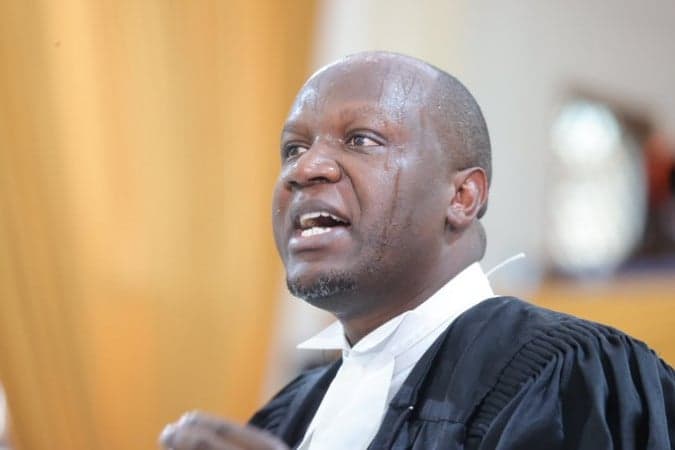
Constitutional lawyer Willis Otieno has launched a scathing attack on the government’s latest bid to tighten the leash on religious organizations, terming the move an act of “authoritarian convenience” rather than a genuine solution to extremism.
In a strongly worded statement issued Sunday, Otieno rejected the proposed state-led regulation of churches, arguing that the government is attempting to cure its own intelligence failures by punishing the entire religious sector. His intervention comes as the debate over the Religious Organisations Bill 2024 reaches a fever pitch, with the state seeking to implement recommendations from the Mutava Musyimi taskforce following the Shakahola massacre.
“The State’s failure to discipline individuals who have abused the pulpit cannot be cured by punishing the entire religious space,” Otieno asserted. “Collective punishment is not regulation; it is authoritarian convenience.”
Otieno’s argument hinges on a delicate reading of the Constitution, specifically the tension between Article 8, which declares there shall be no state religion, and Article 32, which guarantees freedom of conscience and belief.
He warned that the proposed laws risk crossing a dangerous line where the state becomes the arbiter of theology—a role it is ill-equipped to play. According to Otieno, the government’s mandate ends at enforcing criminal law, not policing doctrine.
“The State has no mandate to determine doctrine, approve theology, appoint clergy, or police belief. That is where Article 32 draws the line,” he noted. However, he was quick to clarify that this freedom is not a shield for criminality.
The lawyer also turned his lens on the religious community, cautioning them against what he termed “mutual overreach.” While the state must not capture the church, the church must not attempt to capture the state.
“Freedom of religion does not mean capture of the State by religious institutions. Likewise, the separation of state and religion does not mean persecution of the Church,” Otieno explained. “It means mutual independence, each respecting the boundaries of the other.”
This nuanced position sets Otieno apart from the hardline stance of some clergy who want zero oversight, and the government’s push for a heavy-handed Religious Affairs Commission. He argues that where public money, safety, or fraud are involved, the general law must apply ruthlessly—but special "religious police" are a step too far.
The backdrop to this legal tussle is the horrific discovery of over 400 bodies in the Shakahola forest in 2023, a tragedy that exposed the lethal consequences of unchecked cultism. The state argues that the Religious Organisations Bill—which proposes fines of up to KES 5 million and jail terms for unregistered clerics—is necessary to prevent a recurrence.
However, critics like Otieno argue that Shakahola was a failure of security agencies to act on intelligence, not a lack of laws. For the average Kenyan, the debate is personal: how to ensure their family is safe from predatory cults without the government dictating how they pray.
“We must agitate for self-regulation of religious institutions, firmly and unapologetically, as the only constitutionally sound path,” Otieno concluded.
Keep the conversation in one place—threads here stay linked to the story and in the forums.
Sign in to start a discussion
Start a conversation about this story and keep it linked here.
Other hot threads
E-sports and Gaming Community in Kenya
Active 9 months ago
The Role of Technology in Modern Agriculture (AgriTech)
Active 9 months ago
Popular Recreational Activities Across Counties
Active 9 months ago
Investing in Youth Sports Development Programs
Active 9 months ago



