We're loading the full news article for you. This includes the article content, images, author information, and related articles.
A fierce political battle over energy policy in Australia threatens to close the nation's largest aluminium smelter, raising concerns for global commodity markets and highlighting economic instability in a key Kenyan trade partner.
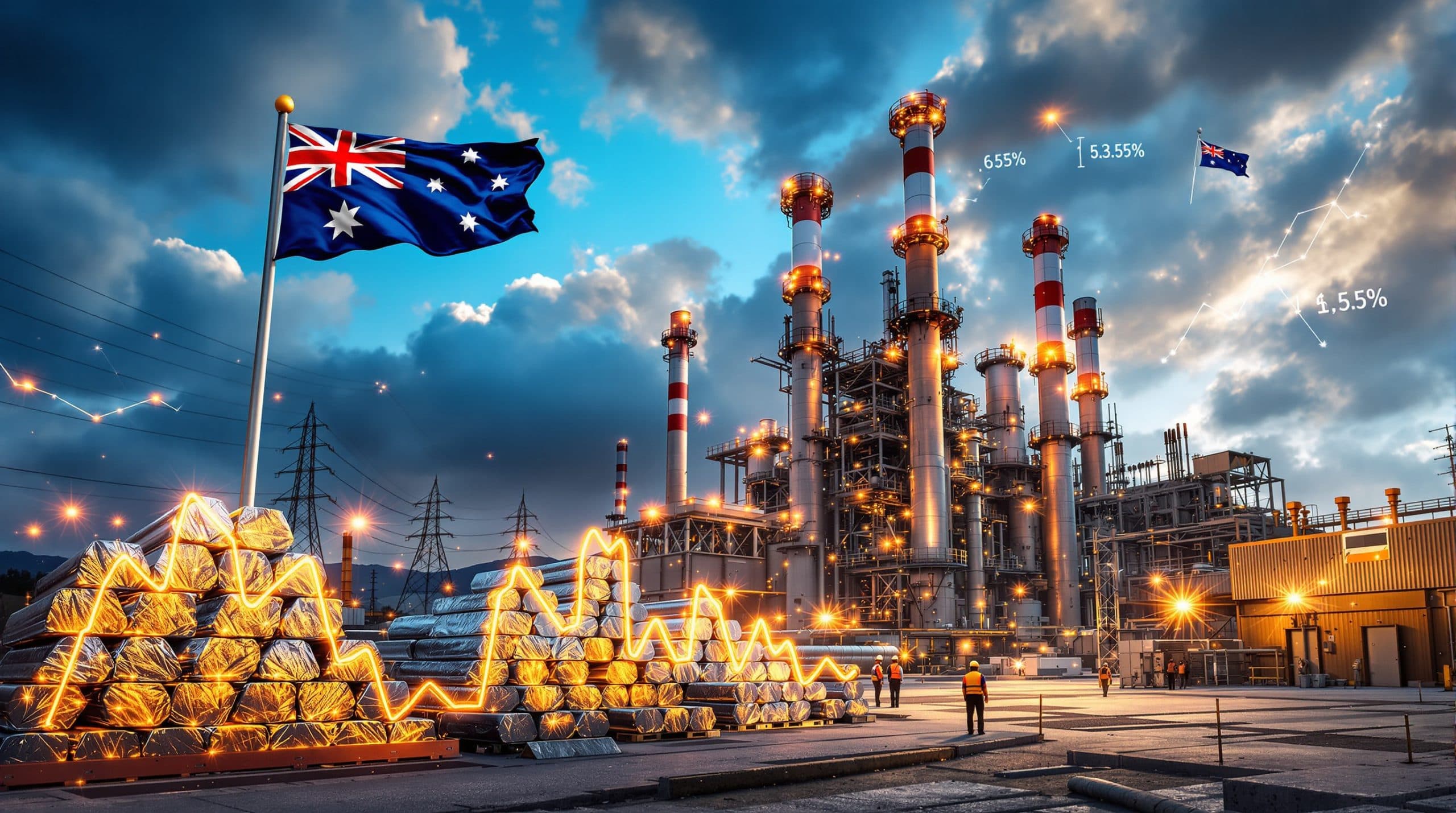
A deepening political rift over energy policy in Australia is threatening the existence of the nation's largest aluminium smelter, Tomago Aluminium, sparking fears of significant job losses and potential disruption to global metal supplies. The crisis, which dominated a heated parliamentary session on Tuesday, 28 October 2025, underscores the profound economic challenges facing a key trade and diplomatic partner for Kenya and the East Africa region.
The smelter's operator, a joint venture including global mining giant Rio Tinto, announced on Tuesday it has begun consulting with employees on a potential shutdown. [2] The facility, located in New South Wales, may cease operations when its current power contract expires in December 2028, citing soaring energy costs that make its future commercially unviable. [2, 6] According to company statements, electricity accounts for over 40% of the smelter's operating costs. [3, 5, 8] Tomago Aluminium Chief Executive Officer, Jérôme Dozol, stated that extensive market reviews since 2022 have failed to secure an affordable energy solution, with proposals for both renewable and coal-fired power being prohibitively expensive. [5, 6]
The Tomago facility is a critical economic asset, producing up to 590,000 tonnes of aluminium annually, which constitutes nearly 40% of Australia's total output. [4, 8] A closure would place over 1,000 direct jobs at risk and could have cascading effects on the wider economy. [4]
The smelter's precarious situation has become a flashpoint in a bitter national debate between the ruling Labor government and the opposition Coalition. During a tense question time in Canberra, the government, through Energy Minister Chris Bowen, defended its policy of accelerating investment in renewable energy sources like wind and solar. [11, 15] Mr. Bowen argued that more renewables are the solution to high prices, referencing Rio Tinto's statement about the difficulty in finding sufficient renewable energy at the required scale. [5]
Conversely, the opposition, led by Sussan Ley, blames the government's policies for the high energy prices threatening industries like Tomago. The Coalition has advocated for a different path, proposing to overturn Australia's long-standing ban on nuclear power and slow the rollout of large-scale renewable projects. [11, 13, 17] This fundamental disagreement on energy policy has created significant uncertainty for heavy industries and investors.
The acrimonious nature of the debate was further highlighted by a separate, sharp exchange concerning Prime Minister Anthony Albanese. Opposition Leader Sussan Ley launched a blistering critique of the Prime Minister for wearing a t-shirt of the post-punk rock band Joy Division upon his return from an overseas trip five days prior. [19, 28]
Ms. Ley told parliament that the choice demonstrated a “profound failure of judgement,” pointing out that the band's name has controversial origins. [19] The name 'Joy Division' was adopted by the band in 1978, borrowed from the 1953 novel 'House of Dolls,' where it referred to the sexual slavery wing of a Nazi concentration camp. [12, 26] “At a time when Jewish Australians are facing a rise in antisemitism, when families are asking for reassurance and unity, the Prime Minister chose to parade an image derived from hatred and suffering,” Ms. Ley stated. [19] She has been vocal in recent months about combating what she terms a 'rising tide of anti-Semitism' in Australia. [27, 32]
While the political drama unfolds in Canberra, the potential economic fallout has global implications. The Tomago smelter exports approximately 90% of its output, primarily to the Asia-Pacific region. [4] A shutdown would remove a significant volume of aluminium from the world market, potentially impacting global prices for the crucial industrial metal. This is relevant for Kenya, as Australia is a growing economic partner, with two-way trade surpassing AUD 1 billion (approximately KSh 95 billion) in 2024. [22] The Australian Department of Foreign Affairs and Trade notes that aluminium ores are a key export to the African continent. [20]
Kenya and Australia share deepening ties in trade, security cooperation, and education, with nearly 10,000 Kenyan students currently studying in Australia. [22, 33] Furthermore, Prime Cabinet Secretary Musalia Mudavadi recently called on Australia to increase its intake of Kenyan products to address a trade imbalance. [37] The economic stability of a key partner within the Commonwealth and the G20 is therefore of direct strategic interest to Nairobi. The unfolding energy crisis in Australia serves as a critical case study on the complex economic and political challenges of the global energy transition, with repercussions that extend far beyond its shores.
Keep the conversation in one place—threads here stay linked to the story and in the forums.
Sign in to start a discussion
Start a conversation about this story and keep it linked here.
Other hot threads
E-sports and Gaming Community in Kenya
Active 9 months ago
The Role of Technology in Modern Agriculture (AgriTech)
Active 9 months ago
Popular Recreational Activities Across Counties
Active 9 months ago
Investing in Youth Sports Development Programs
Active 9 months ago



