We're loading the full news article for you. This includes the article content, images, author information, and related articles.
While the world watches Australia block under-16s from TikTok and Instagram, experts warn that the addictive mechanics of online gaming—a KES 24 trillion global industry—remain entirely unchecked.
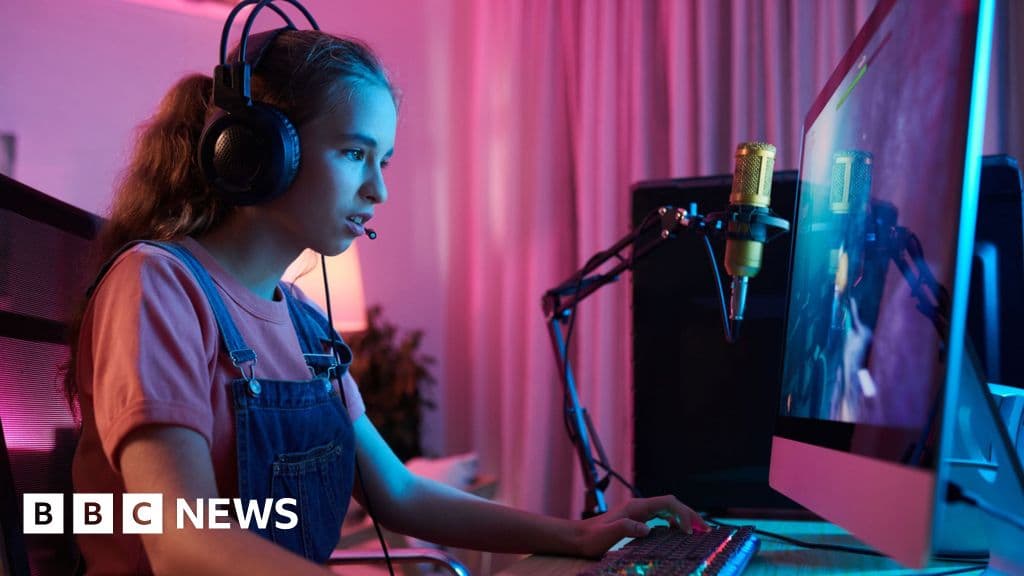
For 15-year-old Sadmir Perviz, the road to recovery doesn't involve a screen, but a pile of board games in a quiet corner of a Perth hospital. Wednesday afternoons have become a ritual: a circuitous journey from his home to the Fiona Stanley Hospital, where he sits down to play Dungeons & Dragons, Jenga, or Uno.
It is a stark departure from his life just a few months ago, when Sadmir would spend up to 10 hours a day locked in virtual worlds, clicking buttons instead of rolling dice. "It feels completely different," Sadmir reflected. "You can interact with people, so you actually know who's there rather than just being on a call with random people."
Sadmir is one of 300 patients at Australia’s only publicly-run gaming disorder clinic. But as the country enforces a landmark ban on social media for under-16s, experts like Sadmir’s psychiatrist are asking a critical question: why was the equally addictive world of online gaming given a free pass?
The clinic at Fiona Stanley Hospital is a simple space, but it represents the frontline of a modern crisis. Here, patients and clinicians sit together, swapping high-speed internet for the tactile reality of Sushi Go and card games. The goal is to help young people wean themselves off excessive gaming habits that can cripple their social lives and mental health.
Dr. Daniela Vecchio, the psychiatrist who founded the clinic, emphasized that while gaming isn't inherently evil, the risks it poses are nearly identical to those of social media. "Gaming platforms and social media pose similar risks for children: excessive time spent online, and potential exposure to predators, harmful content, or bullying," Dr. Vecchio noted.
Despite these parallels, Australia's "world-first" legislation, which bars children under 16 from platforms like Instagram and TikTok, explicitly excludes gaming environments. This decision has left experts baffled, arguing that for patients like Sadmir, the addiction mechanics in gaming are just as potent as the algorithmic loops of social media.
The exclusion of gaming from the ban highlights a complex regulatory challenge. While social media is often criticized for its infinite scroll and comparison culture, the global gaming market—valued at approximately $188 billion (approx. KES 24.3 trillion)—thrives on retention mechanics designed to keep players hooked for hours.
Critics argue that by banning one form of digital engagement while ignoring another, the government may simply be displacing the problem. Children kicked off social apps may migrate en masse to gaming lobbies, which often feature unmoderated voice chats and loot box systems akin to gambling.
For parents in Nairobi, the Australian experiment serves as a cautionary tale. Kenya is not immune to these digital shifts; recent data indicates that Kenyans are among the world's most voracious social media users, spending an average of 3 hours and 43 minutes daily on these platforms.
While Kenya has yet to propose a ban as strict as Australia's, the symptoms of digital overload are visible in households from Westlands to Buruburu. As internet penetration deepens, the line between "social media" and "gaming" blurs—platforms like Roblox or Fortnite are essentially social networks with a game attached.
Dr. Vecchio questions the logic of a ban that ignores this reality. If the goal is to protect children from the darker corners of the internet, leaving the gaming door wide open might undermine the entire effort. For Sadmir, the solution wasn't a government ban, but a return to human connection—one dice roll at a time.
Keep the conversation in one place—threads here stay linked to the story and in the forums.
Sign in to start a discussion
Start a conversation about this story and keep it linked here.
Other hot threads
E-sports and Gaming Community in Kenya
Active 9 months ago
The Role of Technology in Modern Agriculture (AgriTech)
Active 9 months ago
Popular Recreational Activities Across Counties
Active 9 months ago
Investing in Youth Sports Development Programs
Active 9 months ago