We're loading the full news article for you. This includes the article content, images, author information, and related articles.
A damning audit report has cast a spotlight on the Ruto administration’s management of a Ksh110 billion Eurobond, raising questions on fiscal accountability.
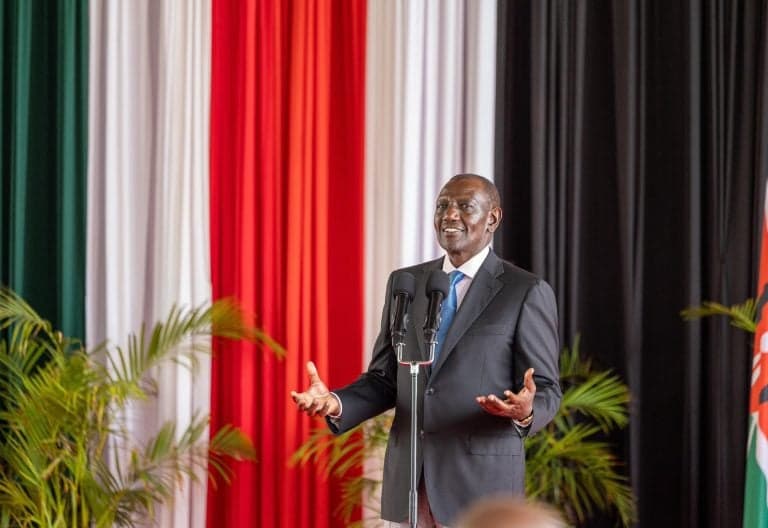
A signature on a loan document in Nairobi does not always translate into tangible progress on the ground. This week, the Office of the Auditor General delivered a stark reminder of that reality, casting significant doubt on the tracking, allocation, and final utilization of a Ksh110 billion Eurobond injection that the government previously claimed was critical for stabilizing the national balance sheet.
The disclosure, contained within the latest fiscal accountability report released by the oversight body, reveals a critical breakdown in documentation and project tracking that has sent shockwaves through the financial sector. For a country currently balancing on a precarious fiscal tightrope, where debt servicing obligations claim an ever-increasing share of domestic tax revenue, the inability to clearly account for such a monumental sum represents a profound breach of public trust. The implications extend far beyond the dry pages of an accounting report they threaten to undermine the government’s credibility with international lenders, jeopardize the sovereign credit rating of the nation, and exacerbate the economic anxiety felt by millions of Kenyans struggling with the rising cost of living.
At the heart of the controversy is a fundamental discrepancy in the reconciliation of funds. The audit, which scrutinizes the financial activities of the National Treasury over the last fiscal cycle, highlights that while the Ksh110 billion was successfully raised on the international capital markets, the paper trail for its deployment into infrastructure and debt refinancing projects remains dangerously opaque.
Auditors noted several red flags that suggest administrative negligence or deeper systemic rot in how sovereign debt is managed. Specifically, the report cites instances where funds earmarked for energy and road infrastructure were diverted or left sitting in accounts without clear project milestones attached to them. This lack of transparency is particularly galling given the administration’s public insistence that every shilling of the Eurobond was strictly tied to high-impact projects designed to generate economic returns.
Economists at the University of Nairobi and independent fiscal analysts warn that this audit could not have come at a worse time. Kenya’s debt-to-GDP ratio has been a subject of intense scrutiny by the International Monetary Fund and the World Bank, both of which have mandated stricter fiscal consolidation measures as a condition for continued support. When a government cannot account for a facility as large as a Ksh110 billion Eurobond, it effectively tells international investors that the state’s fiscal house is not in order.
The cost of this opacity is rarely theoretical. It manifests in the risk premium that international investors demand to hold Kenyan debt. If global markets perceive that the administration cannot manage the funds it borrows, interest rates on future sovereign bonds will inevitably climb. This forces the National Treasury to allocate even more of the national budget toward interest payments rather than essential services like healthcare, education, or agriculture. Essentially, the taxpayer is left to foot the bill for the interest on borrowed money that may have vanished into administrative inefficiencies.
While the halls of the National Treasury in Nairobi remain largely quiet regarding the specific findings of the audit, the reaction on the ground has been visceral. Small business owners in Westlands and farmers in the Rift Valley who have been squeezed by tax hikes intended to service the national debt are expressing deep frustration. They ask how the government can justify increasing VAT and fuel levies when billions in borrowed funds are reportedly being managed with such cavalier disregard for accountability.
The administration has traditionally defended its borrowing strategy as a necessary evil to keep the economy afloat amidst global shocks. However, this defense relies entirely on the premise of disciplined management. The Auditor General’s report systematically dismantles this narrative, suggesting that the problem is not merely a lack of revenue, but a catastrophic failure in the expenditure architecture. Until there is a full, transparent forensic audit of these funds, the public’s skepticism is likely to grow, turning the Eurobond into a political liability as much as a fiscal one.
Kenya is not alone in this struggle. Across the African continent, nations like Ghana and Zambia have wrestled with the consequences of opaque debt management, often resulting in painful restructuring processes that set back national development by years. The international community is watching Kenya closely, as it remains a beacon of market-based development in East Africa. If the government fails to address these audit concerns with immediate, transparent, and corrective action, it risks drifting into the same cycle of debt distress that has crippled regional peers. The path forward requires more than just political promises it demands a radical, verifiable overhaul of how public debt is authorized, spent, and reported.
Ultimately, the Ksh110 billion question remains: if the government cannot provide receipts for the money it has already borrowed, why should the markets—or the Kenyan people—continue to trust it with more?
Keep the conversation in one place—threads here stay linked to the story and in the forums.
Sign in to start a discussion
Start a conversation about this story and keep it linked here.
Other hot threads
E-sports and Gaming Community in Kenya
Active 10 months ago
The Role of Technology in Modern Agriculture (AgriTech)
Active 10 months ago
Popular Recreational Activities Across Counties
Active 10 months ago
Investing in Youth Sports Development Programs
Active 10 months ago



