We're loading the full news article for you. This includes the article content, images, author information, and related articles.
A staggering KSh 50 billion has sparked a fierce political storm after an audit report flagged irregular transactions within the new Health Authority.

A staggering KSh 50 billion—the cornerstone of Kenya's ambitious Universal Health Coverage agenda—has become the eye of a fierce political storm. President William Ruto has publicly rejected characterisations that this sum has been stolen, labeling such reports as politically motivated propaganda while insisting the funds remain intact within the nation’s medical infrastructure.
The controversy centers on a report from the Office of the Auditor-General, which flagged approximately KSh 49.3 billion in transactions within the Social Health Authority (SHA) as either irregular, unsupported, or lacking sufficient documentation. For millions of Kenyans navigating the turbulent transition from the defunct National Hospital Insurance Fund (NHIF) to the new Social Health Insurance Fund (SHIF), this figure is more than an accounting note—it is a symbol of potential governance failure at a time when access to affordable healthcare remains a primary national anxiety.
In the complex world of public finance, the distinction between "stolen" and "unsupported" is often lost in the public discourse. The Auditor-General, Nancy Gathungu, identified a spectrum of financial anomalies that have prompted intense scrutiny from oversight committees and civil society alike. The total flagged amount of KSh 49.3 billion is not a single missing ledger entry, but a collection of discrepancies accumulated during the tumultuous 2024/2025 financial year.
Key data points from the audit report include:
The auditor’s findings suggest that while there is no definitive proof of physical cash theft, there are profound structural weaknesses in how the new digital payment system interacts with legacy hospital billing practices.
President Ruto, speaking to members of the United Democratic Alliance and the Orange Democratic Movement, addressed the narrative directly. He argued that the KSh 50 billion figure is a misinterpretation of standard actuarial and accounting estimations used to prepare for future medical liabilities. He emphasized that if the government had actually lost KSh 50 billion in liquid cash, the entire operational capacity of the health system would have collapsed, preventing the disbursement of funds to hospitals.
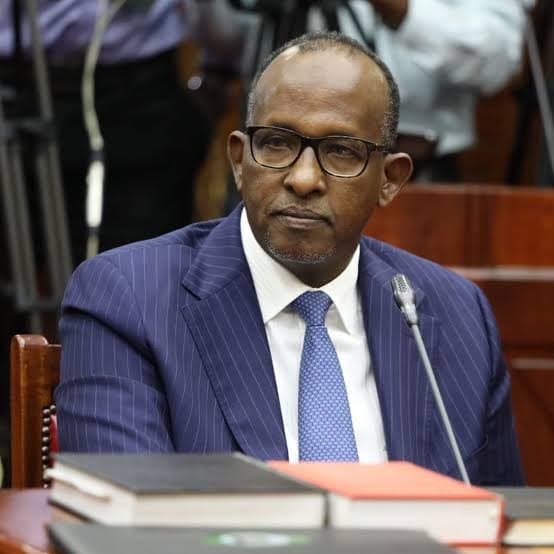
Health Cabinet Secretary Aden Duale has provided technical support for this stance, describing the large sum as an "Outstanding Claims Reserve." According to the ministry, these are funds ring-fenced to ensure hospitals can be paid for services rendered—even if those services were "incurred but not reported" (IBNR). The government maintains that the new digital system is actually more robust than the previous NHIF model, which was notoriously prone to human-induced fraud, double-billing, and manual manipulation.
While the political and accounting battles rage in boardrooms and parliament, the reality on the ground remains complex for the average Kenyan. The transition from NHIF to SHA has been characterized by digital glitches, confusion at hospital reception desks, and, in some instances, the denial of services for patients who were unable to verify their registration status in the new system.
Clinicians and hospital administrators at various Level 4 and Level 5 facilities report that the pressure to adapt to the new digital portal has created friction. When a patient arrives for life-saving care—such as dialysis or emergency surgery—and the digital verification system fails or flags a billing discrepancy, the burden of proof falls on the facility. The audit’s focus on "unsupported claims" highlights this exact tension: if a facility provides care but cannot navigate the complex, evolving digital requirements of the SHA, they are left with a bill that the state may decline to settle.
The core challenge for the Social Health Authority is not merely the size of the funds, but the speed of the digitization process. The government argues that by moving away from paper-based claims, it has created an audit trail that makes these irregularities visible for the first time. In the past, such discrepancies might have been buried in manual ledgers today, they are instantly flagged by data analytics.
However, critics argue that visibility is not the same as accountability. The fact that billions of shillings remain "unsupported" suggests that even with a digital-first approach, the reconciliation process between public health authorities and private healthcare providers is failing to keep pace. As the nation watches to see how the Parliamentary Public Investments Committee handles these findings, the government faces a binary choice: reform the verification process to ensure transparency without stifling care, or risk losing the public trust necessary for the success of Universal Health Coverage. For the patient waiting in a ward in Kisumu or Mandera, the technical difference between an audit query and a scandal matters little they simply need the system to work.
The path forward for the SHA will require more than just defensive rhetoric or aggressive digitisation it requires a transparent, rigorous reconciliation of the billions of shillings currently tied up in the "unsupported" category. Until the gap between official accounting and public experience is closed, the specter of these lost billions will continue to loom over Kenya's health reforms.
Keep the conversation in one place—threads here stay linked to the story and in the forums.
Sign in to start a discussion
Start a conversation about this story and keep it linked here.
Other hot threads
E-sports and Gaming Community in Kenya
Active 9 months ago
The Role of Technology in Modern Agriculture (AgriTech)
Active 9 months ago
Popular Recreational Activities Across Counties
Active 9 months ago
Investing in Youth Sports Development Programs
Active 9 months ago
Key figures and persons of interest featured in this article