We're loading the full news article for you. This includes the article content, images, author information, and related articles.
Kisii Governor Simba Arati affirms ODM will stay in its cooperation pact with the government until 2027 but will operate independently, signaling a complex political dynamic of simultaneous collaboration and opposition.
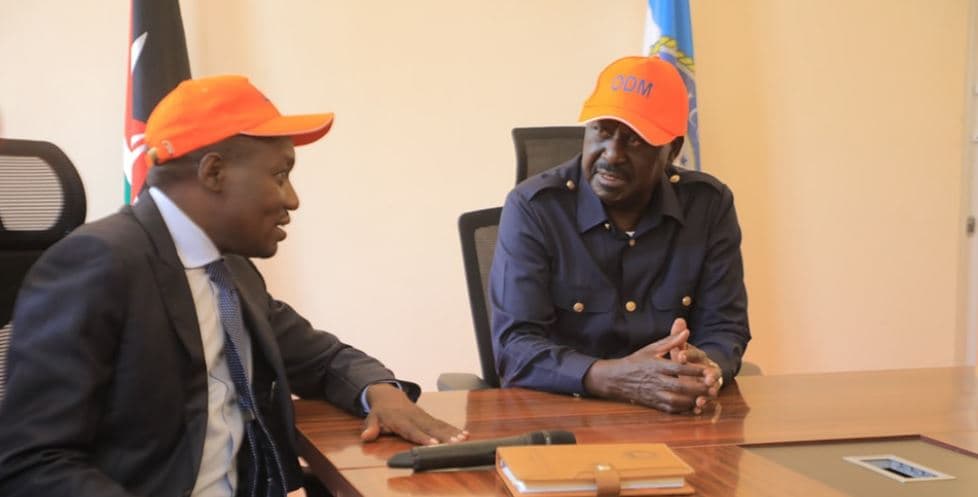
NAIROBI, KENYA – The Orange Democratic Movement (ODM) will continue its participation in a “broad-based government” arrangement with the ruling Kenya Kwanza coalition but will maintain its political independence and continue to hold the government accountable, ODM Deputy Party Leader Simba Arati declared on Wednesday. The statement by the Kisii Governor, made during a tour in Nakuru, introduces a nuanced position for the opposition party, suggesting it will simultaneously cooperate with and critique President William Ruto's administration in the run-up to the 2027 General Election.
Speaking to party supporters on Wednesday, November 5, 2025, while officially opening a new ODM county office in Nakuru, Arati emphasized that the party's role within the government framework does not equate to joining the Kenya Kwanza coalition. “We are in broad-based to stay because that is where Raila Odinga left us,” Arati stated, referencing the political pact initiated by the late former Prime Minister and President Ruto. However, he was categorical that this cooperation has its limits. “Even if we are in a broad-based government, we will not accept any abuse, any violation of human rights,” Arati asserted, adding that the party remains committed to fighting corruption and the theft of public resources.
The term “broad-based government” refers to a political cooperation pact formalized through a 10-point Memorandum of Understanding signed on March 7, 2025, between President Ruto and the late Raila Odinga. This arrangement, which followed a period of intense anti-government protests in 2024, was aimed at national healing, bipartisan legislative cooperation, and implementing the National Dialogue Committee (NADCO) report. A joint parliamentary group meeting was held on August 18, 2025, to anchor this cooperation.
Despite the formal dialogue, senior ODM officials have clarified that it is not a formal coalition agreement. Mombasa Governor Abdulswamad Nassir stated in October 2025 that no coalition pact was ever signed with President Ruto's administration. This ambiguity allows ODM to maintain a critical distance, a position Arati's recent comments have reinforced. The cooperation has seen several ODM-affiliated professionals appointed to government roles, but the party insists it has not been absorbed by the ruling regime.
Arati's declaration comes amid a vibrant internal debate within ODM about its future following the death of its long-time leader, Raila Odinga, on October 15, 2025. One faction of the party appears to advocate for deeper integration with the government, while another, including Saboti MP Caleb Amisi, has warned that the partnership is weakening ODM's credibility as an opposition force.
The party's acting leader, Dr. Oburu Oginga, has firmly stated that ODM will “never be in opposition again” and will either form the next government or be part of a winning coalition in 2027. This sentiment was echoed by Homa Bay Governor Gladys Wanga. Arati's balancing act—promising loyalty to the pact while also vowing to oppose government excesses—appears to be a strategy aimed at navigating these internal dynamics. It allows the party to leverage its position within the government for development outcomes while preserving its identity as a champion for accountability, a core tenet of its brand.
The governor's tour in Nakuru, a region with over one million registered voters, was also a strategic move to consolidate and expand the party's support base beyond its traditional strongholds. He spoke of plans to build on the support the late Odinga received from the Mount Kenya region in previous elections, indicating a forward-looking strategy for 2027.
This dual positioning by a major political party presents a complex scenario for Kenyan governance. While the cooperation pact has been credited with stabilizing the political environment after the 2024 protests, the assertion of independence raises questions about the government's ability to pass contentious legislation that requires broad support. It signals that ODM's support in Parliament is not guaranteed and will likely be conditional.
For Kenyans, this dynamic could mean that while the executive branch benefits from a less hostile political environment, the opposition's watchdog role will not be entirely abandoned. Arati explicitly warned against extrajudicial killings and abuse of power, vowing that ODM would not “be laughing with” perpetrators of such acts. This stance seeks to reassure the party's base and the wider public that its engagement with the government is not a blanket endorsement of all its actions. As the 2027 election cycle draws nearer, the durability and nature of this political tightrope walk will become a defining feature of Kenya's political landscape.
Keep the conversation in one place—threads here stay linked to the story and in the forums.
Sign in to start a discussion
Start a conversation about this story and keep it linked here.
Other hot threads
E-sports and Gaming Community in Kenya
Active 9 months ago
The Role of Technology in Modern Agriculture (AgriTech)
Active 9 months ago
Popular Recreational Activities Across Counties
Active 9 months ago
Investing in Youth Sports Development Programs
Active 9 months ago
Key figures and persons of interest featured in this article