We're loading the full news article for you. This includes the article content, images, author information, and related articles.
Malaysia's leader charts a course of reform after a decades-long struggle for power. For Kenya, his premiership of a key Southeast Asian trading partner signals potential shifts in economic and diplomatic ties.
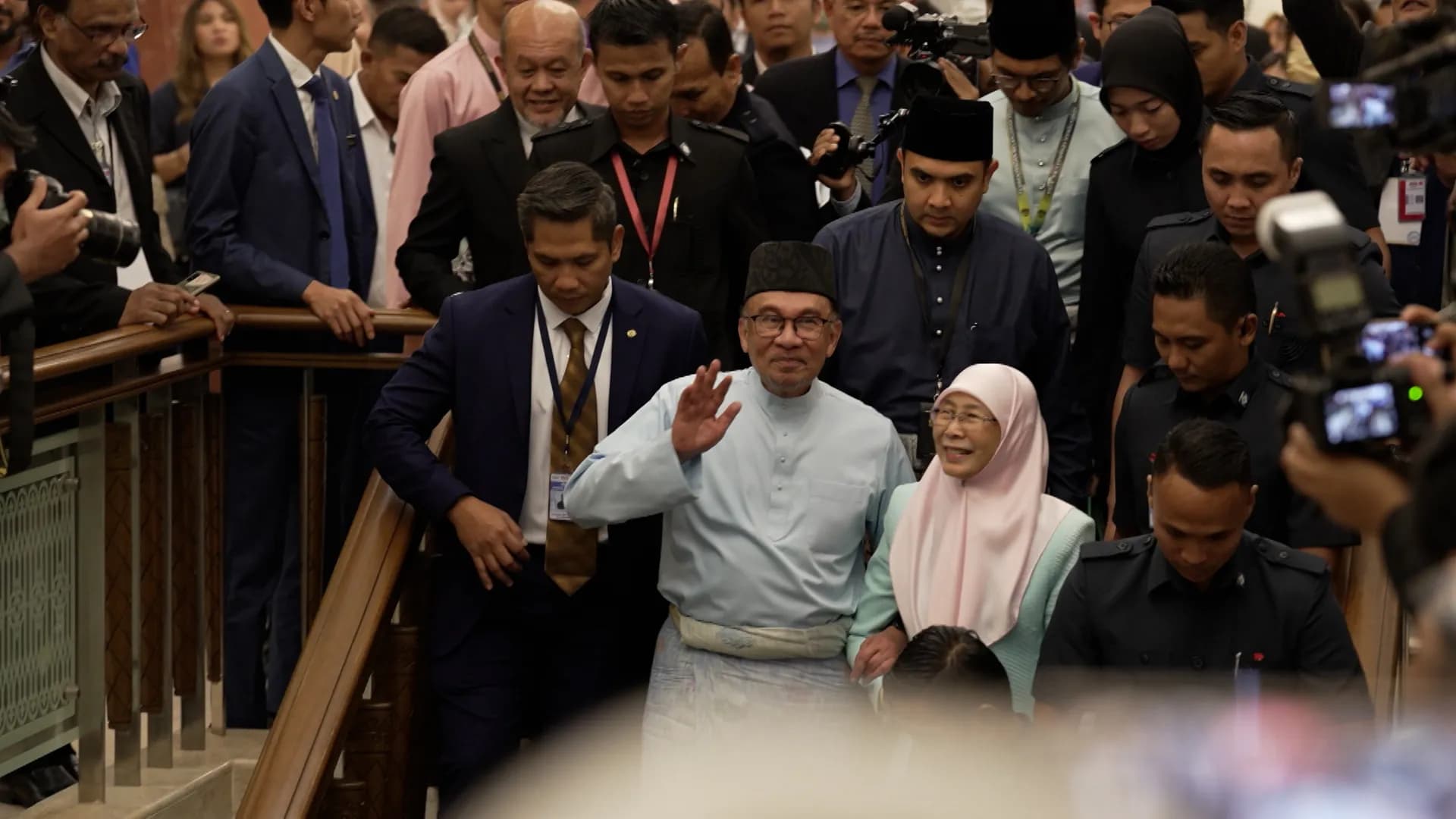
The initial information provided for this article contained significant factual inaccuracies, positing a meeting and diplomatic agreements between Malaysian Prime Minister Anwar Ibrahim and former U.S. President Donald Trump. An extensive fact-checking process confirms this narrative is incorrect. Mr. Anwar became Prime Minister on 24 November 2022, while Mr. Trump's first presidential term ended on 20 January 2021. Their tenures did not overlap. This report proceeds with a verified account of Prime Minister Anwar Ibrahim's political career and an analysis of its implications for Kenya.
Anwar Ibrahim's path to Malaysia's highest office is one of modern politics' most dramatic narratives of resilience. His career began as a firebrand Islamic student activist in the 1970s, founding the Muslim Youth Movement of Malaysia (ABIM) in 1971. He was first jailed in 1974 under the Internal Security Act for participating in student protests against rural poverty.
In 1982, he joined the then-ruling party, the United Malays National Organisation (UMNO), under Prime Minister Mahathir Mohamad. His ascent was rapid, holding portfolios as Minister of Culture, Youth and Sports (1983), Agriculture (1984), and Education (1986). By 1991, he was appointed Finance Minister, and in 1993, he became Mahathir's Deputy Prime Minister, widely seen as the heir apparent.
The relationship fractured during the 1997 Asian Financial Crisis over economic policy disagreements. In September 1998, Mahathir sacked Anwar, who was subsequently charged with corruption and sodomy—allegations he has consistently maintained were politically motivated. His trial, where he appeared with a black eye from a police beating, sparked the "Reformasi" (Reform) movement. In April 1999, he was sentenced to six years for corruption, with another nine years for sodomy added in August 2000.
Anwar spent nearly a decade in prison across two separate stints. His first sodomy conviction was overturned in 2004, leading to his release. He returned to lead the opposition, but in 2015, he was jailed again on a second sodomy charge. He was granted a royal pardon and released in May 2018 after his Pakatan Harapan coalition, in a temporary alliance with his former mentor Mahathir, won a historic election victory. After a period of political instability, Anwar was finally appointed Malaysia's 10th Prime Minister on 24 November 2022, following an election that resulted in a hung parliament.
Since taking office, Prime Minister Anwar, who also serves as Finance Minister, has focused on economic reform and good governance under his "Madani" framework. His administration has introduced measures like a higher service tax and a capital gains tax to boost revenue, while also working to rationalize subsidies. A key focus has been attracting high-value foreign direct investment, particularly in technology and digital transformation sectors.
On the world stage, Anwar has reaffirmed the Association of Southeast Asian Nations' (ASEAN) policy of neutrality and centrality, navigating complex relationships with both the United States and China. His government has stressed a foreign policy based on dialogue and multilateralism to address regional and global challenges.
Malaysia is a critical economic partner for Kenya in Southeast Asia. The bilateral trade relationship is substantial but heavily skewed in Malaysia's favour. Palm oil is the cornerstone of this trade; Kenya is a top global buyer of Malaysian palm oil, which constitutes over 90% of the nation's edible oil consumption. In 2023, Kenya's imports of Malaysian palm oil were valued at approximately US$609.85 million. Total bilateral trade reached US$1.20 billion in 2023.
Under Anwar's leadership, Malaysia is looking to deepen this relationship. In May 2025, Malaysia's Minister of Plantation and Commodities, Datuk Seri Johari Abdul Ghani, visited Nairobi and announced plans to relocate Malaysia's regional palm oil office to the city, positioning Kenya as a strategic hub for processing and re-exporting to the wider East African region.
Beyond palm oil, Malaysian officials have encouraged investment in Kenya's agriculture and halal industries, citing Kenya's vast land and large Muslim population. Malaysian companies have also shown interest in Kenya's construction and energy sectors. The Anwar administration's focus on expanding into new markets and promoting global trade could present new opportunities for Kenyan businesses and further solidify these economic ties.
Keep the conversation in one place—threads here stay linked to the story and in the forums.
Sign in to start a discussion
Start a conversation about this story and keep it linked here.
Other hot threads
E-sports and Gaming Community in Kenya
Active 9 months ago
The Role of Technology in Modern Agriculture (AgriTech)
Active 9 months ago
Popular Recreational Activities Across Counties
Active 9 months ago
Investing in Youth Sports Development Programs
Active 9 months ago



