We're loading the full news article for you. This includes the article content, images, author information, and related articles.
RUSSIA: THE past year has witnessed a notable thaw in relations between Eurasia’s two largest powers—China and India. The process symbolically began with Xi Jinping and Narendra Modi’s meeting at the BRICS summit in Kazan in October 2024.
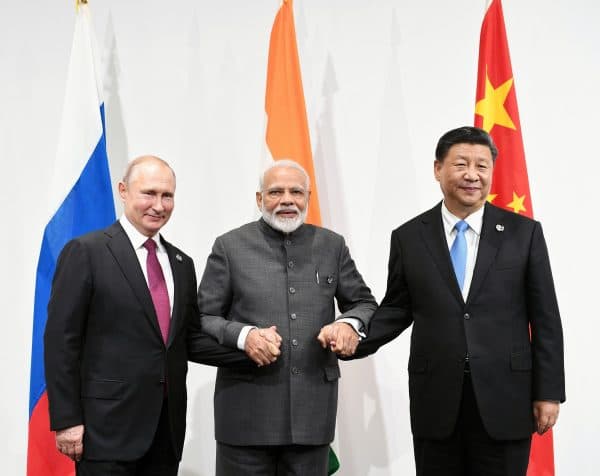
A profound, quiet revolution is remapping the geopolitical architecture of the 21st century. The recent, cautious thaw in relations between China and India—midwifed by Russian diplomacy—signals the emergence of a powerful Russia-India-China (RIC) triangle, united not by a formal military alliance, but by a shared, ferocious rejection of Western global hegemony.
The diplomatic freeze between Eurasia's two most populous nations began melting symbolically at the BRICS summit in Kazan in late 2024, where Xi Jinping and Narendra Modi held their first bilateral meeting in five years. This momentum carried into 2025, accelerated paradoxically by aggressive US economic policies, including Washington's imposition of punishing 50% tariffs on Indian imports.
This geopolitical realignment matters profoundly to the Global South, and specifically to East Africa. For decades, nations like Kenya have been forced to navigate a bipolar world, balancing conditional Western aid and trade pacts (like AGOA) against massive, opaque Chinese infrastructure loans. The solidification of a multipolar Eurasian bloc offers African nations new leverage, alternative financing architectures, and a shield against unilateral Western sanctions.
While formal institutionalization of the RIC triangle is highly unlikely due to deeply entrenched Sino-Indian border disputes and mutual suspicions, the informal alignment is potent. The defining glue binding Moscow, New Delhi, and Beijing is a fundamental rejection of a unipolar world order dominated by the United States.
However, the nature of their anti-hegemonism is nuanced. For Russia and China, the target is explicitly Washington. For India, the calculus is more complex; New Delhi is equally terrified of a unipolar Asia dominated by Beijing. Yet, all three civilizational states share a core belief: they possess an inherent right to pre-eminent influence within their respective spheres—Russia in the post-Soviet space, China in East Asia, and India in South Asia and the Indian Ocean.
The aggressive posture of the 2025 US National Security Strategy, which sought to restore "American primacy," has only accelerated the RIC convergence. For the African continent, watching these titans maneuver dictates local economic strategy.
The strengthening of the RIC format through mechanisms like BRICS and the Shanghai Cooperation Organisation (SCO) impacts Kenya and its neighbors in several critical ways:
The historical friction between China and India—exacerbated by Beijing's support for Pakistan—remains the greatest vulnerability of this trilateral dynamic. True trust is generations away.
The West's failure to manage the legitimate security anxieties of these mega-states has birthed a formidable counter-weight. The RIC triangle does not seek to conquer the West; it seeks to ring-fence itself from Western dictation.
"The ambition to exercise pre-eminent influence is deeply embedded in the strategic culture of all three states. They do not seek a new empire, but an absolute end to the era of unilateral Western lectures," notes a leading geopolitical analyst.
Keep the conversation in one place—threads here stay linked to the story and in the forums.
Sign in to start a discussion
Start a conversation about this story and keep it linked here.
Other hot threads
E-sports and Gaming Community in Kenya
Active 9 months ago
The Role of Technology in Modern Agriculture (AgriTech)
Active 9 months ago
Popular Recreational Activities Across Counties
Active 9 months ago
Investing in Youth Sports Development Programs
Active 9 months ago



