We're loading the full news article for you. This includes the article content, images, author information, and related articles.
Manchester City’s 2–1 comeback win at Liverpool on Sunday, February 8, 2026 will be remembered less as a routine league result and more as an Anfield pressure-test that Liverpool failed—decided by one outstanding set-piece strike
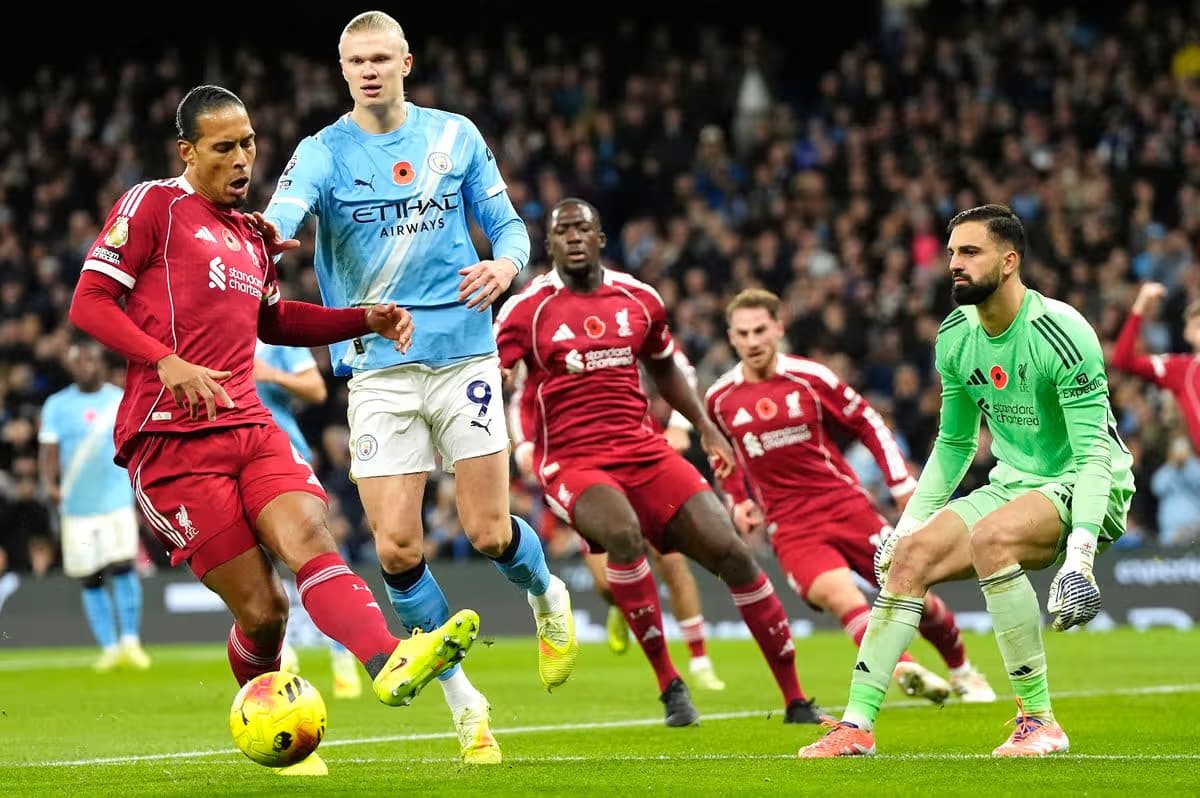
Manchester City’s 2–1 comeback win at Liverpool on Sunday, February 8, 2026 will be remembered less as a routine league result and more as an Anfield pressure-test that Liverpool failed—decided by one outstanding set-piece strike, one late equaliser engineered through City’s structure, and a stoppage-time collapse that mixed risk, VAR and raw nerve.
City’s reward is immediate and strategic: the victory keeps their title chase alive and, per Reuters, cuts Arsenal’s lead to six points.
Liverpool landed the punch—Dominik Szoboszlai’s 74th-minute free-kick—but City absorbed it, then flipped the fight through Bernardo Silva (84’) and Erling Haaland’s 90+3’ penalty, before a surreal final act saw a City “third” ruled out by VAR and Szoboszlai dismissed.
For 70 minutes, the game carried the feel of a tight, tactical standoff—City probing, Liverpool holding shape, neither side turning control into clean chances. Then Szoboszlai hit a long-range free-kick that detonated Anfield and appeared to set Liverpool up for a statement win.
The investigative angle is what happened next: Liverpool’s lead didn’t calm the match; it sharpened it. City’s response wasn’t frantic—it was systematic, a familiar Guardiola pattern: increase the volume of attacks, keep Liverpool pinned, and wait for the game to present one moment of disorganisation.
The equaliser arrived on 84 minutes, with Haaland involved before Bernardo Silva finished.
This was the key shift: once City drew level, Liverpool were forced out of “protect mode” and back into decision-making under stress. That is where elite sides win games—by forcing opponents to make one wrong call at full speed.
Reuters reports the decisive incident plainly: Matheus Nunes was fouled by Liverpool goalkeeper Alisson, City were awarded a penalty, and Haaland converted in stoppage time.
The Guardian’s live report frames it as a reckless challenge that gifted City the finish line.
From an investigative lens, the penalty was the product of Liverpool’s late-game posture. Chasing control after losing it, they became vulnerable to one of the most dangerous situations in modern football: attackers running into a box where the goalkeeper has to decide—commit, or hold. Alisson committed. City cashed in.
Then came the kind of ending that turns a classic into an argument. With Liverpool sending bodies forward—including their goalkeeper—City broke and Rayan Cherki scored from near halfway into an empty net… only for VAR to intervene.
Reuters reports the sequence: the goal was disallowed, Szoboszlai was sent off for a foul in the build-up, and City instead received a free-kick.
The Guardian similarly describes the late chaos and the red card landing in the same storm of stoppage-time moments.
(Separate coverage also notes the decision sparked wider debate about VAR and spectacle.)
Whatever view one takes on the officiating, the critical point is this: Liverpool’s attempt to force an equaliser created the very scenario City punish better than anyone—transition space, open goal risk, and decision-making under exhaustion.
This win matters historically and politically in the title race.
Title pressure: Reuters positions it as City staying on Arsenal’s heels, gap now six points.
Statement value: TalkSPORT reports it was City’s first league double over Liverpool since 1937—a rare marker of dominance in a rivalry usually defined by fine margins.
For Liverpool, the damage is twofold: dropped points and narrative. Losing from a 74th-minute lead at Anfield—then ending with a red card and a VAR-scrubbed finale—leaves questions that extend beyond performance: game management, emotional control, and how safely they can navigate high-stakes finishes against elite possession sides.
For City, it’s the kind of win champions use as fuel: not perfect, not pretty—yet ruthless when the moment demanded it.
Keep the conversation in one place—threads here stay linked to the story and in the forums.
Sign in to start a discussion
Start a conversation about this story and keep it linked here.
Other hot threads
E-sports and Gaming Community in Kenya
Active 10 months ago
The Role of Technology in Modern Agriculture (AgriTech)
Active 10 months ago
Popular Recreational Activities Across Counties
Active 10 months ago
Investing in Youth Sports Development Programs
Active 10 months ago
Key figures and persons of interest featured in this article