We're loading the full news article for you. This includes the article content, images, author information, and related articles.
AFC Leopards’ boss reveals how a ‘midfield cage’ and a psychological reset helped Ingwe exorcise their demons and paint Nairobi blue.
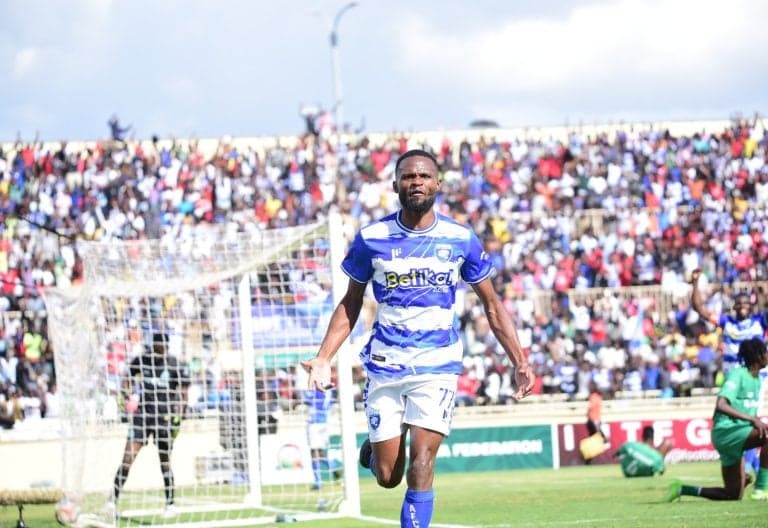
It wasn’t magic that silenced the Green Army at Nyayo National Stadium on Sunday; it was cold, calculated mathematics. When the final whistle blew on the 98th Mashemeji Derby, confirming a 1-0 victory for AFC Leopards, head coach Fred Ambani didn’t just celebrate three points—he celebrated the vindication of a high-risk tactical gamble that neutralized the league’s most dangerous attack.
For the thousands of Ingwe faithful who thronged the CBD well into Monday morning, this victory was about bragging rights. But for the technical bench, it was a statement of intent. The win propels Leopards to sixth on the FKF Premier League log with 17 points, while denying perennial rivals Gor Mahia the chance to reclaim the table summit from Kenya Police FC.
Speaking post-match, Ambani pulled back the curtain on the game plan that stifled Gor Mahia’s creative engine. The secret lay in a rigid, man-for-man stifling of Gor’s midfield maestro, Austin Odhiambo. Aware that K’Ogalo thrives on Odhiambo’s transition play, Ambani deployed a double-pivot midfield anchor featuring the combative Musa Oundo and Kayci Odhiambo.
“We knew if we let Austin breathe, we would suffer,” Ambani noted, his voice hoarse from the touchline commands. “Our tactical approach was simple: build a cage around him. Oundo and Kayci were instructed to cut the supply lines, not just tackle. By forcing Gor to bypass their midfield and resort to long balls, we played the game on our terms, not theirs.”
The stats back the gaffer’s claim. Gor Mahia, usually fluid in possession, failed to register a single shot on target in the first half. The ‘Blue Wall’ forced them into speculative long-range efforts that troubled goalkeeper Humphrey Katasi rarely.
Beyond the chalkboard, Ambani revealed a psychological shift that proved just as crucial. In the week leading up to the derby, talk was rife about bonuses and incentives—a common motivator in Kenyan football. Ambani flipped the script, demanding “self-motivation” over financial carrots.
“I told the boys, ‘If you need money to win a derby, you are in the wrong business,’” Ambani emphasized. “Scouts are watching. The world is watching. That should be enough.”
This approach seemed to liberate the squad from the pressure that has historically paralyzed them in this fixture. Ambani, who maintains an unbeaten record in the derby as both player and coach, instilled a sense of calm that was palpable even when Gor Mahia threw bodies forward in the dying minutes.
The tactical discipline provided the platform, but it was Julius Masaba who provided the spark. In the 26th minute, the winger capitalized on a rare error by Gor goalkeeper Byrne Omondi.
“We practiced that,” Masaba beamed. “Coach told us to anticipate the second ball. When Tyson shot, I didn’t watch; I ran.”
While Gor Mahia’s head coach Charles Akonnor—managing his first Kenyan derby—lamented his side’s wastefulness, particularly a stoppage-time miss by Shariff Musa, the day belonged to Ambani’s tactical pragmatism. As the dust settles and the banter continues on social media, one thing is clear: Ingwe didn't just win a match; they outthought a champion.
Keep the conversation in one place—threads here stay linked to the story and in the forums.
Sign in to start a discussion
Start a conversation about this story and keep it linked here.
Other hot threads
E-sports and Gaming Community in Kenya
Active 9 months ago
The Role of Technology in Modern Agriculture (AgriTech)
Active 9 months ago
Popular Recreational Activities Across Counties
Active 9 months ago
Investing in Youth Sports Development Programs
Active 9 months ago