We're loading the full news article for you. This includes the article content, images, author information, and related articles.
Olympic Broadcasting Services deploys cutting-edge tech to bring fans closer to the ice than ever before.
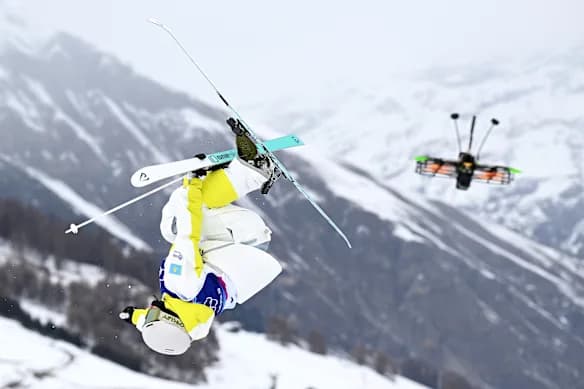
The Milano Cortina 2026 Winter Games are set to redefine sports broadcasting, trading traditional camera angles for high-speed, AI-driven drone cinematography that puts viewers right in the action.
When the world tunes in to the 2026 Winter Olympics, the view will be radically different. Olympic Broadcasting Services (OBS) has announced a massive deployment of advanced technology designed to bridge the gap between the athlete and the audience. At the heart of this revolution is a fleet of 25 specialized drones, including 15 First-Person-View (FPV) units, which will buzz through the mountain air to capture skiing, snowboarding, and speed skating with an intimacy and velocity never before seen in live sports.
Gone are the days of static long-lens shots from a distance. The new FPV drones are capable of tracking athletes at breakneck speeds, maneuvering just meters behind a downhill skier or hovering above a halfpipe. "We use them in almost all sports, with the exception of ice hockey and curling," explained OBS CEO Yiannis Exarchos. This exclusion is practical—the buzz of the drones, while faint, would be distracting in the silent concentration of the curling rink.
The pilots for these machines are not just technicians; many are former athletes themselves. They understand the flow of the sport, anticipating a skier’s turn or a snowboarder’s jump to position the camera for the perfect shot. This synergy between human expertise and robotic precision promises a "pilot`s eye" view that conveys the true terror and exhilaration of winter sports.
Despite the heavy focus on hardware, Exarchos insists that technology is merely a tool for storytelling. The goal is not to show off the gadgets but to help the audience appreciate the superhuman feats of the competitors. By visualizing the physics of a quad cork or the aerodynamics of a speed skater, the broadcast aims to educate as much as it entertains.
As the Games approach, the integration of these tools marks a pivotal moment in sports media. The viewer is no longer a passive observer in the stands but a participant in the race, flying down the Dolomites at 100 kilometers per hour. For the 2026 Winter Olympics, the sky is no longer the limit—it’s the front row.
Keep the conversation in one place—threads here stay linked to the story and in the forums.
Sign in to start a discussion
Start a conversation about this story and keep it linked here.
Other hot threads
E-sports and Gaming Community in Kenya
Active 9 months ago
The Role of Technology in Modern Agriculture (AgriTech)
Active 9 months ago
Popular Recreational Activities Across Counties
Active 9 months ago
Investing in Youth Sports Development Programs
Active 9 months ago



