We're loading the full news article for you. This includes the article content, images, author information, and related articles.
One year after the landmark political pact between President William Ruto and the late Raila Odinga, we analyze the true cost of Kenya’s broad-based govt.

The silence in the corridors of power in Nairobi is perhaps the most defining legacy of the March 7, 2025, handshake. Exactly one year ago, the nation stood at a precipice, watching as President William Ruto and the late Raila Odinga formalized a broad-based government that effectively dissolved the traditional binary of opposition and ruling coalition. Today, as the anniversary passes, the dust has settled, yet the fundamental question remains: who actually claimed victory in this grand political realignment, and what price has the Kenyan electorate paid for the tranquility that followed?
For the informed observer, this anniversary is not merely a date on the calendar but a moment to audit the governance structure that has defined the last 12 months. The pact, initiated at a time of deep economic anxiety and widespread public protest, was designed to stabilize the political temperature. However, the subsequent year has demonstrated that while street protests may have vanished, the structural challenges of governance, economic inequality, and the absence of a robust opposition have created a new, more complex set of national problems.
The March 7 agreement was marketed as a national reconciliation strategy. It brought key opposition figures into the Cabinet and state agencies, theoretically unifying the country. Yet, political analysts at the University of Nairobi argue that the pact served primarily to immunize the administration against legislative challenges. By co-opting the leadership of the Azimio coalition, the government effectively neutralized the parliamentary oversight mechanism. This has led to a legislative environment where critical bills—ranging from fiscal policy adjustments to infrastructure prioritization—pass with minimal friction, yet often without the rigorous vetting that a healthy democracy requires.
Data from the National Assembly archives confirms this shift in legislative behavior. Between March 2025 and March 2026, government-sponsored motions recorded an approval rate of 94 percent, an unprecedented figure in the era of multi-party politics. For the administration, this is efficiency. For constitutional experts, it is a consolidation of power that risks sidelining minority voices.
The economic justification for the broad-based government was the restoration of investor confidence. Proponents of the pact argued that a stable political environment was the prerequisite for economic recovery. The administration points to specific metrics to validate this claim, although these figures tell a nuanced story.
However, while macro-economic stability has improved, the micro-economic reality for the average household remains precarious. The cost of living, while not surging as violently as in previous years, remains elevated. For a shopkeeper in Gikomba or a small-scale farmer in the Rift Valley, the "stability" brought by the pact has not translated into increased purchasing power. The divide between the political elite, who now share the spoils of the executive, and the grassroots population, who continue to grapple with high fuel prices and stagnant wages, has widened.
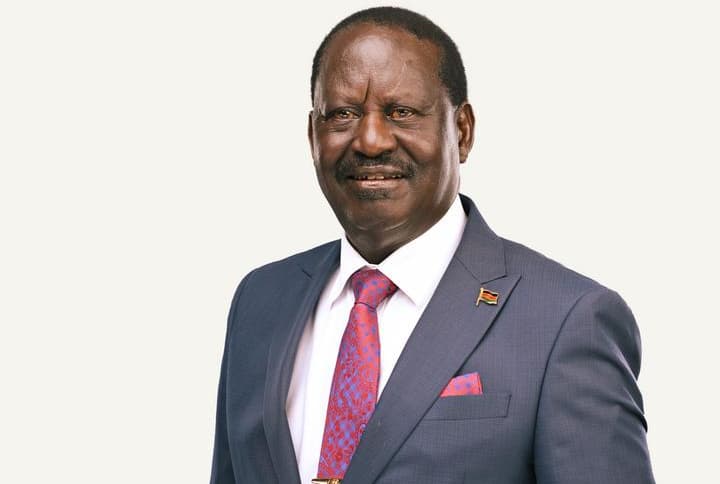
The passing of Raila Odinga, the veteran opposition leader, has left a profound vacuum in the Kenyan political ecosystem. His role in the March 7 pact was intended to be the final chapter of a storied career—a transition from a perpetual challenger to a statesperson. Following his death, the coalition he led has struggled to define its identity. Without his unifying force, the opposition factions that were brought into the government have faced internal fragmentation.
This fragmentation has resulted in a "managed" political landscape. With no clear, singular alternative voice, government policy is rarely challenged by a cohesive counter-narrative. This creates a dangerous scenario where policy errors are not identified until they reach a point of crisis. When the late Odinga signed the pact, he envisioned a collaborative future today, that collaboration looks less like a partnership and more like a merger where the minority stake has been diluted to near invisibility.
For many Kenyans, the political deal is secondary to the immediate survival of their enterprises. In Nairobi, small business owners report a mixed verdict. Some praise the lack of protest-related disruptions, which previously hampered trade in the Central Business District. Others, however, express a deep sense of democratic fatigue. They note that while the streets are peaceful, the channels for grievance redress have been effectively blocked. When the opposition sits at the table with the executive, the citizen in the village feels they have nowhere to turn when policy decisions—such as the recent hike in medical levy contributions—adversely affect their livelihoods.
The international community, particularly East African trade partners, has largely welcomed the stability. Trade volumes between Kenya and its neighbors, including Uganda and Tanzania, have increased by an estimated 12 percent year-on-year, driven by the easing of cross-border political tensions. Yet, this regional stability is predicated on a domestic peace that remains fragile, reliant on the continuity of the current political consensus.
As the nation looks beyond this anniversary, the challenge for the current administration is to prove that the broad-based government is capable of delivering more than just peace. Stability is a foundation, not the structure itself. The government must now pivot from maintaining the status quo to addressing the systemic issues that necessitated the pact in the first place.
The coming months will be a test of resilience. If the administration continues to operate without meaningful critique, it risks becoming insulated from the very reality it seeks to manage. The legacy of the March 7 pact will ultimately be measured not by the lack of noise in the streets, but by the tangible improvement in the lives of the millions of Kenyans who are still waiting for the economic promises of 2025 to materialize. The pact may have ended the political war, but the economic battle for Kenya’s future is far from over.
Keep the conversation in one place—threads here stay linked to the story and in the forums.
Sign in to start a discussion
Start a conversation about this story and keep it linked here.
Other hot threads
E-sports and Gaming Community in Kenya
Active 9 months ago
The Role of Technology in Modern Agriculture (AgriTech)
Active 9 months ago
Popular Recreational Activities Across Counties
Active 9 months ago
Investing in Youth Sports Development Programs
Active 9 months ago
Key figures and persons of interest featured in this article