We're loading the full news article for you. This includes the article content, images, author information, and related articles.
The veteran lawyer argues the physics of the crash don’t add up—and questions why the former Lugari MP was found 80km off his intended route in the dead of night.
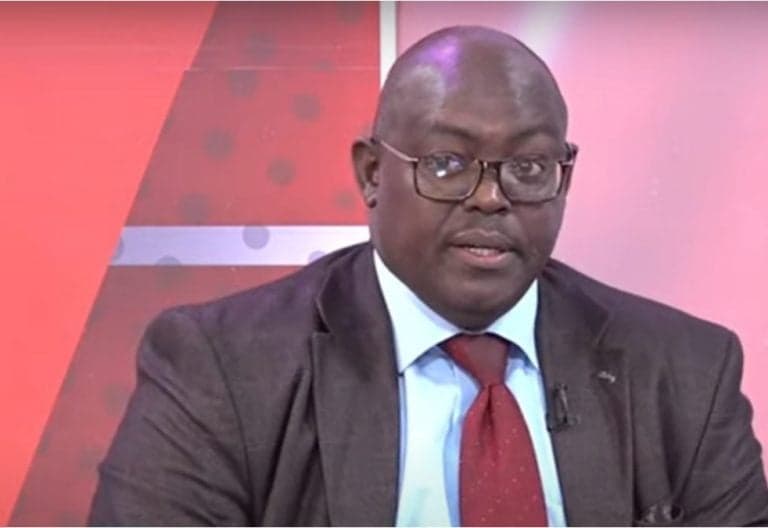
The wreckage of the Mercedes Benz on the Nairobi-Nakuru highway was mangled, but according to prominent advocate Kibe Mungai, the official narrative is even more distorted. Two days after former Lugari MP Cyrus Jirongo was pronounced dead following a 3 a.m. collision at Karai, the silence of mourning has been shattered by a thunderous allegation: this was no accident.
Speaking to the press in Nairobi, Mungai, known for taking on the state’s most sensitive cases, did not mince words. He termed the police report—which claims Jirongo veered into the path of an oncoming bus—as “procedurally convenient but factually porous.”
The crux of Mungai’s argument lies in a glaring geographical impossibility. Family sources indicate that on the night of the crash, Jirongo had left his Karen residence bound for Gigiri—a journey of roughly 25 kilometers across Nairobi. Yet, his body was recovered in Karai, Naivasha, over 80 kilometers away in the opposite direction.
“Cyrus Jirongo was a man of routine. He did not sleepwalk to Naivasha,” Mungai noted, his tone grave. “We are being told he left Karen for Gigiri and ended up dead in Karai three hours later. Unless he was abducted or coerced, this detour defies logic.”
The lawyer also raised questions about the crash site itself. While the police describe a high-velocity head-on collision with a Climax bus, Mungai points to the “suspiciously minimal” damage to the heavy commercial vehicle and the unsettling composure of the bus driver immediately after the incident.
“I have defended accident victims for decades,” Mungai said. “When a Mercedes Benz strikes a bus head-on at highway speeds, the devastation is mutual. Yet, we see a bus with a scratched bumper and a driver who narrated the event with the calmness of a man reading a grocery list. Where are the skid marks? Where is the debris field consistent with such an impact?”
The skepticism is shared by the family. Former Westlands MP Fred Gumo, speaking at Jirongo’s Gigiri home, demanded an immediate review of CCTV footage from the Nairobi-Nakuru highway. “We want to know who was trailing him. In this country, when a politician dies at 3 a.m. on a highway, we do not just accept ‘lost control’ as an answer,” Gumo stated.
To understand the gravity of these claims, one must look at the man himself. Cyrus Jirongo was not merely a former MP; he was the chairman of the infamous YK’92 (Youth for KANU ’92), a lobby group that flooded the economy with so much cash that the KES 500 note was nicknamed the 'Jirongo'.
His death removes a repository of institutional memory from the Kenyan landscape. If Mungai’s fears are confirmed, Jirongo joins a chilling list of Kenyan leaders—from J.M. Kariuki to Robert Ouko—whose final moments remain shrouded in the fog of “unexplained accidents.”
For the average Kenyan, this story is a grim reminder of the fragility of truth. If a man as connected as Jirongo can perish under questionable circumstances with no immediate answers, what safety is there for the common mwananchi? The call for an independent autopsy is growing louder, but history suggests that in Kenya, the dead are often buried with their secrets.
“We will not let this be swept under the tarmac,” Mungai vowed. “We demand the data from his phone towers. We demand the traffic camera logs. Cyrus Jirongo survived the shark tank of 1990s politics; he did not just accidentally drive into a bus.”
Keep the conversation in one place—threads here stay linked to the story and in the forums.
Sign in to start a discussion
Start a conversation about this story and keep it linked here.
Other hot threads
E-sports and Gaming Community in Kenya
Active 9 months ago
The Role of Technology in Modern Agriculture (AgriTech)
Active 9 months ago
Popular Recreational Activities Across Counties
Active 9 months ago
Investing in Youth Sports Development Programs
Active 9 months ago



