We're loading the full news article for you. This includes the article content, images, author information, and related articles.
She was barely two years old when it happened. Now 19, the survivor and her mother are taking on a system—and their own relatives—that conspired to bury the truth for nearly two decades.
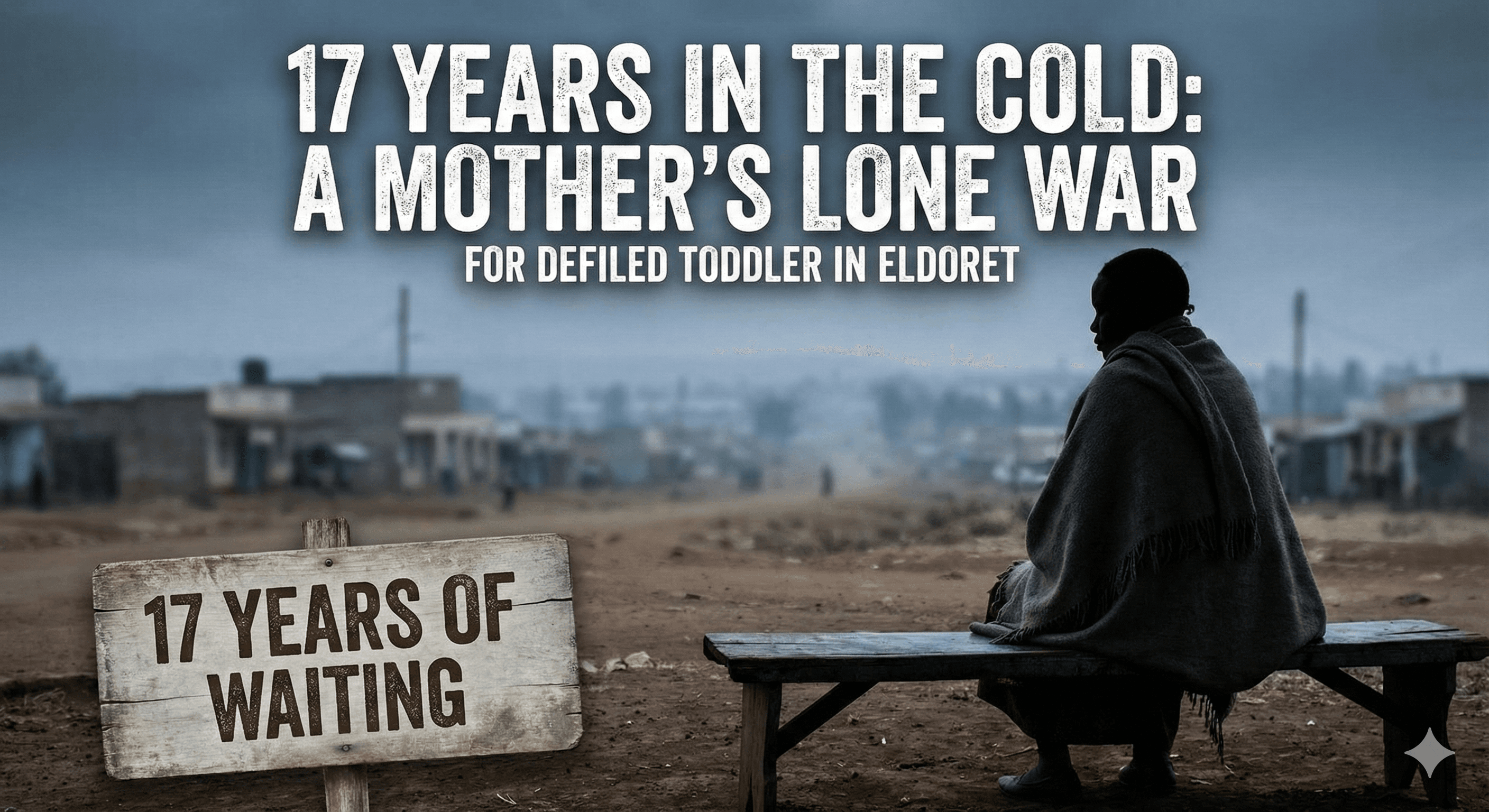
ELDORET — Justice in Kenya often moves at the pace of a tortoise, but for one mother from Trans Nzoia, it has been a 17-year paralysis. Her daughter, now a 19-year-old woman grappling with the scars of her past, was only one year and 11 months old when she was brutally defiled. For nearly two decades, the suspect has walked free, shielded not just by legal technicalities, but by the very family meant to protect the child.
This week, the silence that has shrouded this case since 2008 was finally broken. In a harrowing account shared at the Moi Teaching and Referral Hospital (MTRH) in Eldoret, the mother revealed how a conspiracy of silence, fueled by clan collusion and intimidation, derailed the initial prosecution, leaving her to fight a lonely battle for accountability.
The tragedy began in 2008. Following the assault on the toddler, the machinery of justice seemed to start turning, only to be abruptly jammed from the inside. According to the mother, whose identity is withheld to protect the survivor, her own relatives colluded with the suspect’s family to frustrate the legal process.
In a move that highlights the persistent plague of interfering with witnesses in sexual offence cases, relatives reportedly hid the child to prevent her from being presented in court. Without the victim—the primary evidence—the prosecution’s case crumbled.
The use of Section 202 was the final nail in the initial case. It is a legal provision meant to prevent case backlogs, but in the context of defilement, it is frequently weaponized by perpetrators who bribe or threaten families into hiding victims until the court loses patience.
"The suspect still lives freely," the mother lamented, describing the agony of seeing the man who allegedly shattered her daughter's childhood walk the village without consequence. For the survivor, the trauma has been compounded by years of stigma and continuing threats, a heavy burden for a young woman trying to forge a future.
The tide, however, may be turning. A human rights organization has now stepped in, seeking to revive the file. Legal experts argue that while the accused was discharged, he was not acquitted—meaning the state can reinstitute charges if fresh evidence or the witness becomes available. With the survivor now an adult and willing to speak, the "missing witness" obstacle is effectively removed.
"Justice for a child cannot be time-barred by the conspiracy of adults," noted a legal advocate familiar with similar retrials in the region. The push is now on to have the Office of the Director of Public Prosecutions (ODPP) review the file and summon the suspect once more.
For the mother, the reopening of the case is not just about punishment; it is about validating a 17-year refusal to give up. As the file moves from the dusty archives to the active docket, the message to perpetrators in Trans Nzoia is clear: time may hide the crime, but it does not erase it.
Keep the conversation in one place—threads here stay linked to the story and in the forums.
Sign in to start a discussion
Start a conversation about this story and keep it linked here.
Other hot threads
E-sports and Gaming Community in Kenya
Active 9 months ago
The Role of Technology in Modern Agriculture (AgriTech)
Active 9 months ago
Popular Recreational Activities Across Counties
Active 9 months ago
Investing in Youth Sports Development Programs
Active 9 months ago